 21.10.2026
A good flower pot needs more than a handful of pretty blooms. I look for a combination of upright flowers, mounding plants, and trailing foliage, with every plant suited to the same light and watering conditions. That is how I get a container that looks intentional instead of crowded by midsummer.
I garden in Boise, Idaho, USDA zone 7a, where our high-desert climate brings roughly 11 inches of annual precipitation, alkaline soil, hot July afternoons, and late spring frosts. My timing recommendations start with your own last and first frost dates, not my calendar. Check your local extension service for regional planting advice, especially if your summers are humid or your winters are severe.
Below are 16 flower combinations I would consider for patios, porches, balconies, and garden paths. I have included color ideas, suitable container sizes, and the practical details that help each arrangement last beyond its first flush of flowers.
What I consider before planting
- Match sun exposure and moisture requirements before matching flower colors.
- Choose a container with drainage holes and enough soil volume for mature roots.
- Use a quality potting mix rather than heavy garden soil.
- Plan for regular watering and feeding, especially in hot, dry weather.
- Allow room for mature plants instead of packing every available gap on planting day.
Petunias, Verbena, and Sweet Alyssum
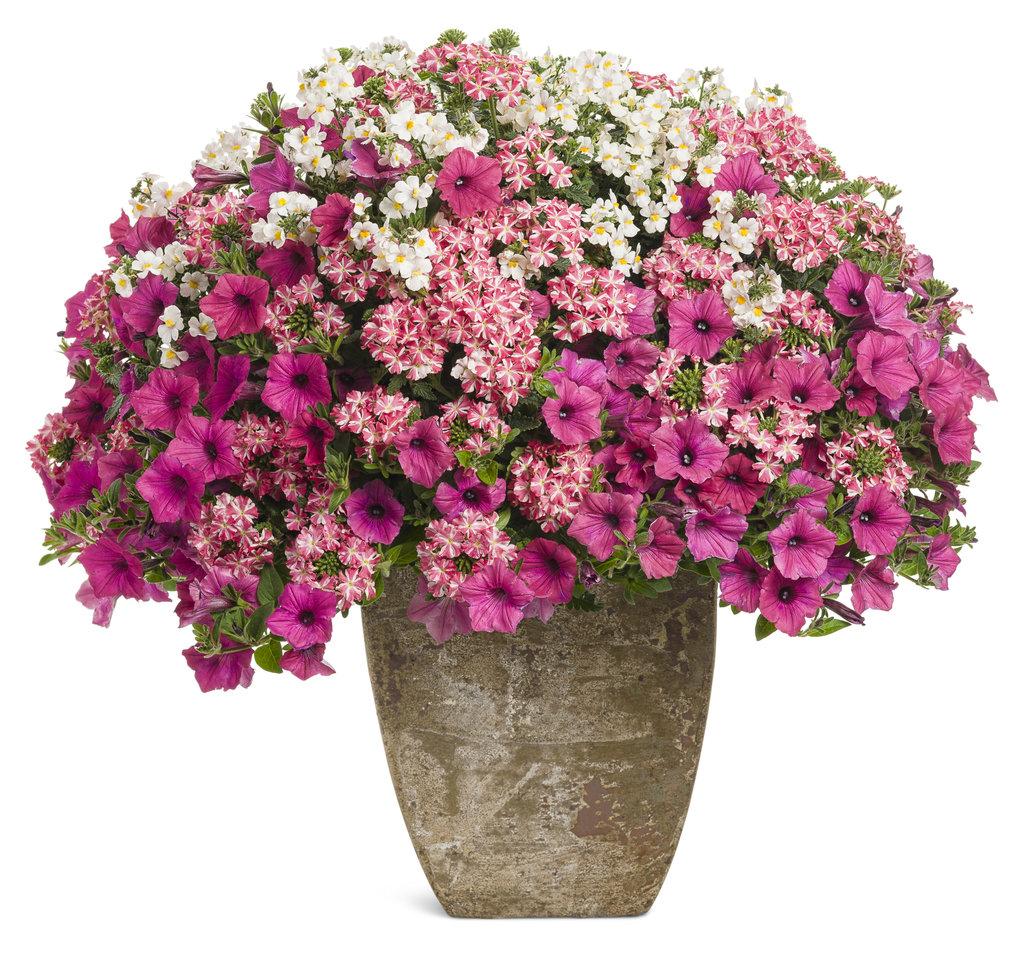
I like this combination when I want a full, cascading container with plenty of color. Petunias provide the large, trumpet-shaped blooms, verbena adds smaller flower clusters, and sweet alyssum softens the pot's edge with tiny flowers. Pink, purple, and white make a reliable-looking palette without requiring every plant to be the same shade.
I would start with a 15- to 20-gallon container for a generous mixed display, with drainage holes and fresh potting mix. All three generally prefer sunny positions, so I would give them at least six hours of direct light where the climate permits. In Boise's dry summer heat, I check the soil daily and water when needed rather than following a rigid schedule. The University of Massachusetts Amherst has useful [container garden planting recipes](https://www.umass.edu/agriculture-food-environment/home-lawn-garden/fact-sheets/colorful-container-gardens) for sunny combinations.
Geraniums, Lobelia, and Bacopa
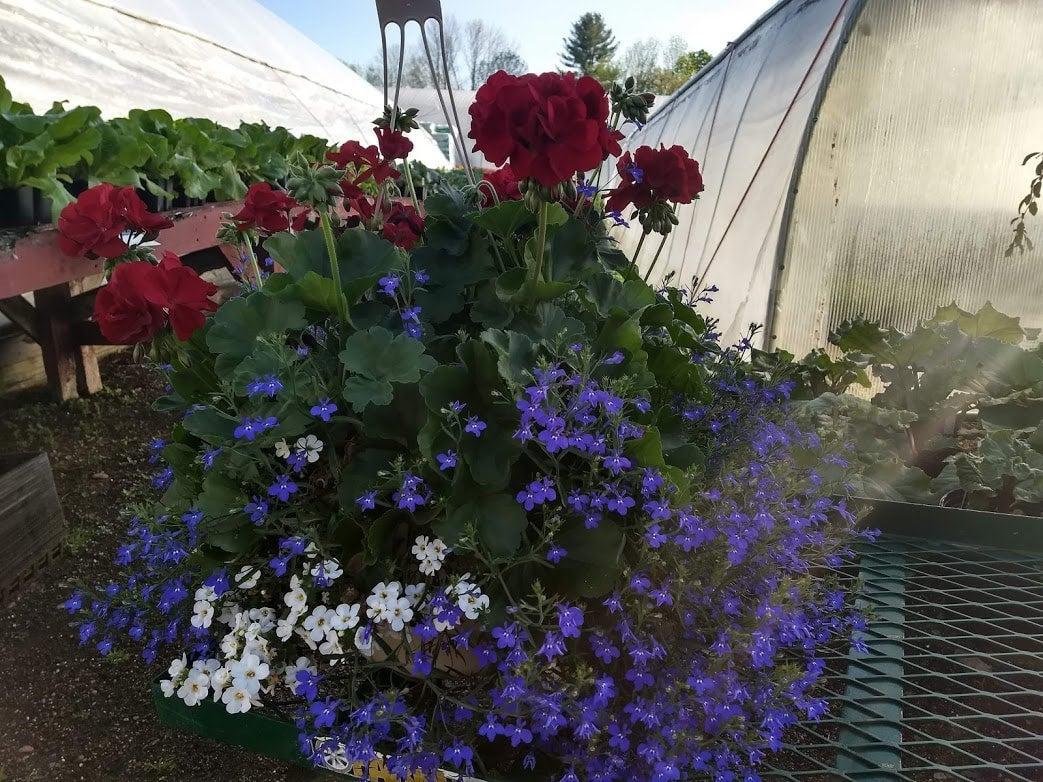
For a traditional porch pot, I would pair upright geraniums with trailing flowers. Geraniums provide the main color and height, blue lobelia adds a cool contrast, and bacopa contributes delicate white blooms along the rim. Red geraniums with blue and white companions create a classic combination, while coral or pink geraniums give the arrangement a softer look.
I would choose a container of roughly 10 to 15 gallons for a medium display, increasing the size if I want several plants of each type. Give the arrangement plenty of light, but watch for wilting during hot afternoons. Lobelia and bacopa can struggle when roots repeatedly dry out, so I would not pair them with plants that prefer much drier soil. Oregon State University Extension's [hanging basket guidance](https://extension.oregonstate.edu/news/add-color-lift-hanging-baskets) explains how trailing plants and upright focal plants work together.
Marigolds, Petunias, and Calibrachoa
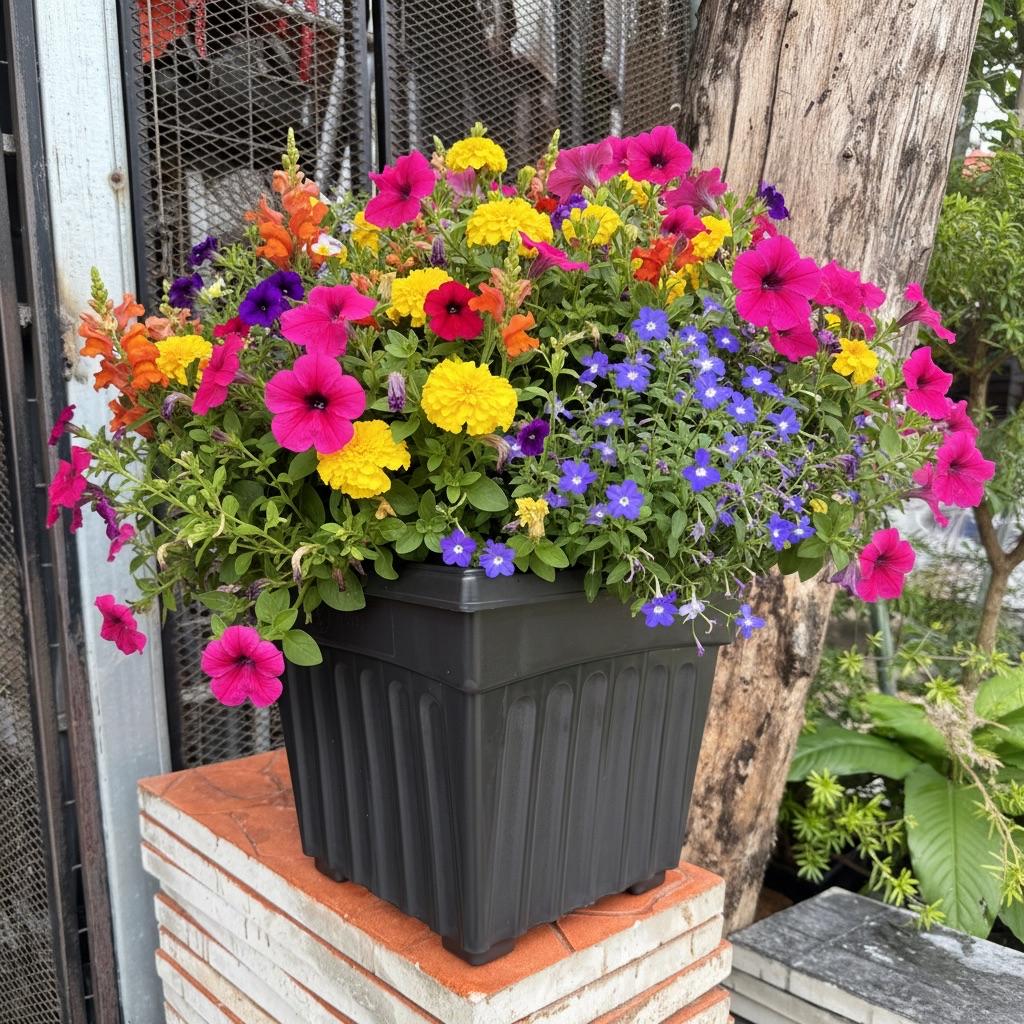
This is my pick for a bright, high-contrast summer container. Golden marigolds bring warm color, petunias provide larger blooms, and calibrachoa fills the spaces between them with smaller, petunia-like flowers. I particularly like yellow, orange, and deep magenta together because each color remains visible from across a patio.
Choose a sunny location and a container around 15 to 20 gallons for a substantial arrangement. Calibrachoa prefers moist, well-drained soil and regular feeding in containers; Illinois Extension recommends full sun and notes that pinching can help maintain a compact shape in its [calibrachoa growing guide](https://extension.illinois.edu/flowers/calibrachoa). I would remove faded blooms when needed, avoid waterlogged roots, and check moisture every day during a Boise heat spell.
Impatiens, Coleus, and Dichondra
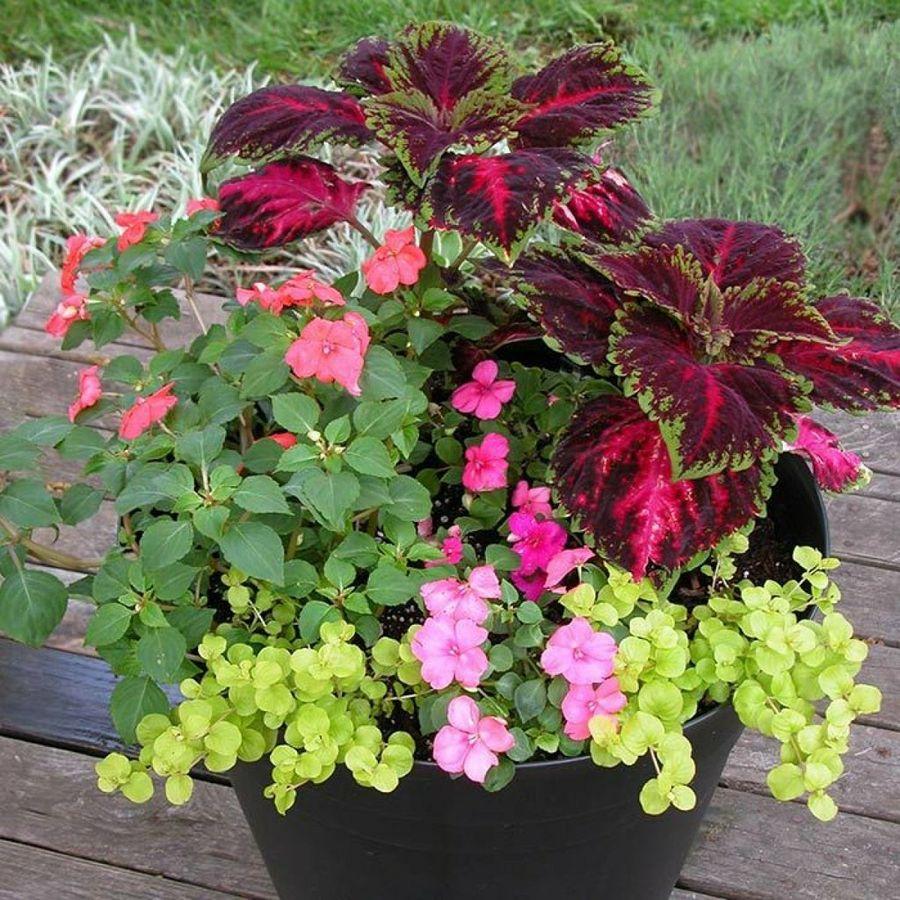
Not every container has to sit in full sun. For a sheltered porch or a bright shaded corner, I like the contrast between pink impatiens and patterned coleus leaves. Dichondra provides a trailing layer, often with silvery foliage that makes the darker coleus colors stand out. This arrangement earns its place through leaf color as much as flowers.
I would use a 10- to 15-gallon pot for a modest mixed display and place it where the plants receive the appropriate filtered light for their varieties. Impatiens generally appreciate even moisture, while coleus cultivars vary in their tolerance of sun. Check the plant labels rather than assuming every coleus belongs in deep shade. An [Extension gardening discussion about shady Colorado patios](https://ask.extension.org/kb/faq.php?id=494371) offers useful ideas for combining shade-loving flowers and foliage plants.
Begonias, Caladiums, and Impatiens
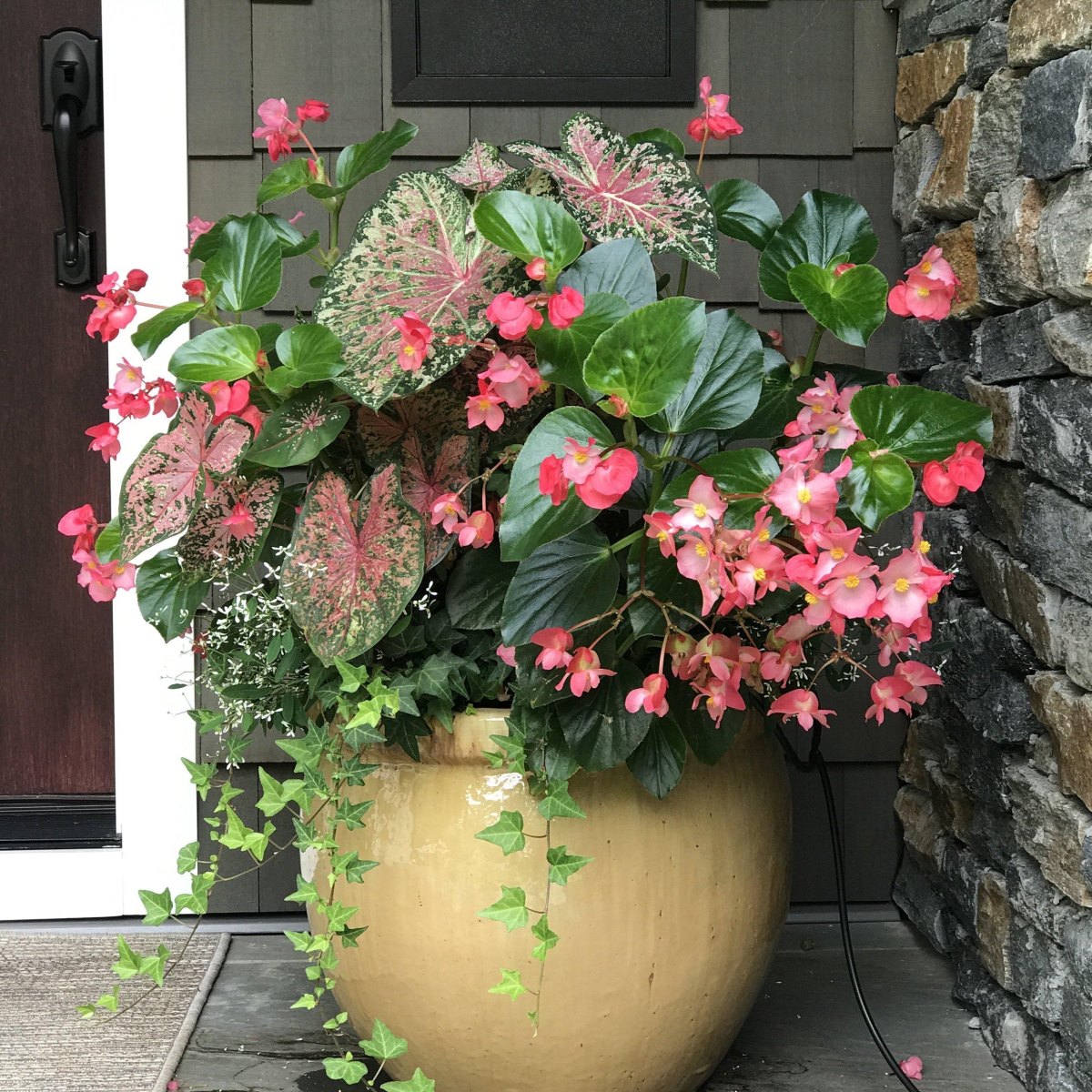
When I want a lush container without relying on constant flower color, I turn to begonias and caladium foliage. Begonias add blooms, caladiums contribute broad leaves patterned in green, white, pink, or red, and impatiens fill the lower spaces with flowers. The overall effect is layered and tropical, even on a modest porch.
I would start with a 15- to 20-gallon container with excellent drainage and a location that suits the particular varieties. Caladiums generally prefer partial to full shade and moist, well-drained soil. Penn State Extension's [caladium growing guide](https://extension.psu.edu/caladiums-for-the-home-garden) confirms that containers are a practical way to grow their colorful foliage. I would avoid letting the pot sit in standing water, and I would remember that caladiums are toxic if ingested, making careful placement important around children and pets.
Salvias, Zinnias, and Sweet Potato Vine
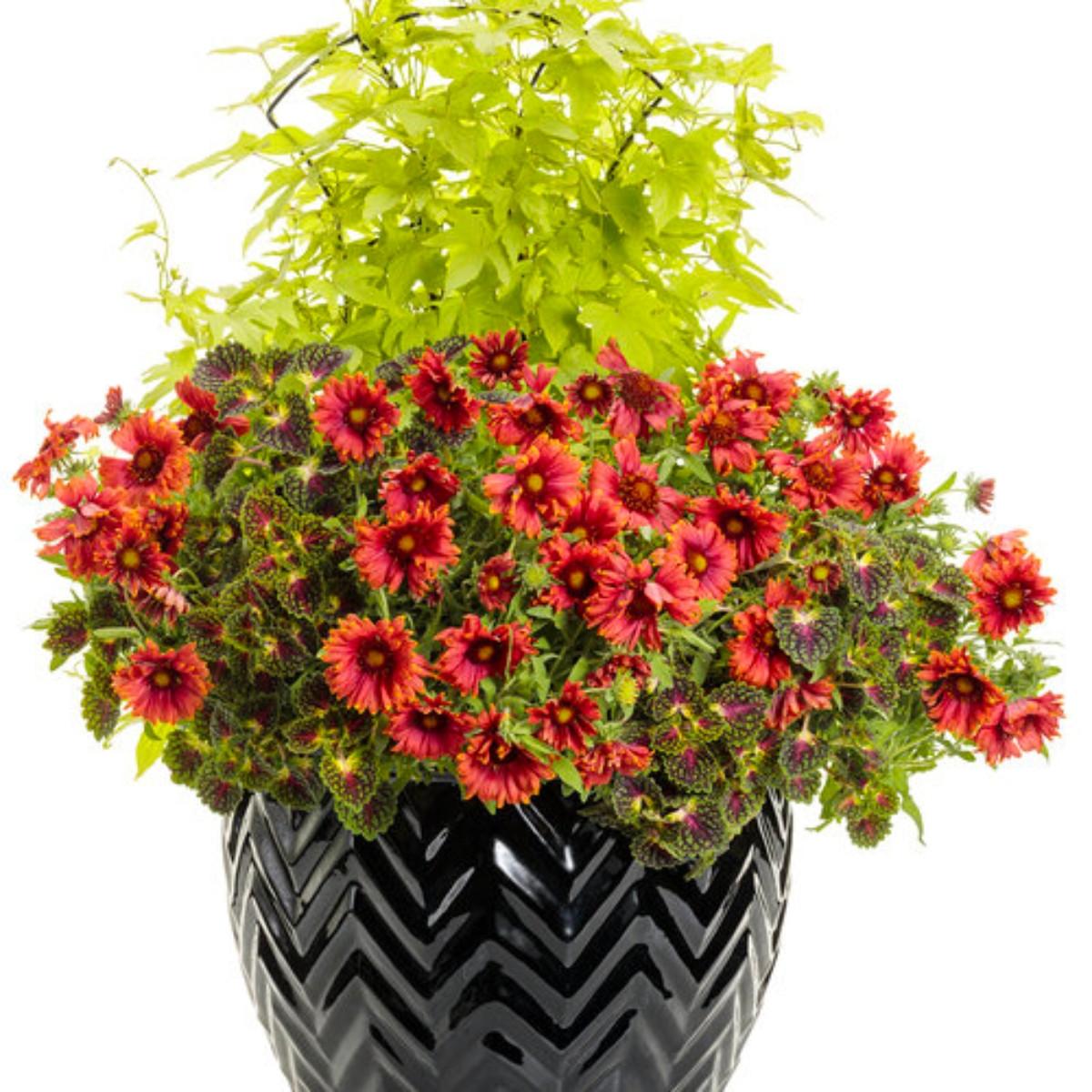
For a sunny spot that needs height and a little drama, I would combine upright salvia spikes with bright zinnias and the broad, trailing foliage of sweet potato vine. Red salvia, orange zinnias, and lime-green foliage create a bold contrast. Purple-leaved sweet potato vine would make the same arrangement feel deeper and less playful.
A 15- to 20-gallon container is a sensible starting point for a substantial planting, with a larger pot if the salvia variety is tall or the vine particularly vigorous. All three need suitable light, and the pot should drain freely. I would check the finished arrangement in afternoon sun because containers can heat up much faster than garden beds. In my zone 7a high-desert climate, I wait until frost danger has passed before planting tender warm-season flowers outdoors; gardeners elsewhere should use their own frost dates and local extension recommendations.
Pansies, Violas, and Ornamental Kale
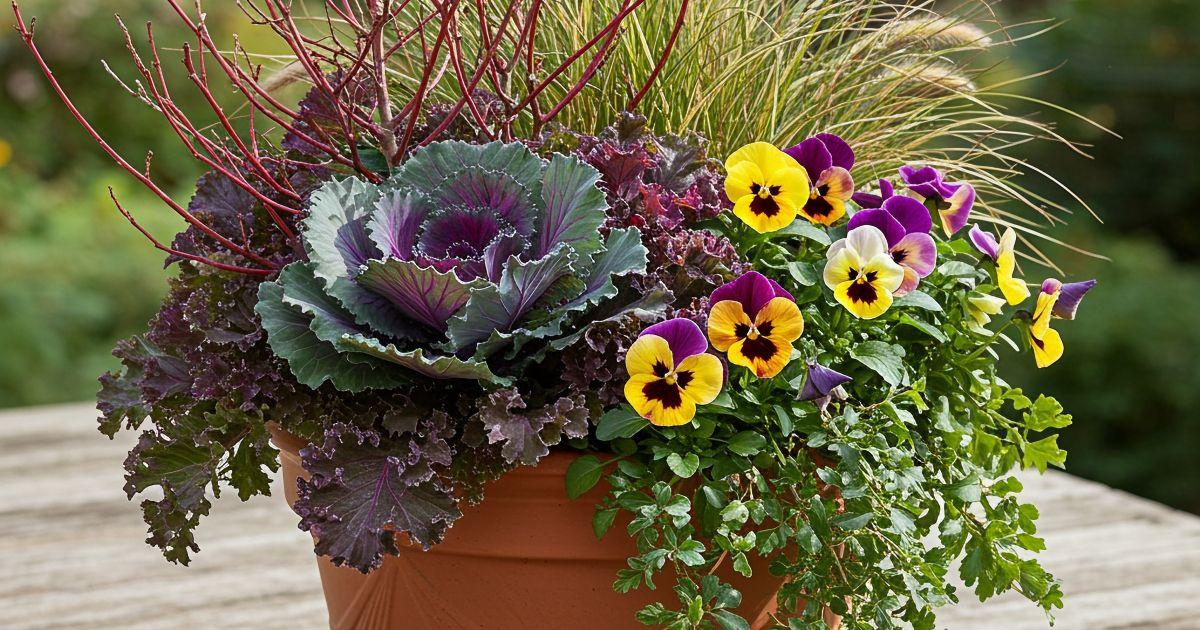
This combination is especially useful when summer annuals begin looking tired. I like pansies and violas for their colorful faces, with ornamental kale supplying a central rosette of textured foliage. Purple and yellow flowers surrounding a purple-green kale plant create a strong display without needing tall stems.
I would use a 10- to 15-gallon container for a mixed autumn or early-spring arrangement. Pansies and violas generally prefer cool weather, sun to partial sun, and moist but well-drained soil. They often struggle once sustained summer heat arrives. Iowa State University Extension explains their cool-season preferences in its [pansy and viola guide](https://yardandgarden.extension.iastate.edu/how-to/growing-pansies-violas). In Boise, I would plan around local frost forecasts and use fall or spring planting windows rather than expecting these plants to look fresh through the hottest part of summer.
Daisies, Nemesia, and Dusty Miller
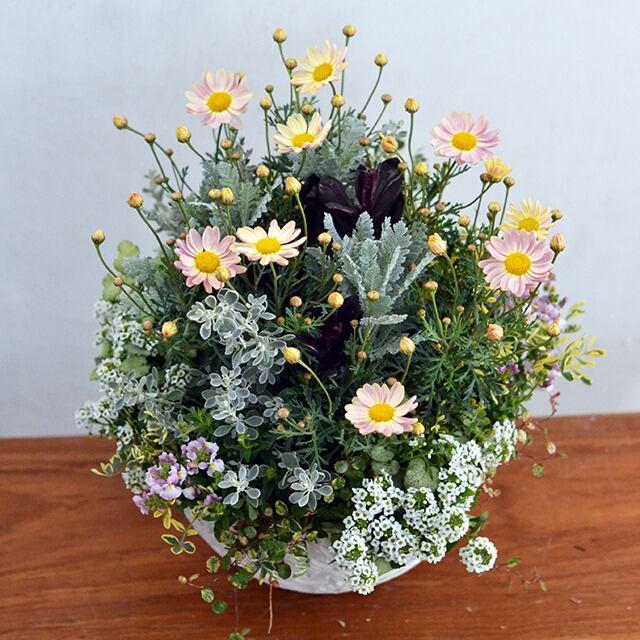
I like this combination for a soft white-and-purple color scheme. Daisies give the container a cheerful focal point, nemesia contributes smaller flowers, and dusty miller adds silvery foliage that separates the colors. The result works particularly well beside pale stone, neutral siding, or a dark-colored pot.
I would choose a 10- to 15-gallon pot and a sunny or lightly shaded position that suits the selected varieties. Nemesia prefers fertile, moist but well-drained growing conditions and can suffer if the compost becomes waterlogged. The Royal Horticultural Society provides practical advice in its [nemesia growing guide](https://www.rhs.org.uk/plants/nemesia/how-to-grow-nemesia). I would also leave room for airflow rather than crowding every plant together, especially in humid climates where dense foliage dries slowly.
Fuchsias, Lobelia, and Ivy
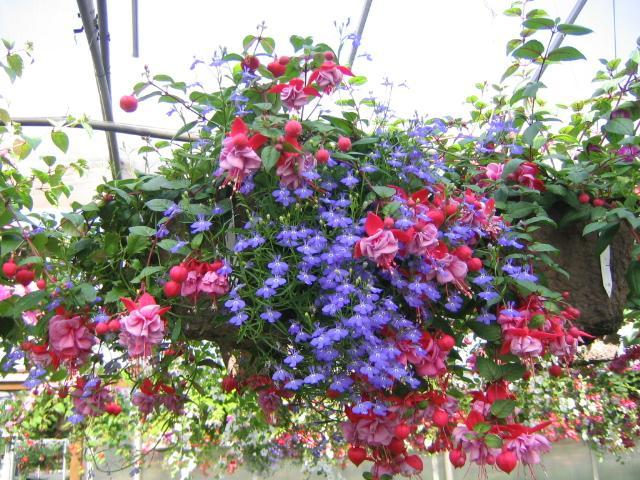
For a hanging basket or an elevated planter, I would use fuchsias as the main attraction. Their pendant flowers add movement, lobelia supplies a blue fringe, and ivy trails down the sides. The arrangement looks especially good when viewed at eye level, where the hanging fuchsia flowers are easy to appreciate.
I would choose a 10- to 12-gallon hanging container if the support can safely carry the weight of the watered pot. Fuchsias generally prefer cooler conditions and protection from harsh afternoon sun, while lobelia can need consistent moisture. Check the needs of the chosen ivy as well, and keep it trimmed before it overwhelms its companions. Oregon State University Extension's [guide to hanging baskets](https://extension.oregonstate.edu/news/add-color-lift-hanging-baskets) recommends combining upright focal plants with suitable trailing species and matching the plants to the site.
Sunflowers, Nasturtiums, and Black-Eyed Susans
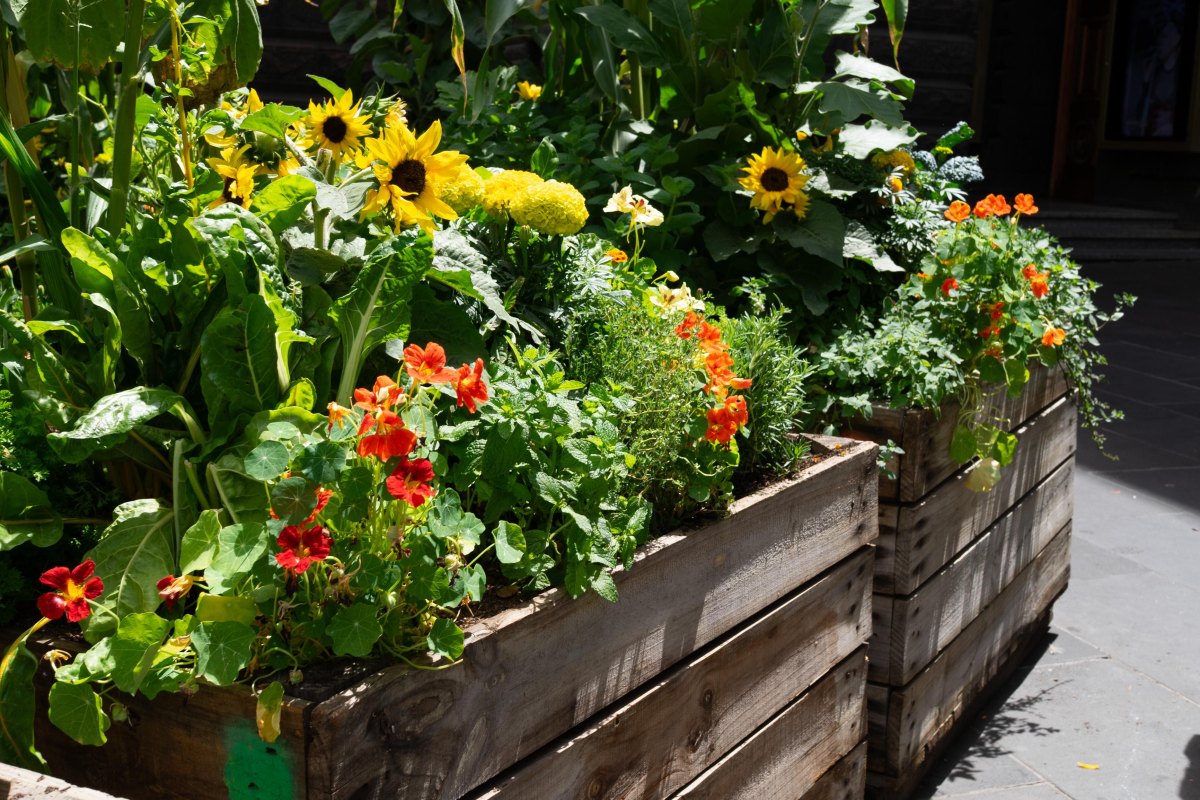
When I want a container that looks like a small summer meadow, I would combine dwarf sunflowers with orange nasturtiums and yellow black-eyed Susans. The sunflowers provide height, the other flowers fill in the middle and lower layers, and the warm colors suit a sunny patio or an informal garden corner.
Use a large container of at least 15 gallons for a multi-plant display, choosing compact sunflower varieties and checking mature height on the seed packet. The Home Garden Seed Association recommends containers at least 5 gallons for dwarf sunflowers and larger pots for annual black-eyed Susans in its [container flower growing guide](https://homegardenseedassociation.com/flowers-and-vegetables-for-containers). I would not put tall, branching sunflowers in a small lightweight pot where wind could tip the whole arrangement. Nasturtiums can trail generously, so leave them room to spread.
Hydrangeas, Heuchera, and Creeping Jenny
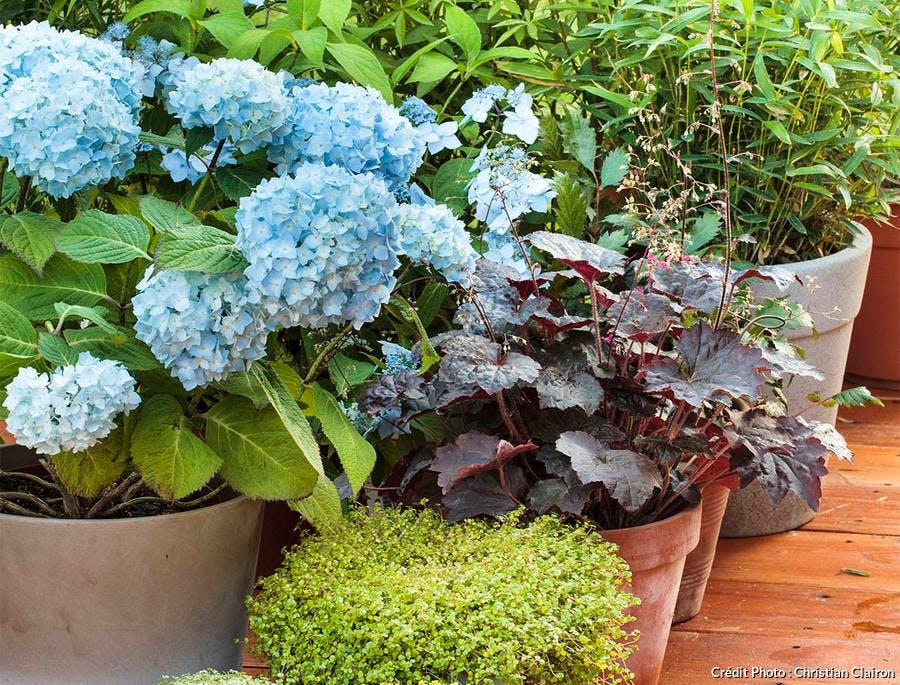
This is the combination I would choose for a more substantial patio container with foliage contrast and a flowering centerpiece. Hydrangeas provide large blooms, heuchera adds richly colored leaves, and creeping Jenny spills over the rim. Blue hydrangeas, burgundy heuchera, and lime-green foliage make a particularly striking mix.
I would start with a 20-gallon or larger container, especially for a hydrangea that will remain in the pot beyond one season. Hydrangeas need consistent moisture, and the container must drain well; heuchera and creeping Jenny varieties also need conditions that suit their particular cultivars. In Boise's dry summers, this mix needs close watering attention and protection from excessive heat where appropriate. I would treat the hydrangea as the plant that sets the pot's size and site, then choose the companions around its light and moisture requirements.
Snapdragons, Alyssum, and Ornamental Grass
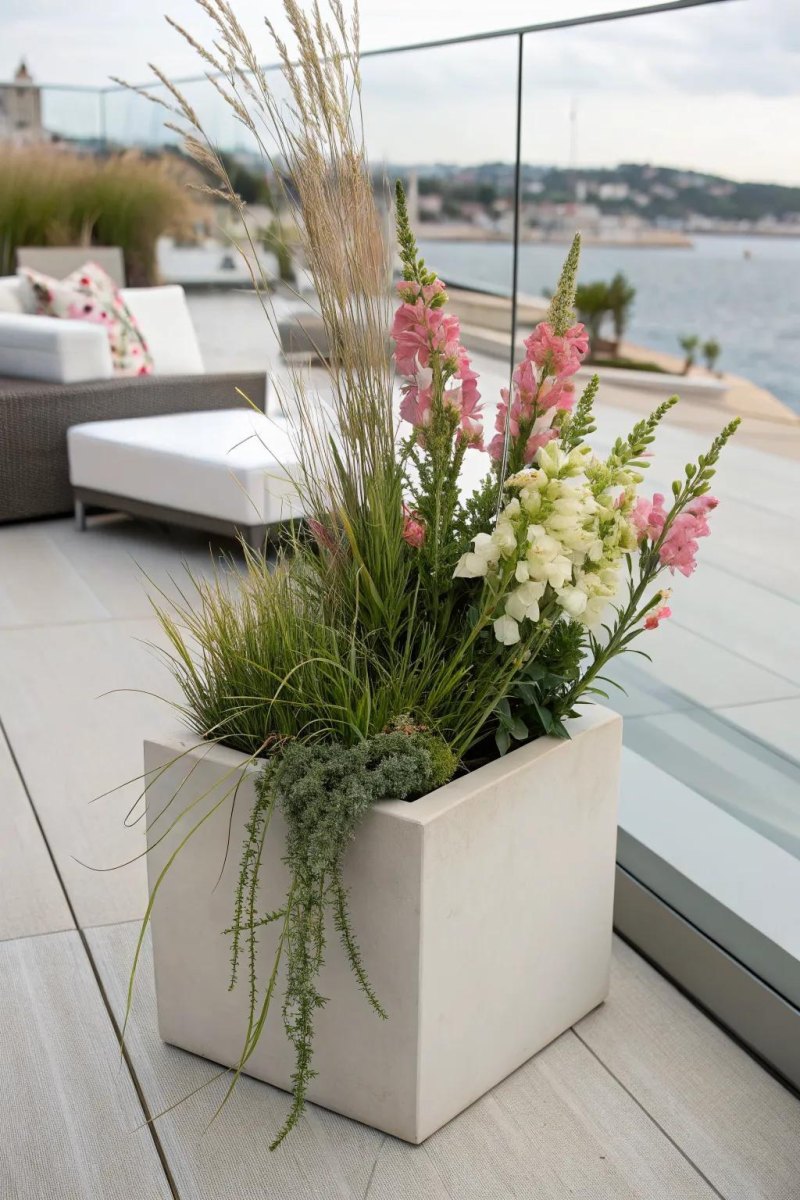
I like this arrangement for vertical interest and fine texture. Snapdragons create upright flower spikes, sweet alyssum softens the edges with small white blooms, and ornamental grass adds movement whenever the wind catches it. Pink snapdragons with white alyssum and a fine-bladed grass make a container feel airy rather than crowded.
A 10- to 15-gallon container can suit a modest version, although a taller grass may need a heavier, wider pot for stability. Snapdragons generally perform best in cooler conditions than many summer annuals, while ornamental grasses vary considerably in their sun and water needs. Southern Living's [snapdragon blooming guide](https://www.southernliving.com/keep-snapdragons-blooming-till-hard-freeze-12164378) discusses deadheading, moisture, and sunlight. For planting dates, I would follow local frost guidance and avoid assuming a schedule that works in a mild southern climate will suit Boise or a colder region.
Lantana, Pentas, and Verbena
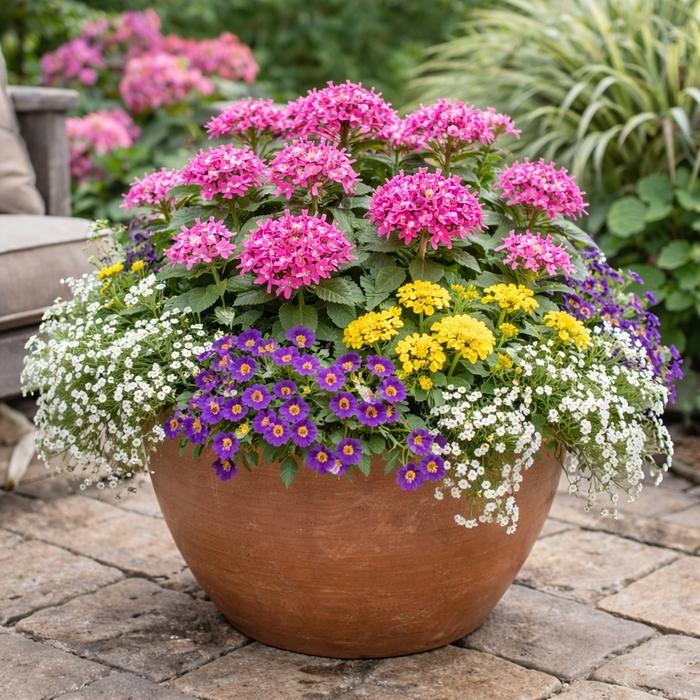
For a hot, sunny corner, I would consider lantana and pentas for bold flower clusters, with verbena trailing over the edge. Orange and yellow lantana paired with pink pentas and purple verbena creates a warm palette that remains visually interesting as the plants fill out. This is a better choice for a sunny site than a shady porch.
I would use a 15- to 20-gallon container and check the mature size of each cultivar before planting. These plants generally appreciate warmth and bright light, but their exact water needs differ by variety and climate. I would let the potting mix guide watering rather than assume that drought tolerance means no water is needed. One important household note: lantana can be toxic if ingested, so I would place it out of reach of children and pets and consult a trusted toxic-plant reference if exposure is a concern.
Cannas, Coleus, and Torenia
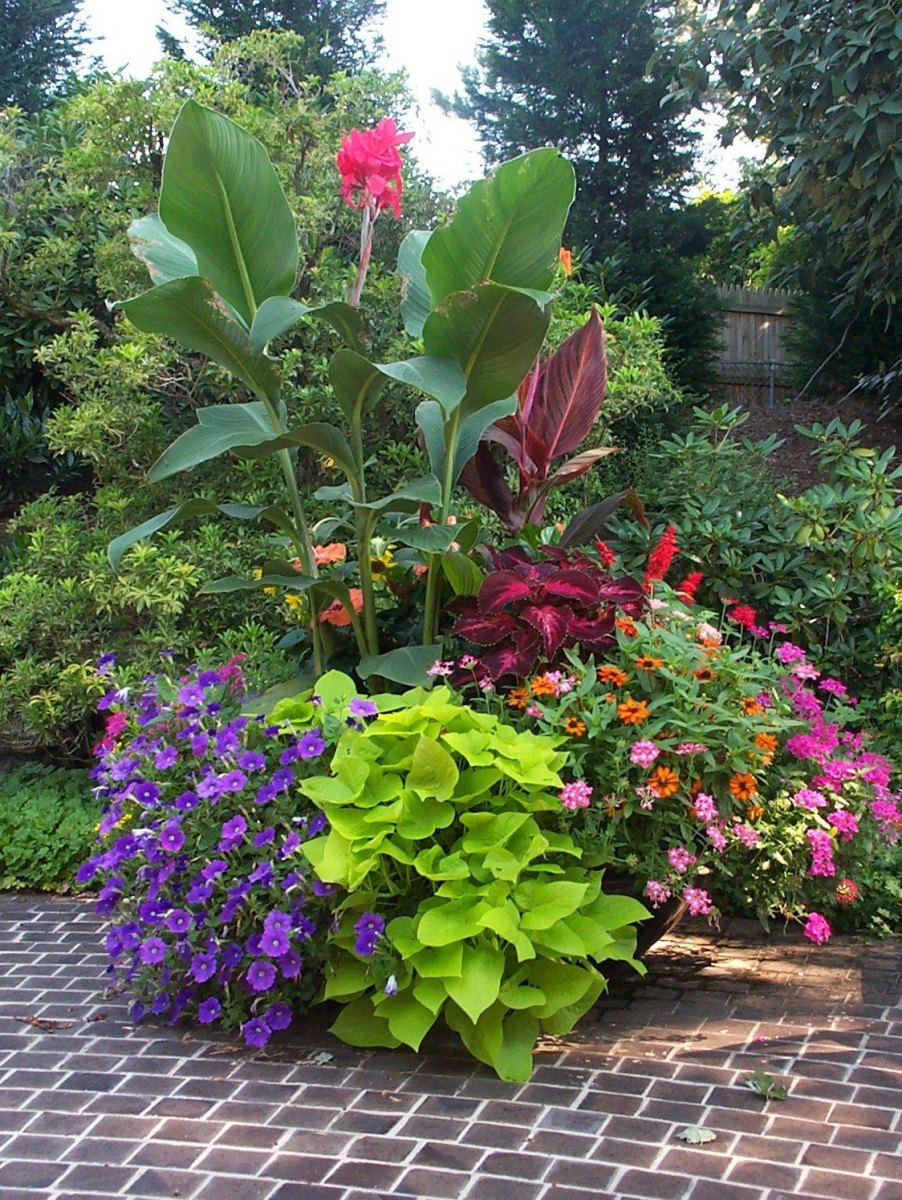
This mix gives me a tropical-looking container with contrasting leaf shapes. Cannas supply height and bold foliage, coleus adds patterned leaves in shades of burgundy, lime, and gold, and torenia provides smaller flowers near the rim. I would use the canna as the focal point and keep the shorter plants around its base.
A 20-gallon or larger container is a reasonable starting point for a canna-led arrangement, with extra space for larger cultivars. The plants need compatible light and moisture conditions, and the container should be heavy enough to stay upright in wind. I would check the canna's mature height and spread before choosing the pot. In Boise, I would also wait until frost danger has passed before moving tender tropical plants outdoors, then bring them into suitable protection before cold weather returns.
Million Bells, Euphorbia, and Geraniums
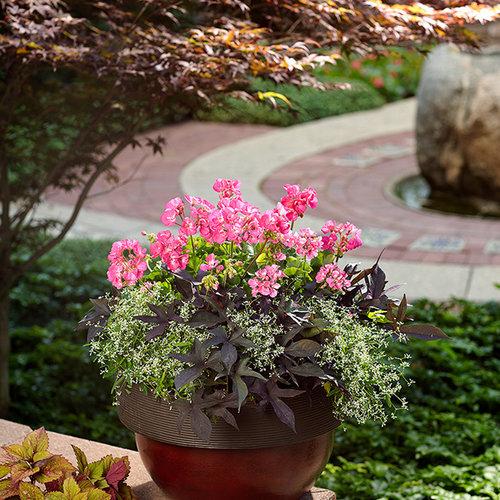
For a container that looks full without relying on one oversized bloom, I like million bells and their abundant small flowers. Geraniums create the main color blocks, while airy euphorbia flowers lighten the arrangement and prevent it from looking too dense. Magenta, pink, and white make an easy palette for a sunny entrance.
I would start with a 15- to 20-gallon container, good drainage, and a position with enough sun for the selected varieties. Million bells perform best in fertile, well-drained soil and benefit from regular feeding in pots. I would check moisture frequently during hot weather and trim any plant that starts shading out its companions. Euphorbia species differ, and some produce irritating milky sap, so I would identify the exact plant and wear gloves when handling it if its label recommends precautions.
Tulips, Hyacinths, and Pansies
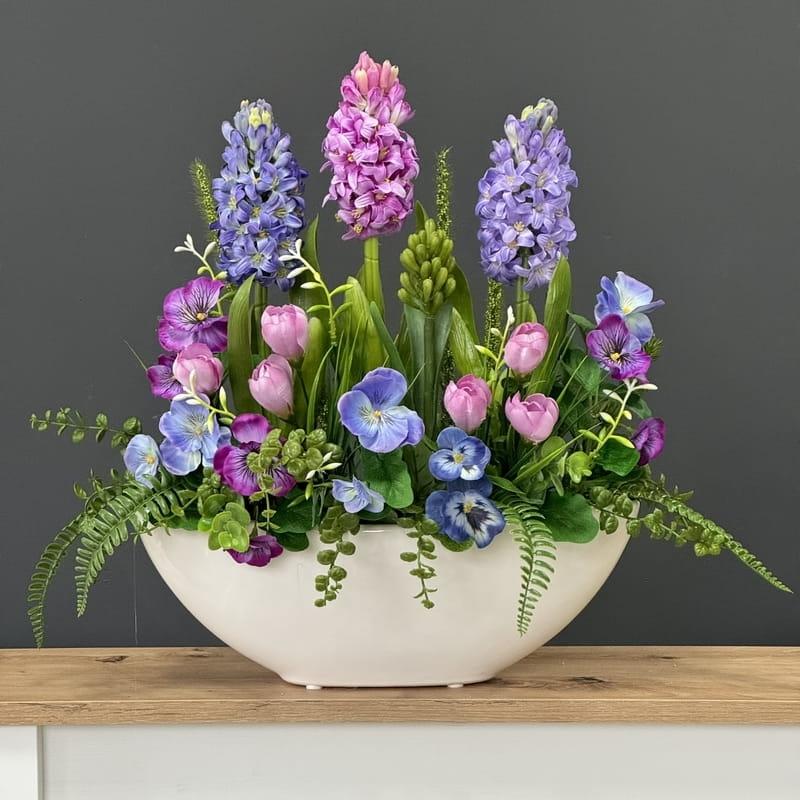
For a spring display, I would combine upright tulips with fragrant hyacinths and low-growing pansies. Tulips give the pot height, hyacinths add dense flower spikes, and pansies fill the visible soil surface with color. Pink tulips above purple hyacinths and yellow-purple pansies create a layered arrangement that looks good from the doorstep.
I would use a 15-gallon container or larger with drainage holes and follow the bulb supplier's instructions for planting depth and chilling requirements. Bulb timing depends on climate and variety, so I would not treat Boise's calendar as universal. Iowa State University Extension notes that spring-flowering bulbs and pansies can work well in cool-season containers in its [guide to cool-season annuals](https://yardandgarden.extension.iastate.edu/how-to/growing-cool-season-annuals). Keep the mix moist without saturating it, and remember that tulip and hyacinth bulbs can be toxic if eaten.
More Pinterest Visuals



 Balcony & Patio GardensSmall Space Garden Ideas That Make Every Inch Count
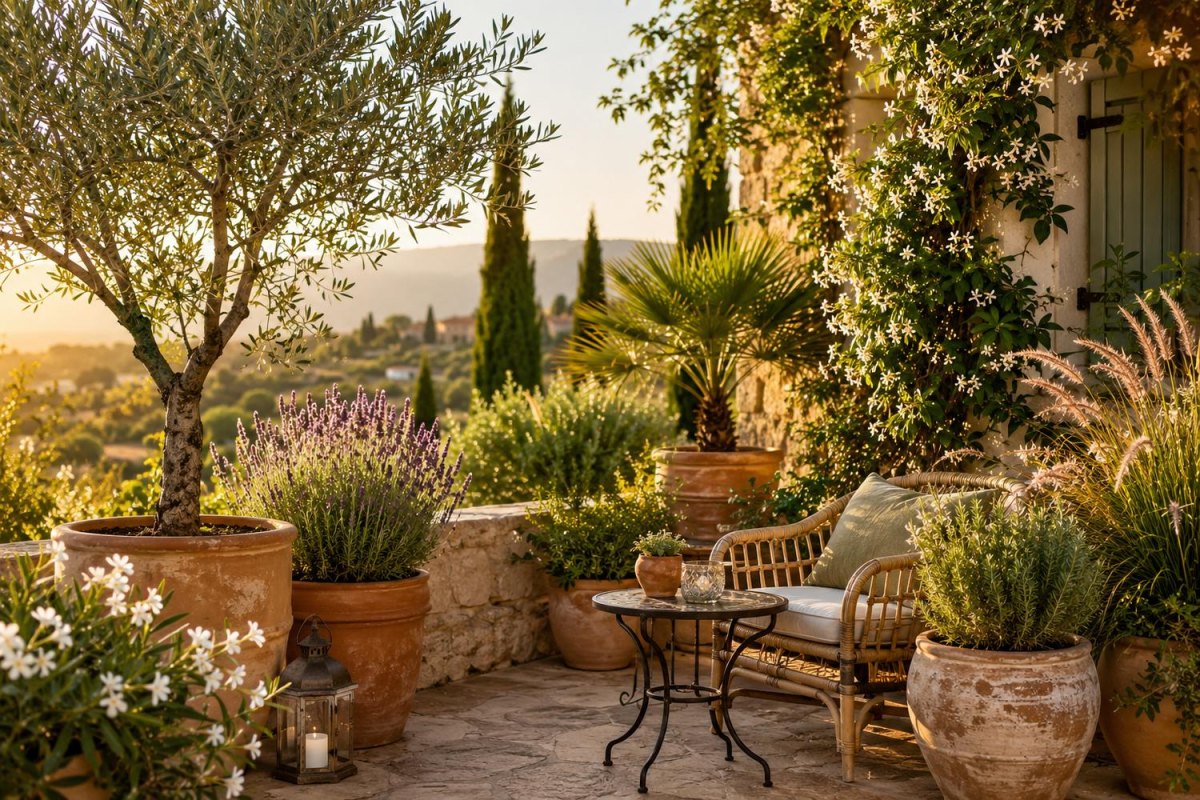 Balcony & Patio GardensKübelpflanzen für die Terrasse – 15 Ideen für ein grünes und blühendes Outdoor-Paradies
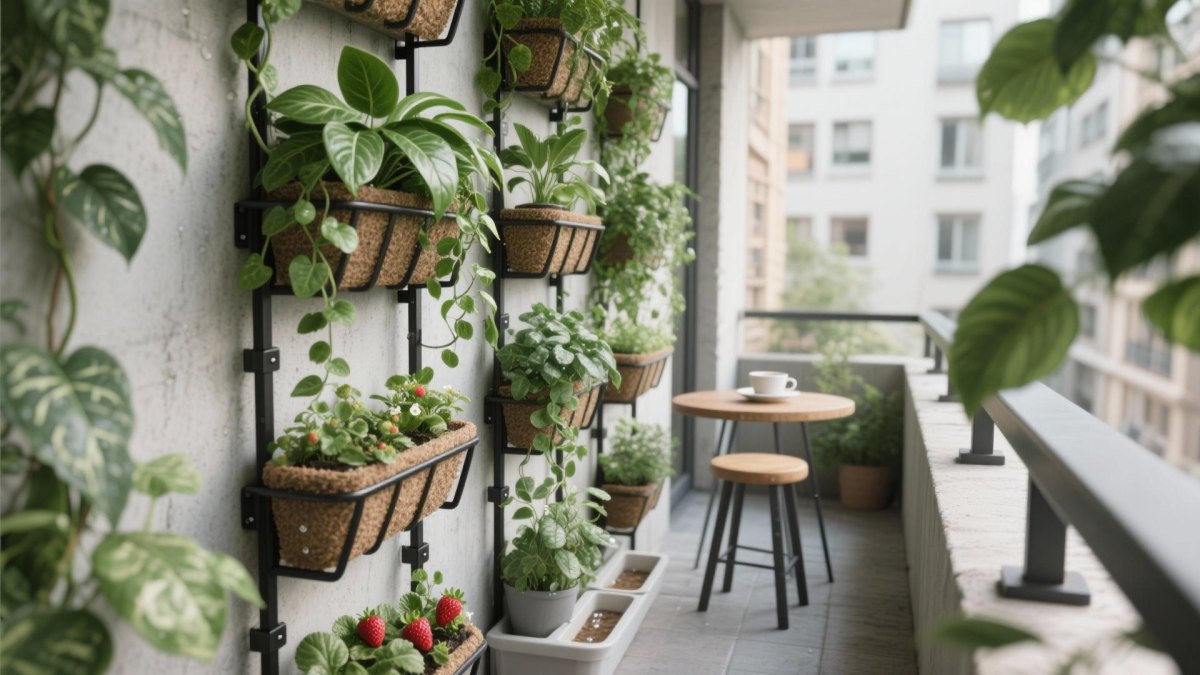 Balcony & Patio Gardens20 Balcony Garden Setup Ideas To Transform Your Outdoor
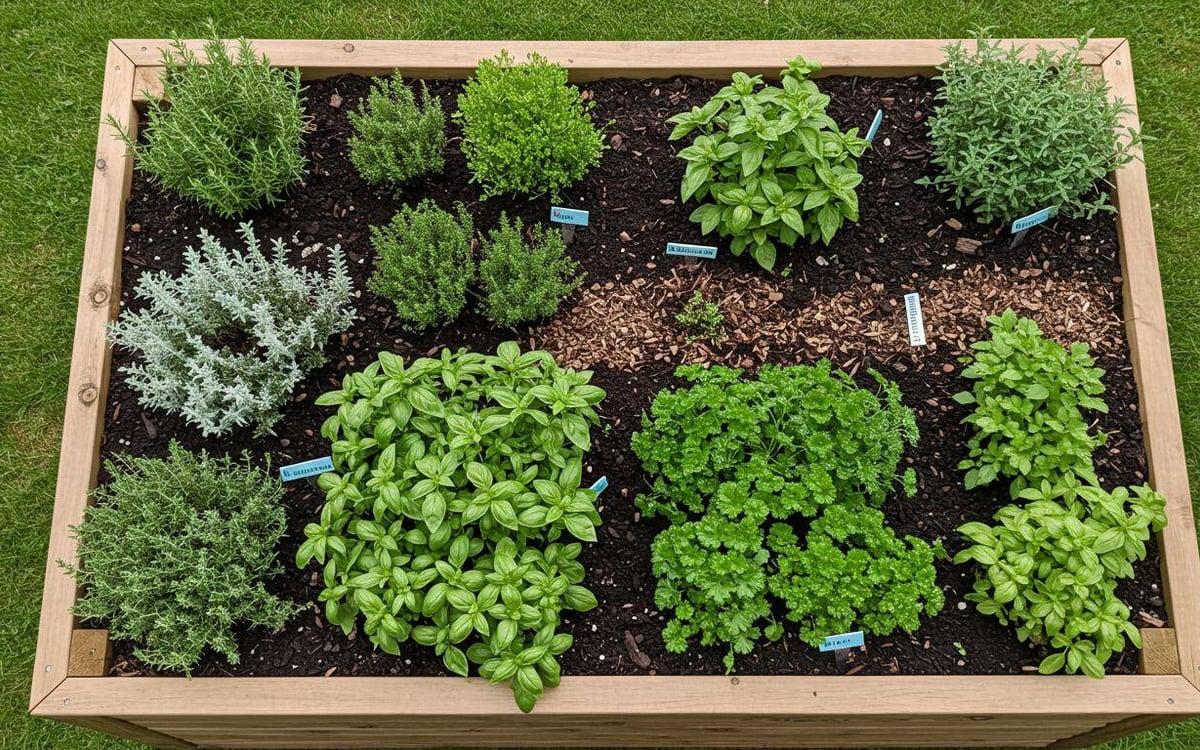 Raised Bed Gardening15 Raised Bed Herb Garden Design Ideas for a Productive Home Garden