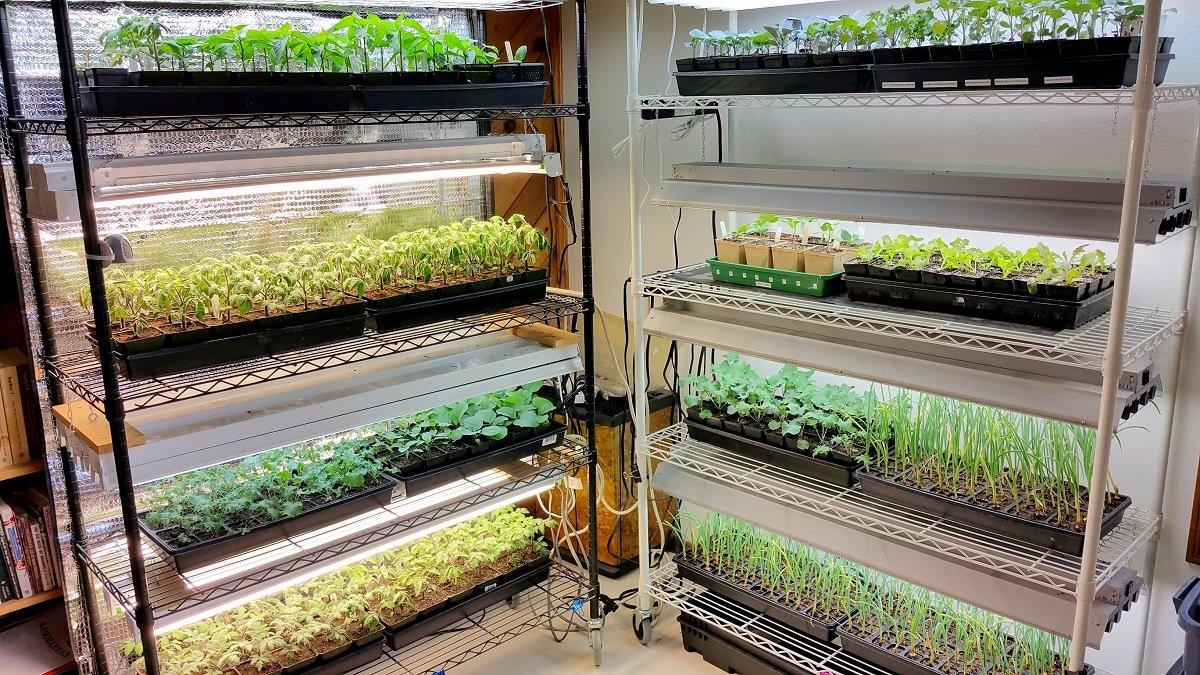
I started making folded toilet paper roll seed starter pots because I wanted fewer plastic trays cluttering my basement grow-light shelves. In my Boise, Idaho zone 7a garden, with dry air, alkaline soil, and only about eleven inches of annual rain, I count backward from my own frost dates rather than copying a calendar. These little cardboard pots are a practical option for starting the right crops at the right time.
Quick summary
- Use clean cardboard rolls and a lightweight seed-starting mix.
- Fold the bottom securely, but keep drainage in mind.
- Transplant based on seedling size and your local frost date.
Choosing the Right Toilet Paper Rolls for Seed Starters
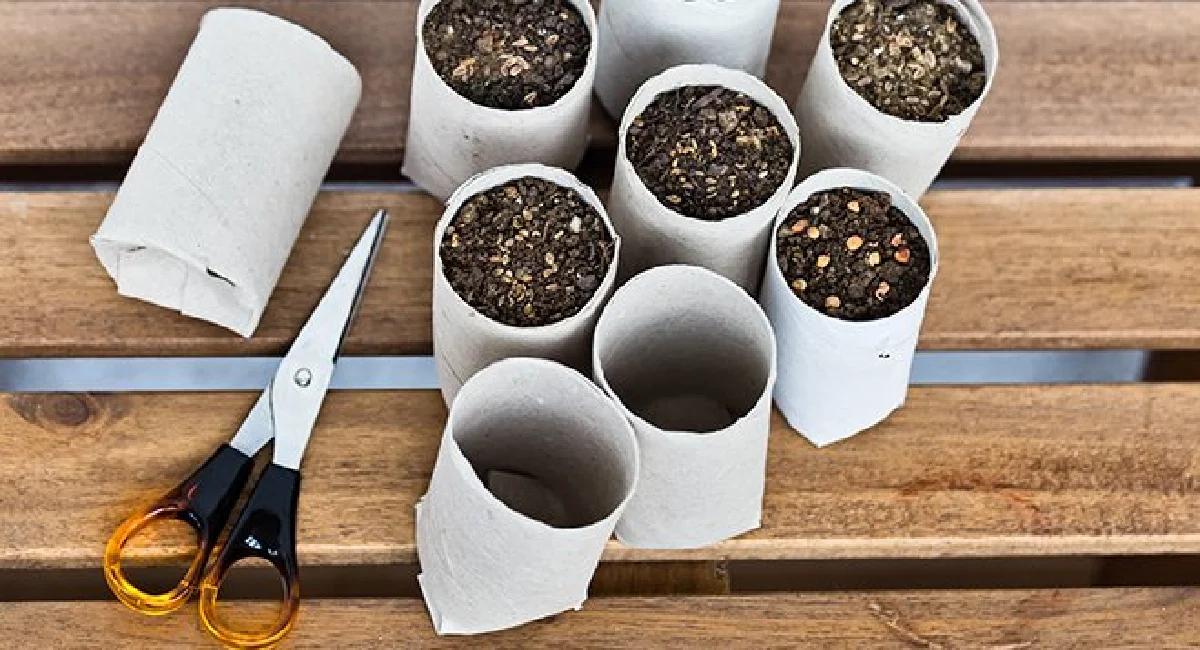
I save plain, sturdy cardboard rolls for this project and skip anything scented or heavily coated. After years of seed starting, I have found the best roll choice is simply a clean tube that can hold moisture for a few weeks without collapsing.
My basement seed setup is small, so I value tools that earn their shelf space. These pots cost almost nothing, and they work well for crops that do not need a long indoor growing period. I record the sowing date in my notebook because timing matters more than the container itself.
Folding the Bottom of the Roll into a Plantable Pot
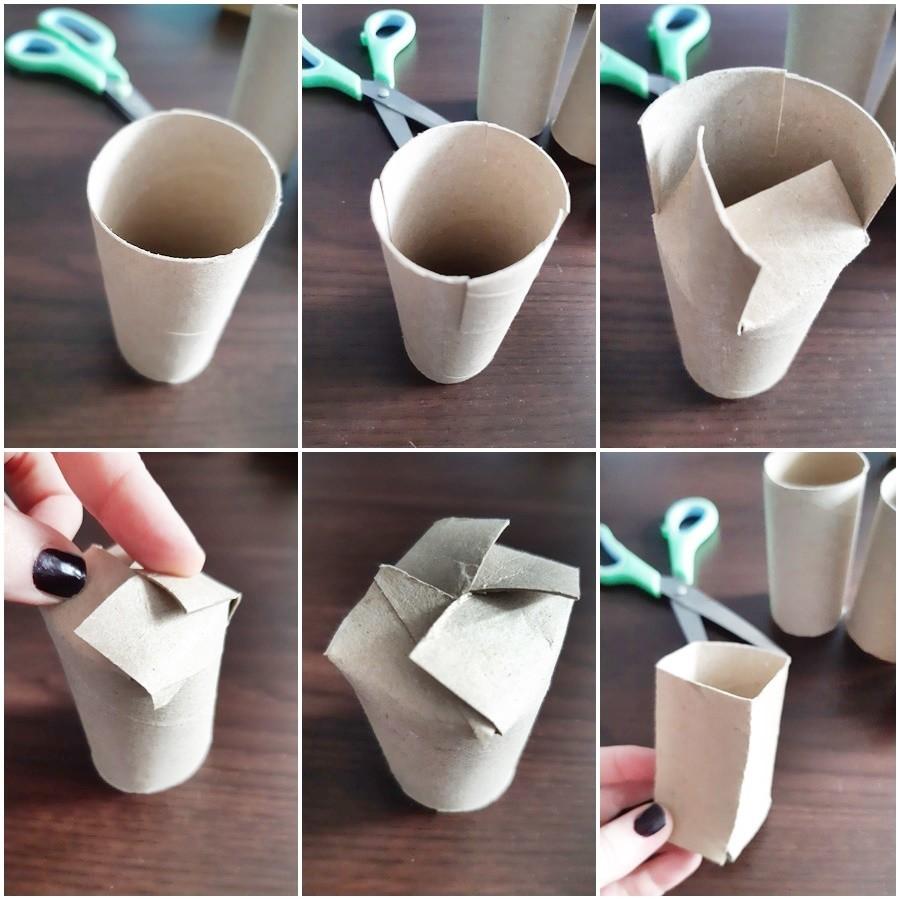
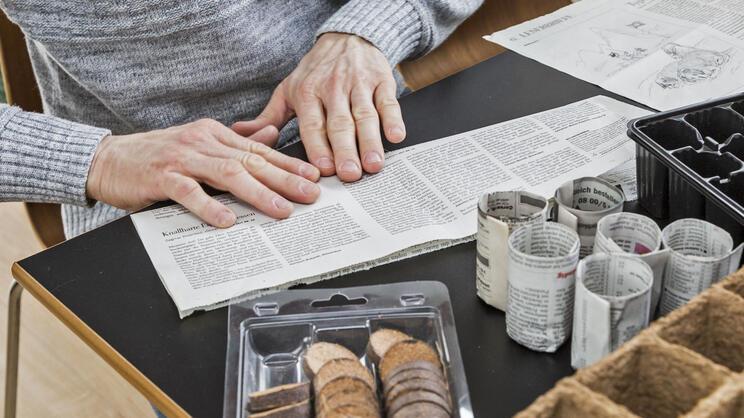
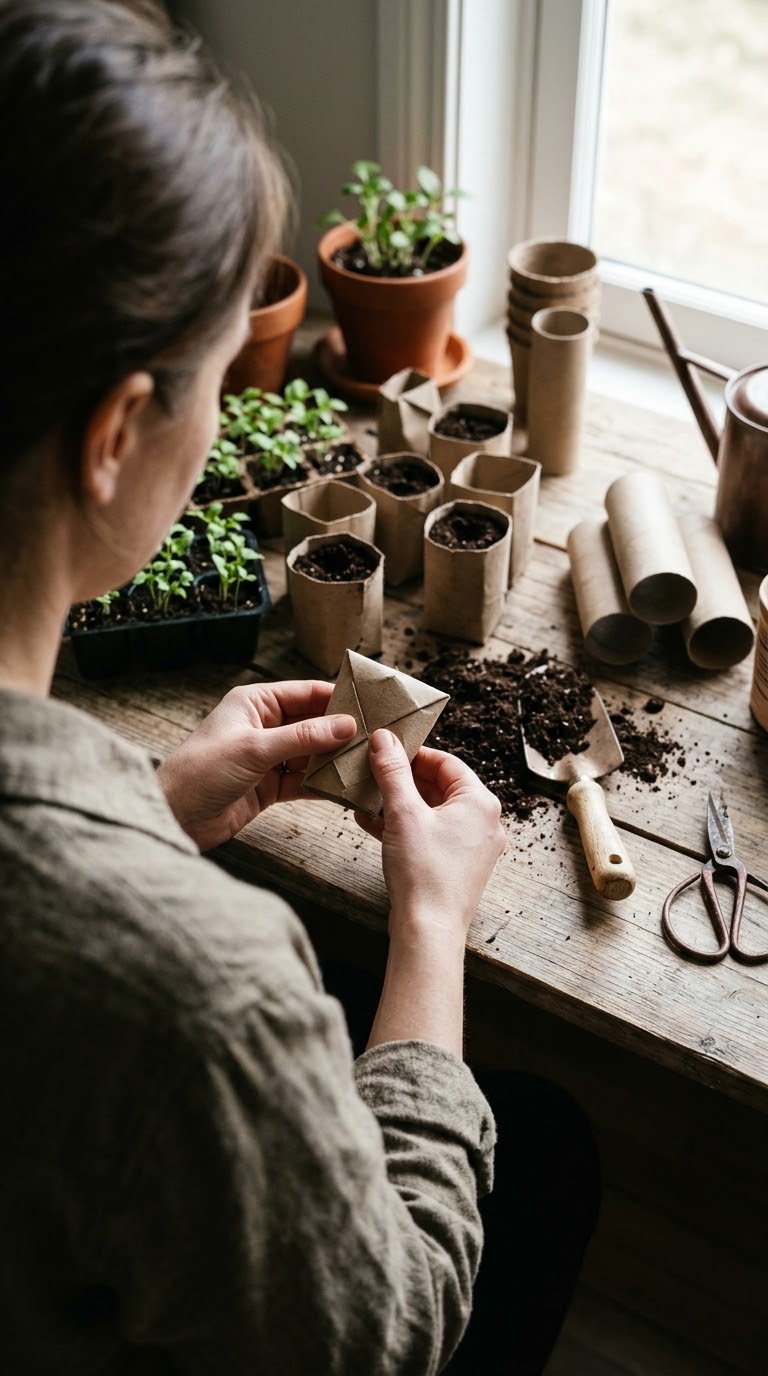
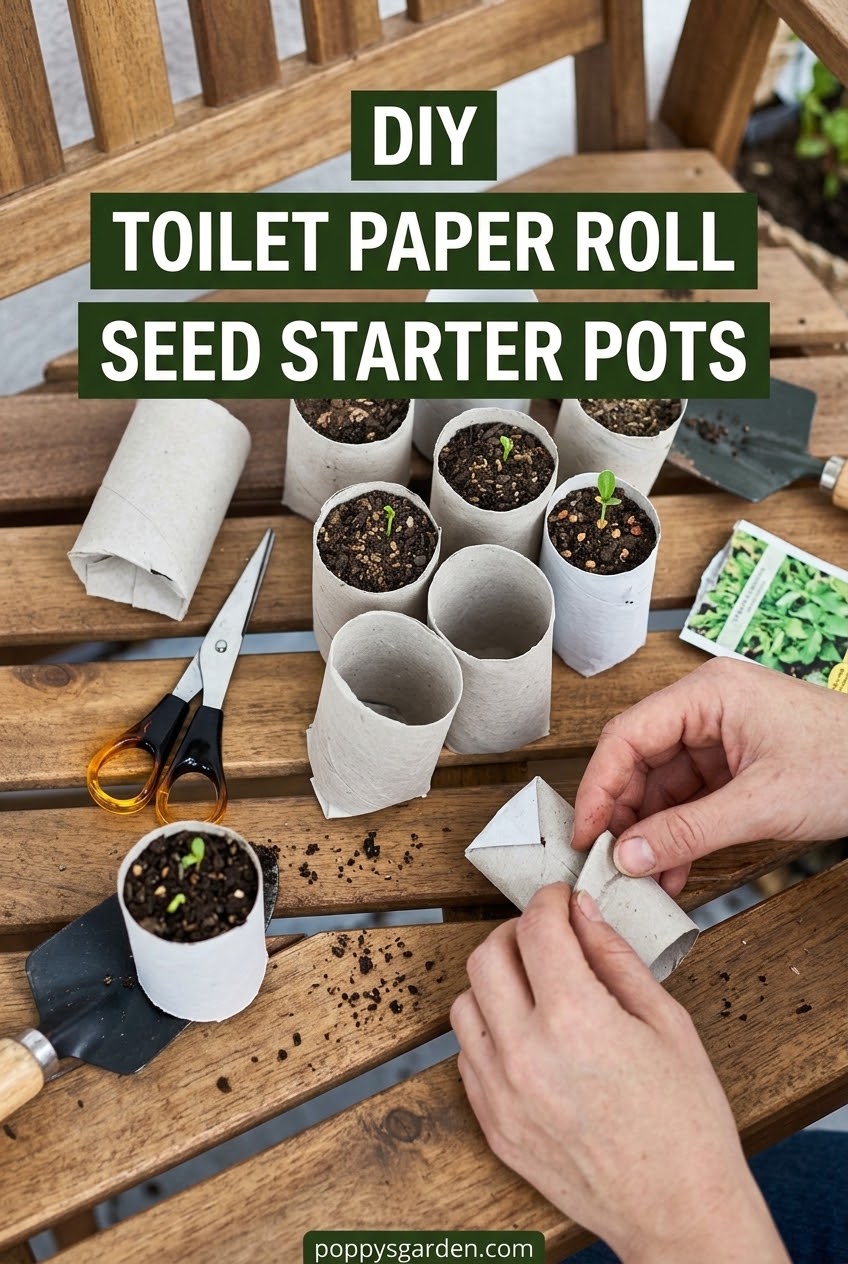
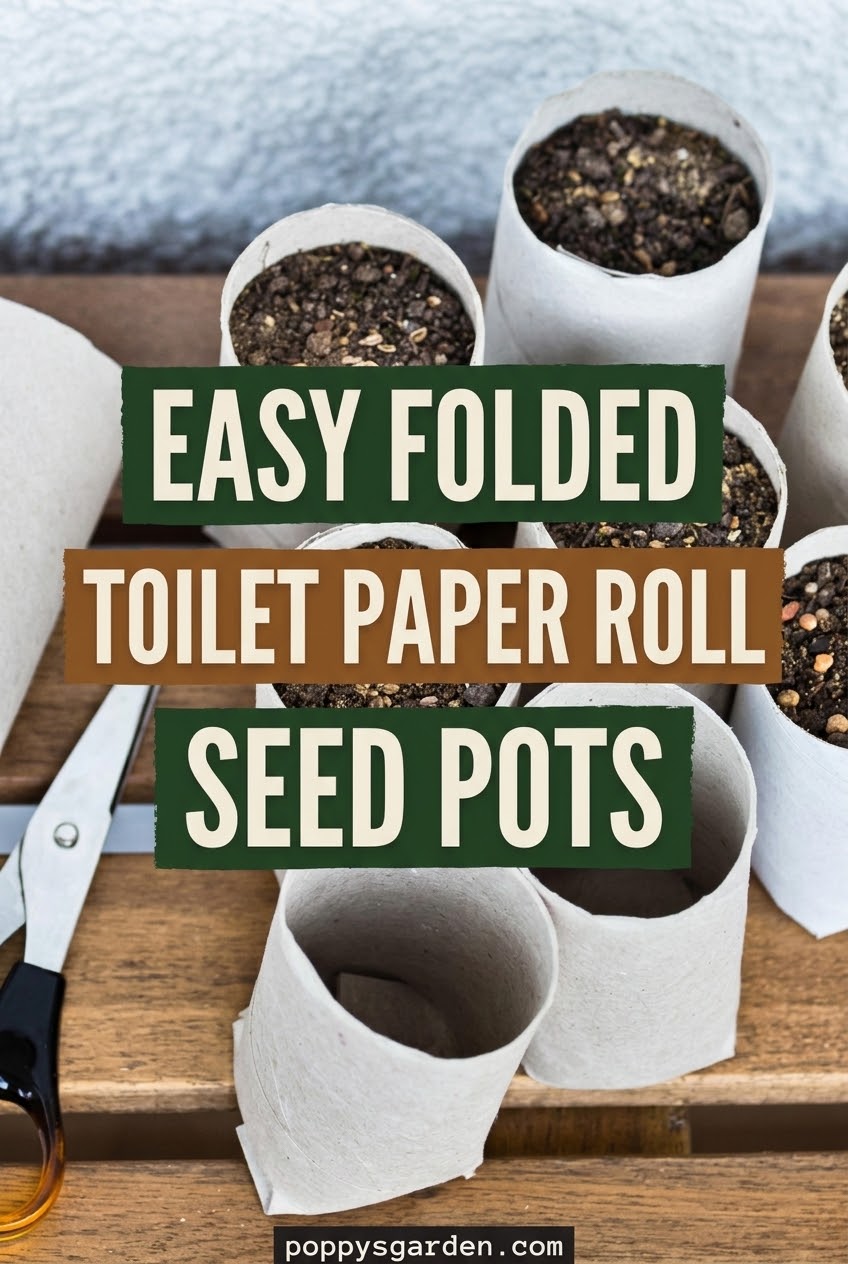
I flatten each roll first, then make four small cuts on one end and fold the flaps inward like closing a cardboard box. The finished base does not need to look perfect; it only needs to hold seed starting mix securely until roots are ready for transplanting.
My tip
Set the finished rolls in a tray before filling them. The tray supports the cardboard when watering.
Filling Folded Toilet Paper Roll Pots with Soil and Seeds
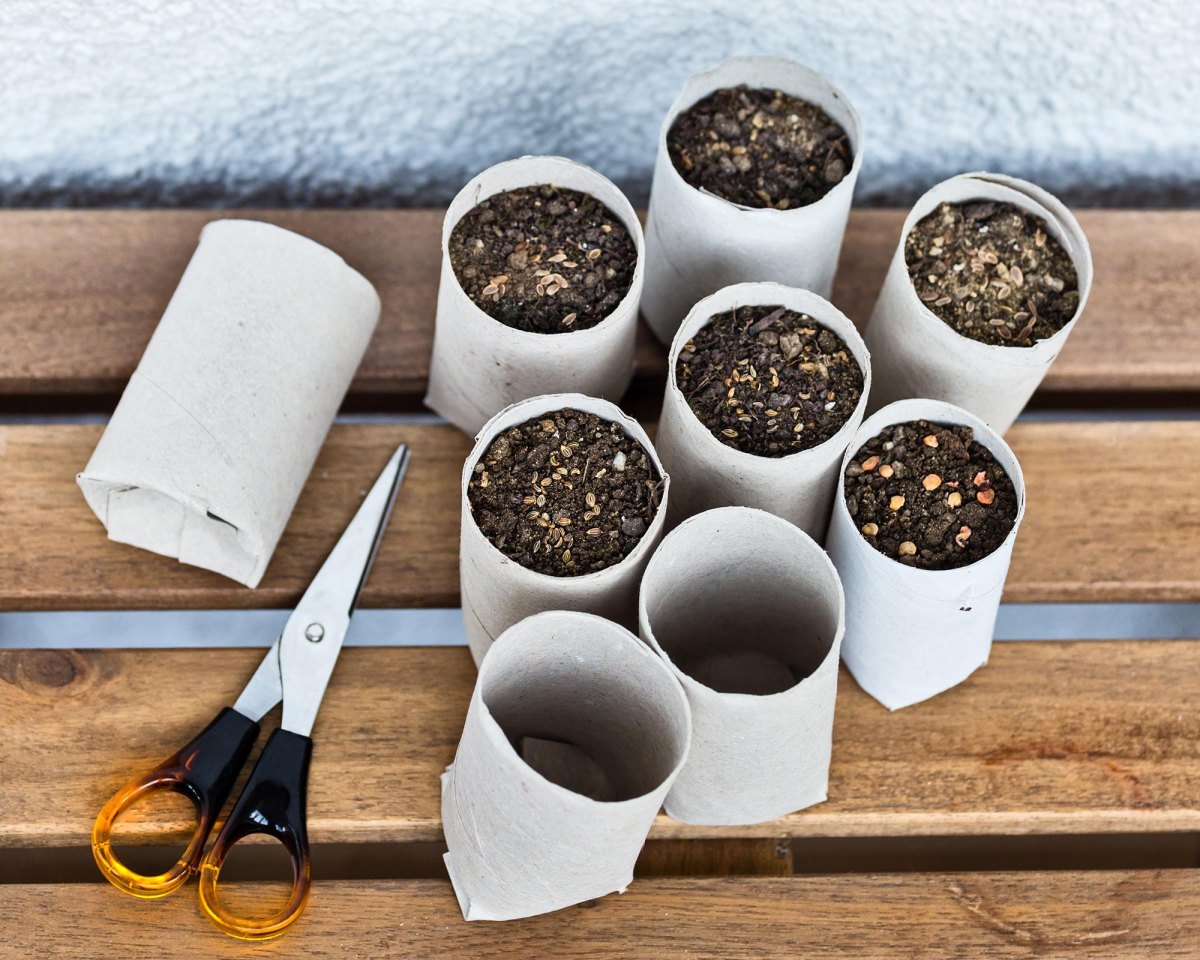
I use a lightweight seed-starting mix instead of scooping garden soil from my beds. My high-desert soil is great after years of compost work, but it is too dense for tiny seedlings. A loose mix gives small roots room to develop.
| Item | What I use |
|---|---|
| Pot | Folded cardboard roll |
| Growing medium | Seed-starting mix |
| Label | Crop name and sowing date |
I fill the roll nearly to the top, sow according to the seed packet, and keep the surface evenly moist. I avoid guessing because my garden notes tell me what actually sprouted well.
Caring for Seedlings Growing in Cardboard Roll Pots
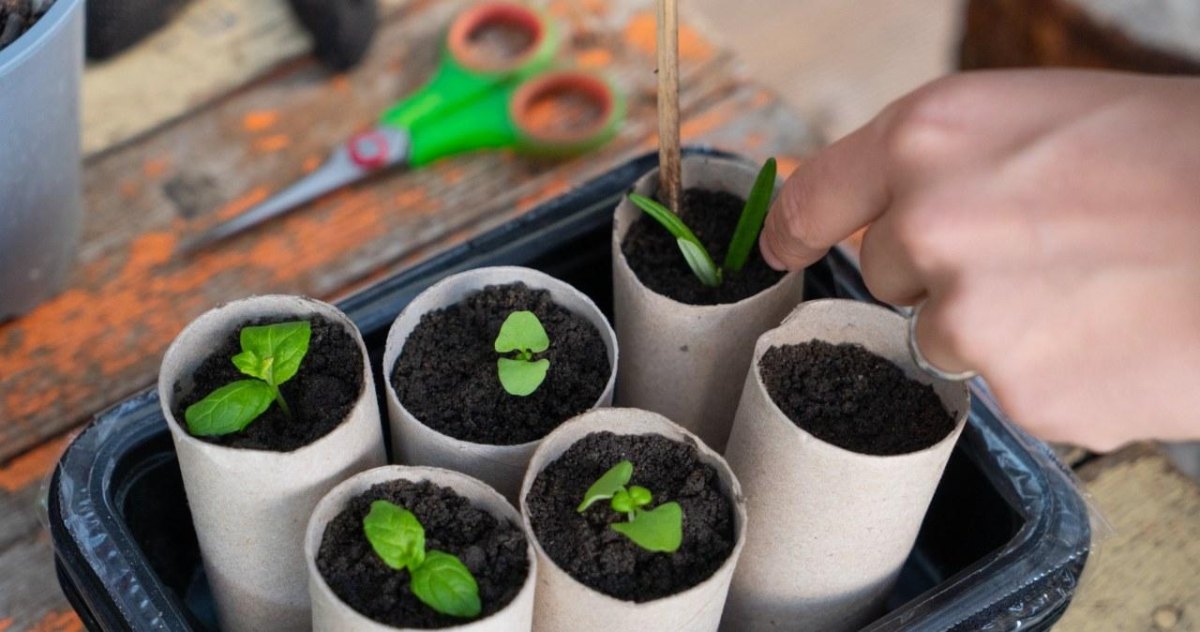
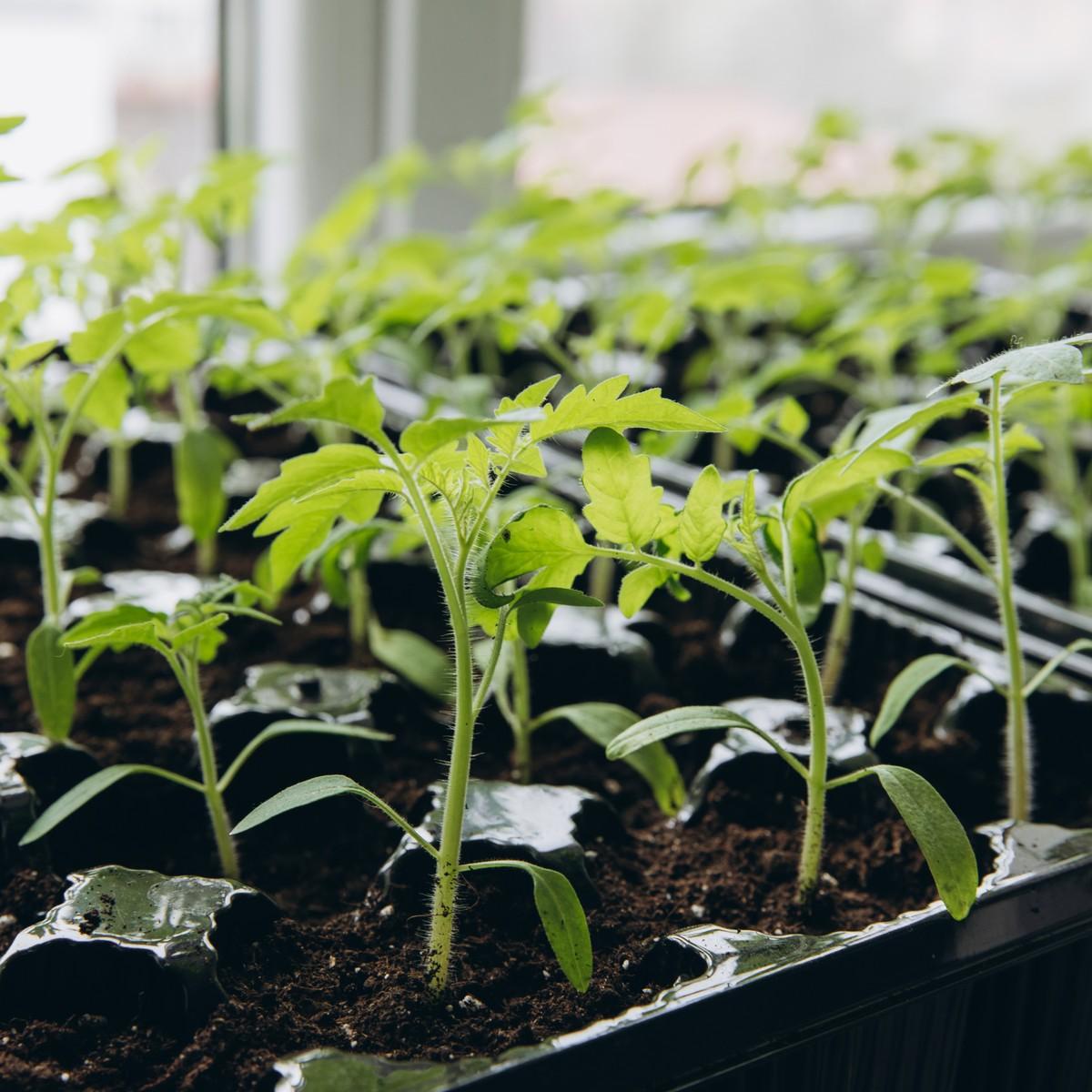
Cardboard pots are forgiving, but seedlings still need the basics: strong light, consistent moisture, and airflow. My biggest seed-starting failures have come from ignoring conditions, not from using recycled containers. Good light prevents weak, stretched seedlings.
Why I like them
- They reuse household materials.
- They simplify transplanting.
What to watch
- Cardboard can soften after weeks of watering.
- Small pots dry faster than larger containers.
Watch for this
Do not leave seedlings sitting in soggy trays. Excess moisture can encourage problems like damping off.
Transplanting Folded Toilet Paper Roll Seedlings into the Garden
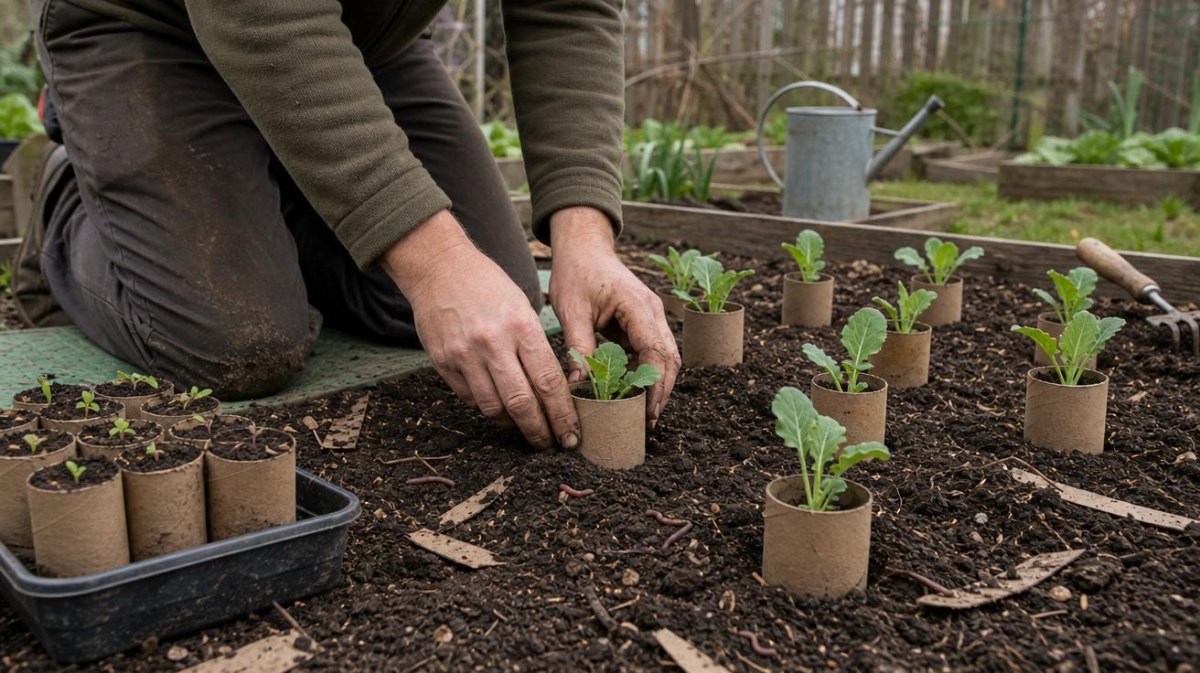
I transplant based on plant size and my actual last frost date, not a generic April reminder. Boise’s spring weather can still surprise me, so I harden plants off before they meet the wind and temperature swings outside. Local frost dates matter more than any universal schedule.
For crops that dislike root disturbance, I can plant the cardboard pot along with the seedling and let it break down. I still make sure the cardboard is not blocking new roots because healthy roots decide whether a transplant succeeds.
15 years
of garden notes guiding my seed-starting decisions
More Pinterest Visuals



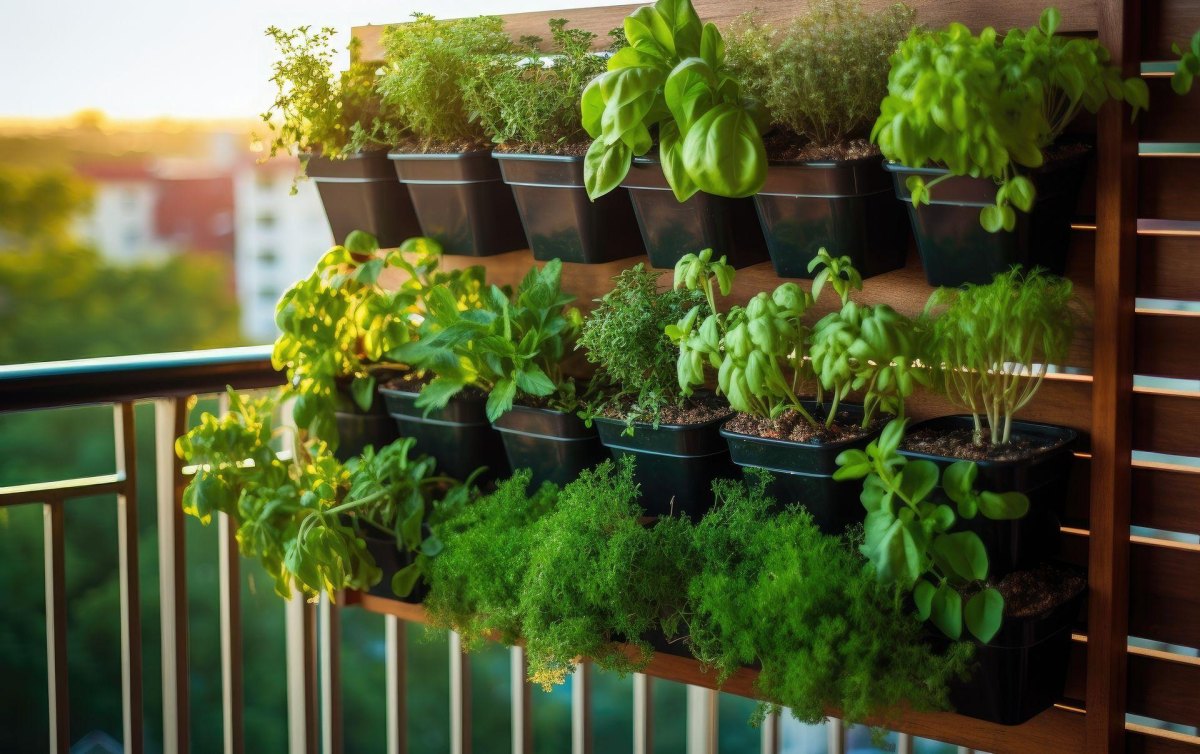 Balcony & Patio GardensSmall Space Garden Ideas That Make Every Inch Count
 Balcony & Patio GardensKübelpflanzen für die Terrasse – 15 Ideen für ein grünes und blühendes Outdoor-Paradies
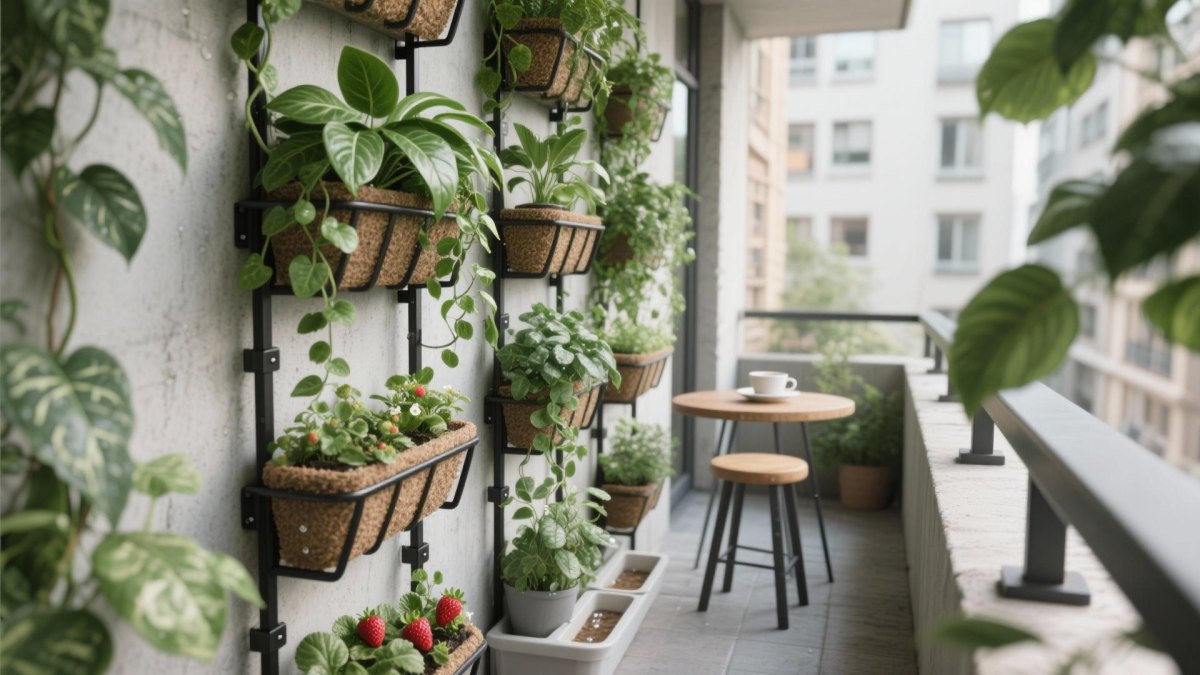 Balcony & Patio Gardens20 Balcony Garden Setup Ideas To Transform Your Outdoor
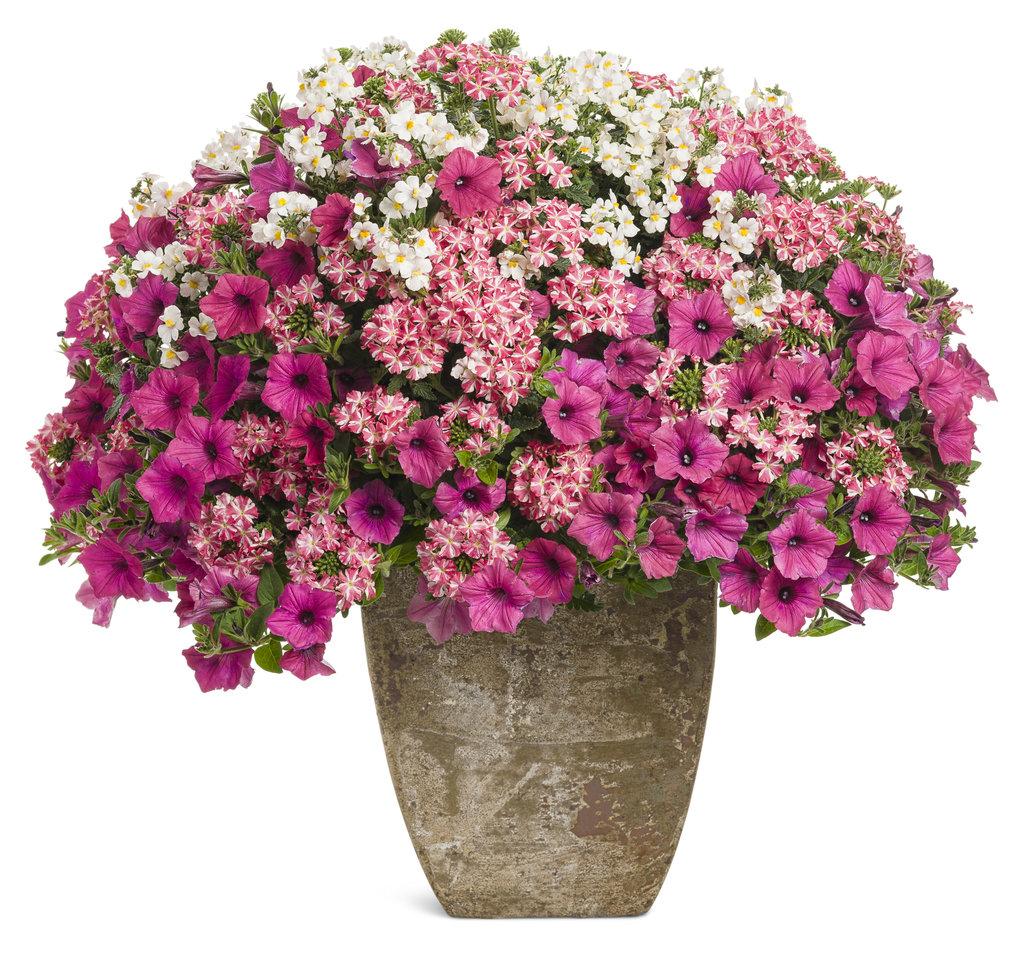 Seasonal & Flower Containers16 Beautiful Container Garden Flower Combinations That Work