

A balcony garden can be a miniature kitchen garden, a leafy retreat, a flower-filled sanctuary, or an outdoor living room with just enough greenery to soften the edges of city life. I love the most successful designs for one simple reason: they make the space work harder without making it feel crowded. These 20 balcony garden setup ideas explore distinct styles, from clever vertical planting to Mediterranean pots and contemporary container gardens, with practical ways to adapt each look to your own home.
A Vertical Garden That Turns Bare Walls Into Living Greenery
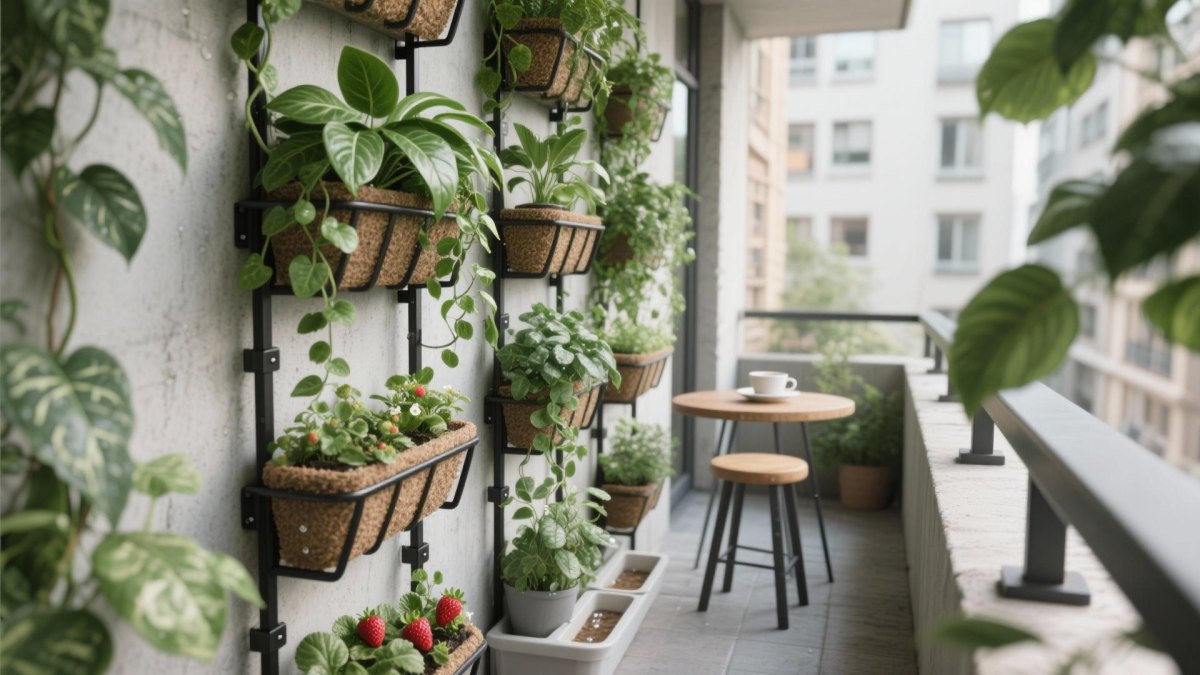
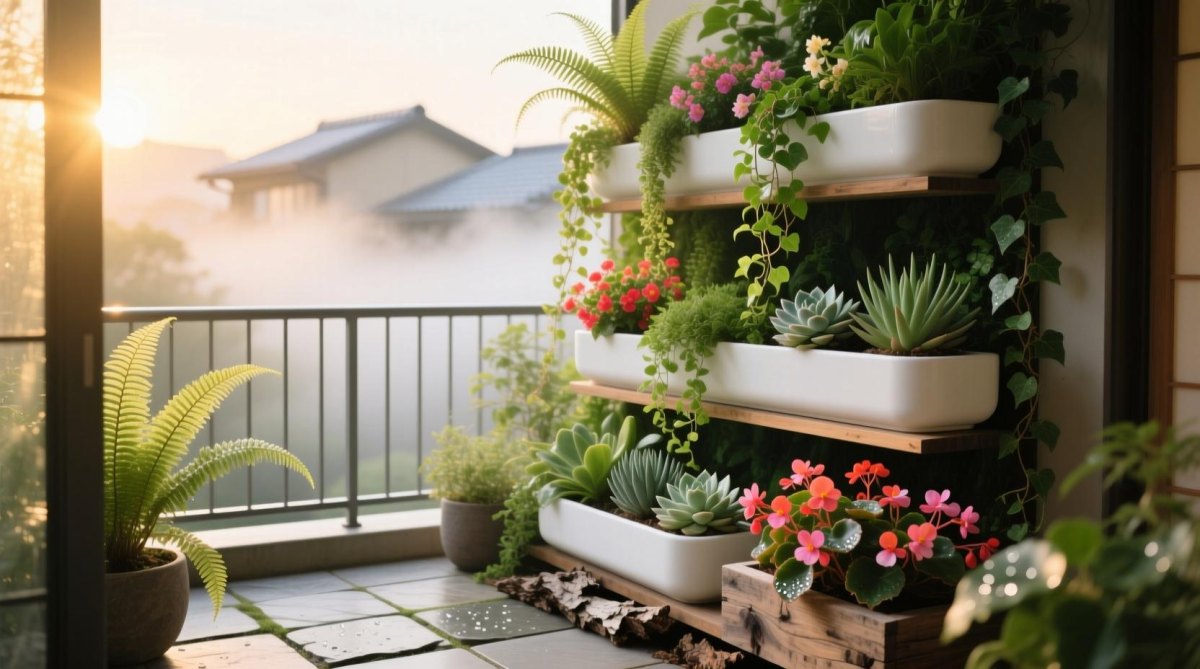
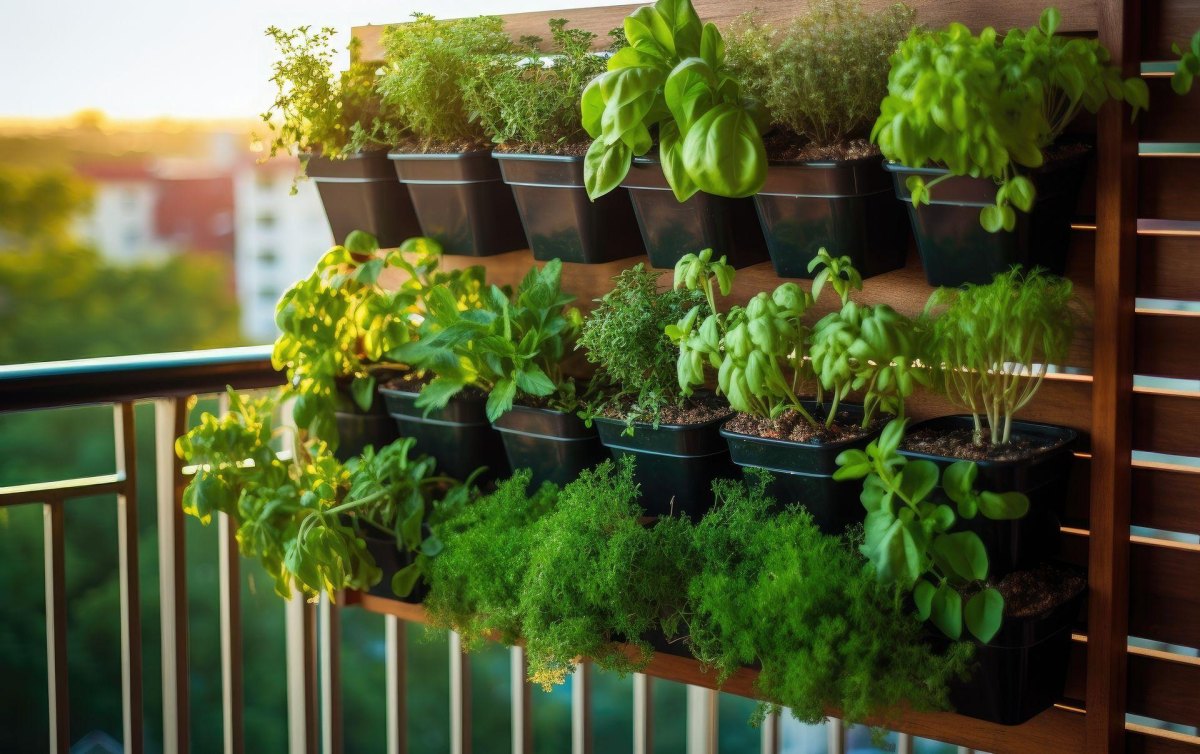
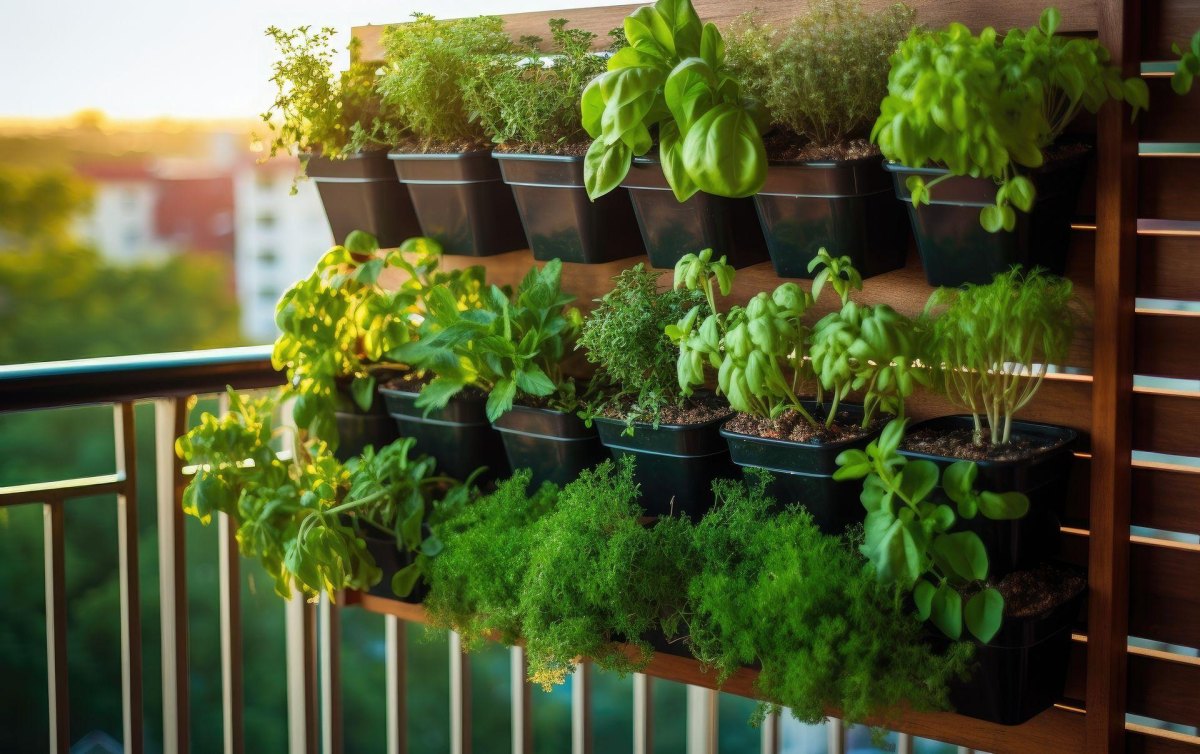
When floor space is precious, I look upward first. A vertical balcony garden uses wall-mounted baskets and compact planters to create a layered tapestry of foliage without sacrificing the walkway or a place to sit. The arrangement works especially well for narrow urban balconies, where every square foot needs a purpose.
The secret is variation. Mix trailing plants that soften the edges, upright foliage plants that provide structure, and a few edible crops for a garden that looks beautiful and earns its keep. Repeating the same planter style keeps the display cohesive, while differences in leaf shape and size add movement.
- For greenery: Try pothos or heartleaf philodendron where their light and temperature needs can be met.
- For food: Use suitable wall-mounted containers for compact herbs or shallow-rooted leafy greens.
- For structure: Choose a sturdy modular rack or professionally secured wall brackets.
Before mounting anything, confirm that the wall can support the combined weight of containers, wet soil, and mature plants. Use containers with drainage and protect the wall from persistent moisture. Watering is easier when the uppermost planters are accessible rather than stacked beyond reach.
To finish the look, introduce a tiny café table and one comfortable chair. The result is a garden that feels generous without asking the floor to do all the work.
A Narrow Balcony Garden With Built-In Wooden Planters
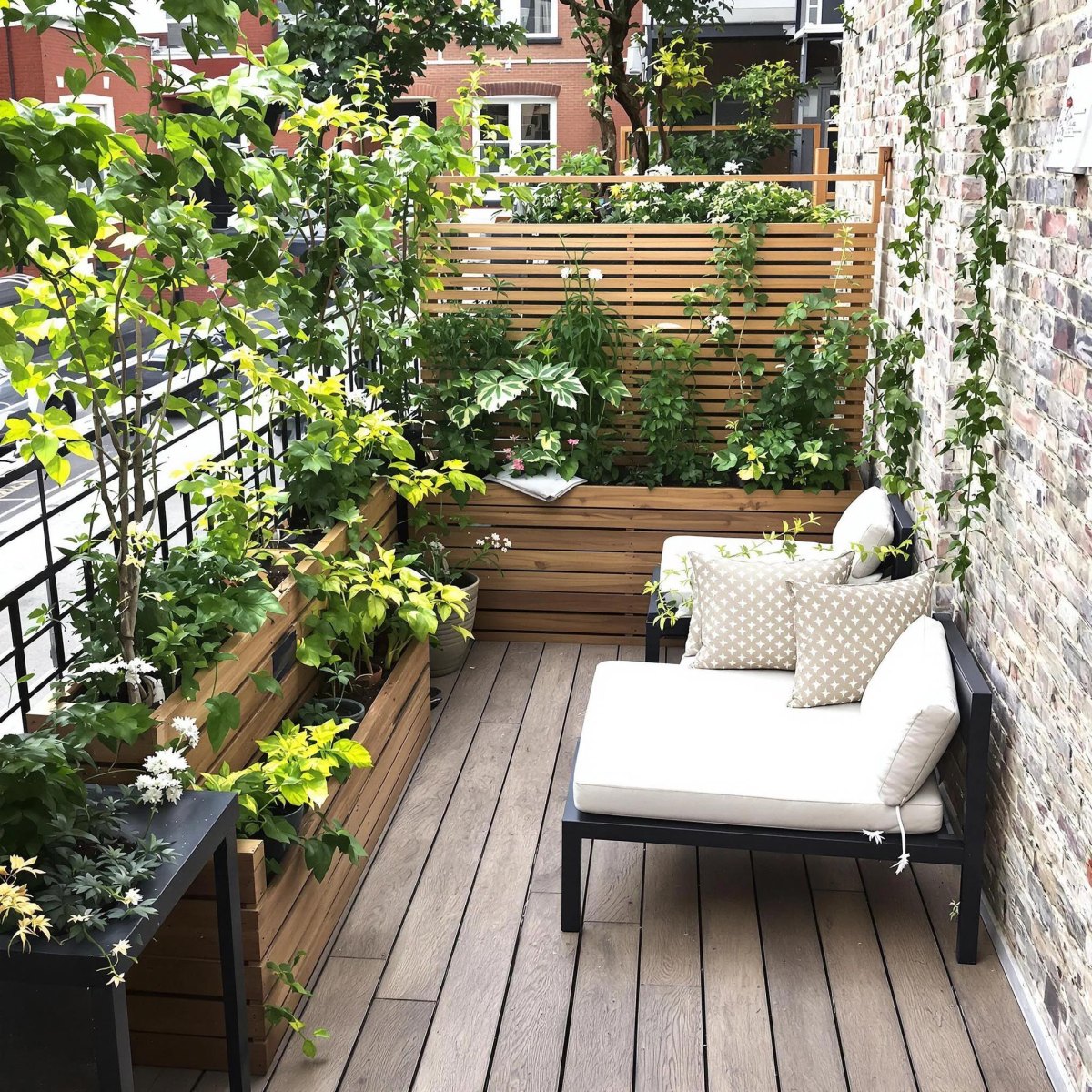
This design makes a narrow balcony feel like an outdoor room by combining continuous wooden planters, a slatted privacy screen, and a compact seating area. Instead of scattering pots randomly, the garden follows the perimeter, creating a clear central route and a deliberate sense of enclosure.
The wooden elements are doing two jobs. They bring warmth to the hard architectural surfaces, while the horizontal slats create a calmer backdrop for varied foliage. The white seating provides contrast and makes the planting feel abundant rather than heavy.
To adapt this arrangement, measure the balcony before purchasing planters. Long, narrow troughs are often easier to accommodate than a collection of deep, round pots. Position taller plants at the far end or along an appropriate side boundary, leaving the most accessible section for seating. Keep the door, drain, and route to the railing unobstructed.
Choose plants by their mature size. Compact shrubs, ferns, climbing plants, and leafy perennials can provide different heights, but the right mix depends on the balcony's sun exposure and local climate. A privacy screen may also reduce airflow, so avoid overcrowding plants that need good ventilation.
For a polished finish, repeat one wood tone, one upholstery color, and two or three foliage textures. A simple palette gives this lush arrangement a tailored, architectural quality. If you rent, consider freestanding planters and a removable screen that can be secured safely without permanent alterations.
A Flower-Filled Balcony With Hanging Baskets
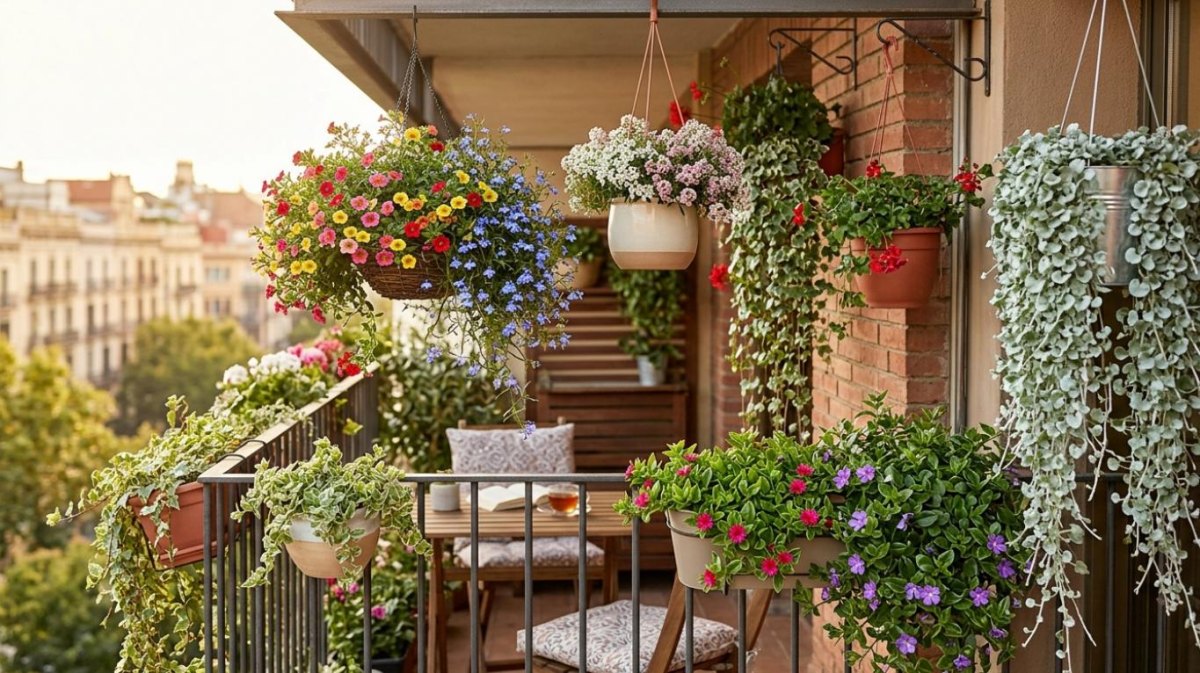
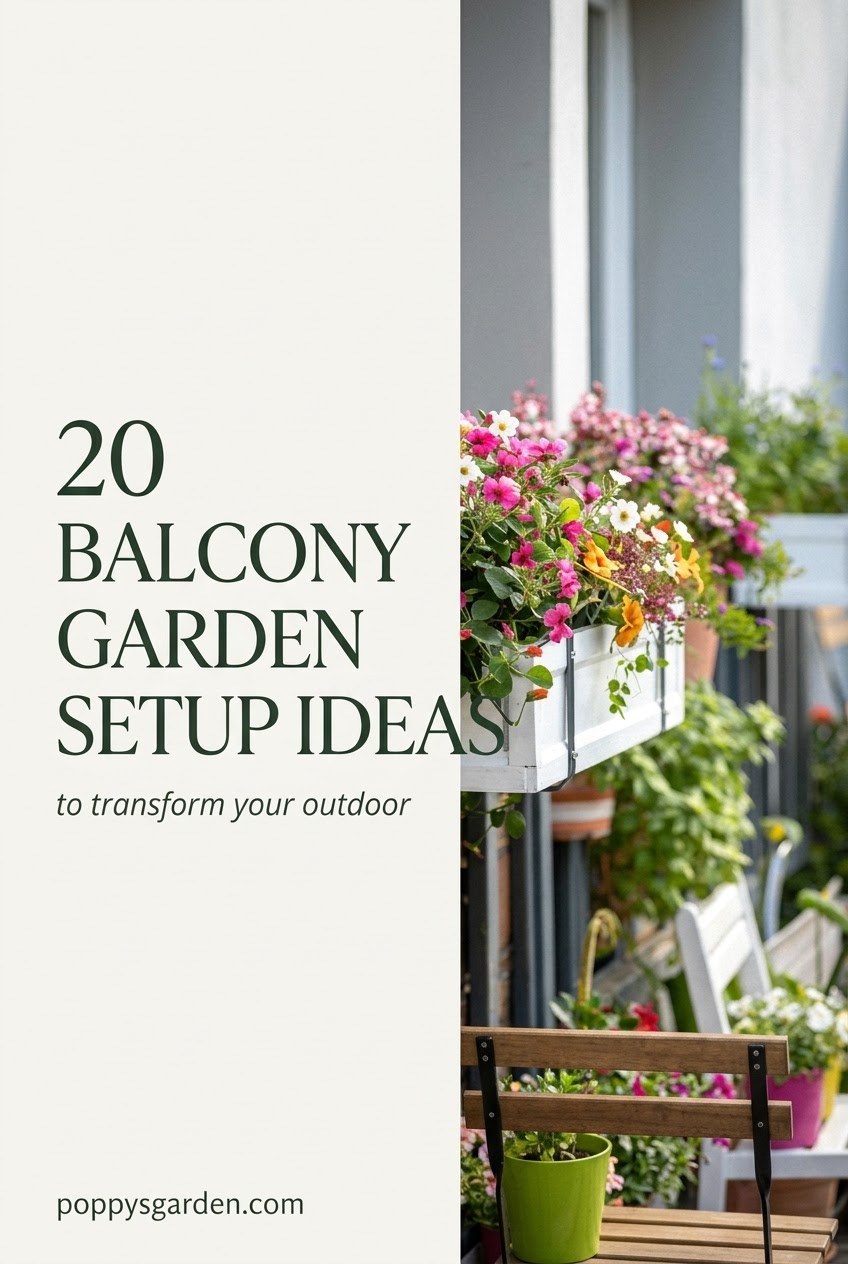
For a balcony that celebrates color, hanging baskets are hard to beat. This approach turns the railing and overhead supports into planting opportunities, with cascading blooms creating a soft, abundant border. It suits anyone who wants a cheerful garden without filling every inch of the floor with containers.
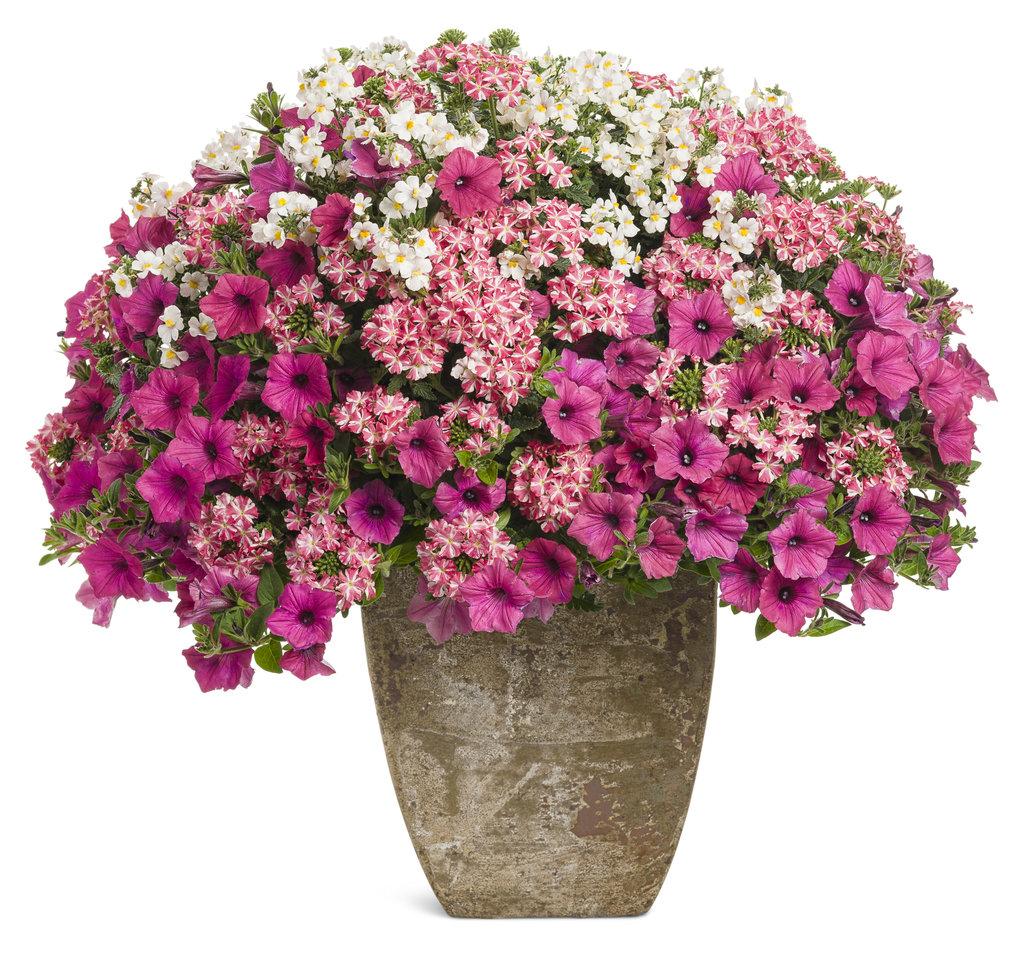
The most effective hanging displays combine color and shape. Trailing petunias, calibrachoa, lobelia, and other suitable flowering annuals can spill over basket edges, while upright flowers provide height. Choose varieties that suit your climate and the amount of direct sunlight the balcony receives. A sunny exposure calls for different plants from a shaded, sheltered corner.
For a harmonious result, choose a restrained color story: pink and white for a romantic look, purple and blue for a cooler palette, or red, yellow, and orange for a lively summer display. Repeating a few colors across several baskets looks more intentional than using every available shade.
Hanging containers need particular attention because they can dry out faster than larger floor pots. Use a suitable potting mix, maintain consistent moisture, and feed flowering plants according to their requirements. Remove spent blooms where appropriate to encourage continued flowering.
Safety comes first. Use purpose-made brackets or hanging systems rated for the expected load, including saturated growing medium. Never attach baskets to a railing or overhead structure that is not designed to carry them. Keep dripping water away from neighbors below, and place heavier containers where they can be watered without stretching over the railing.
A Compact Balcony Herb Garden on a Wooden Shelf
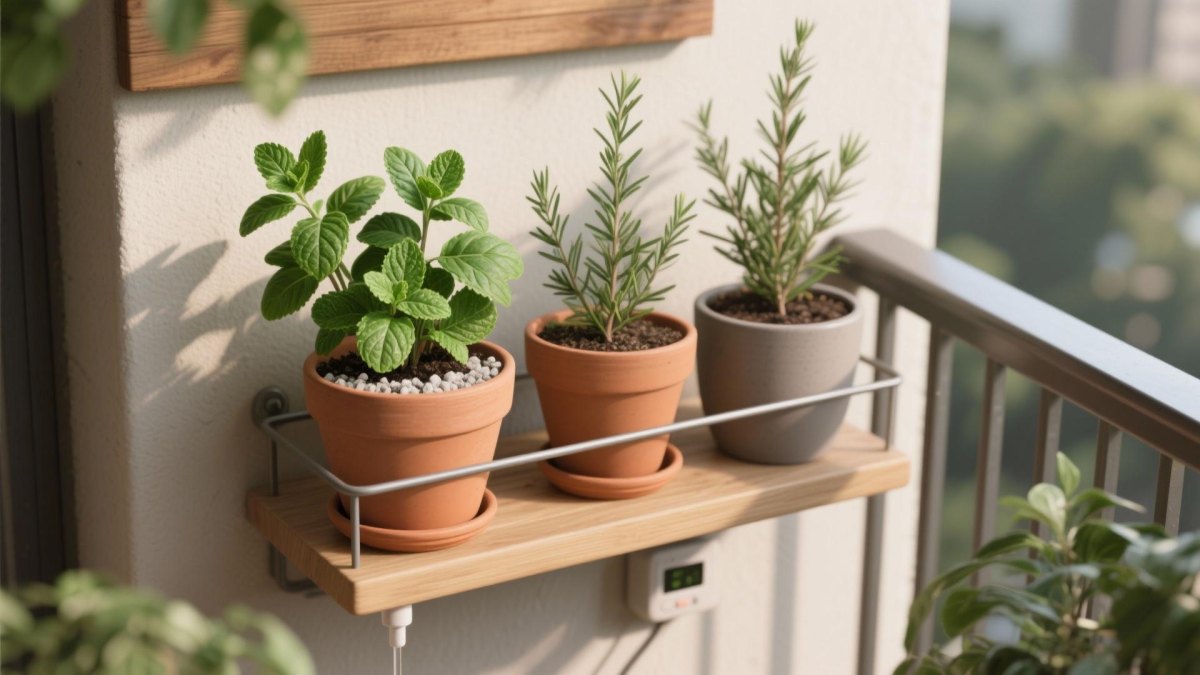
A dedicated herb shelf is one of the most practical balcony garden setup ideas for cooks who want fresh ingredients within easy reach. Three or four pots arranged on a narrow wooden ledge create a compact, useful display without turning the entire balcony into a growing area.
The combination of terracotta and neutral ceramic containers keeps the look simple and timeless. More importantly, individual pots let you tailor the soil, watering, and placement to each herb instead of forcing every plant into the same conditions.
Start with herbs you actually use. Mint is useful but spreads aggressively, so it is best kept in its own pot. Rosemary prefers a sunny position and well-drained soil, while basil generally appreciates warmth, sunlight, and more consistent moisture. Parsley can be a good choice where conditions are less intensely sunny.
Arrange the tallest herbs toward the back, leaving smaller pots at the front for easy harvesting. Check the shelf's weight capacity and secure it appropriately to the wall or balcony structure. A narrow retaining rail helps keep containers stable, but it should not obstruct drainage.
My favorite finishing touch is a small label on each pot. It adds a quiet, organized quality and makes harvesting straightforward for everyone in the household. Keep a pair of clean scissors nearby and pinch or harvest herbs regularly according to each plant's growth habits.
One useful rule: do not water every herb on a fixed schedule simply because the pots sit together. Check the growing medium and the individual plant's needs. A tidy shelf becomes genuinely rewarding when its arrangement reflects how the plants grow as well as how they look.
A Romantic Balcony Garden Bursting With Color
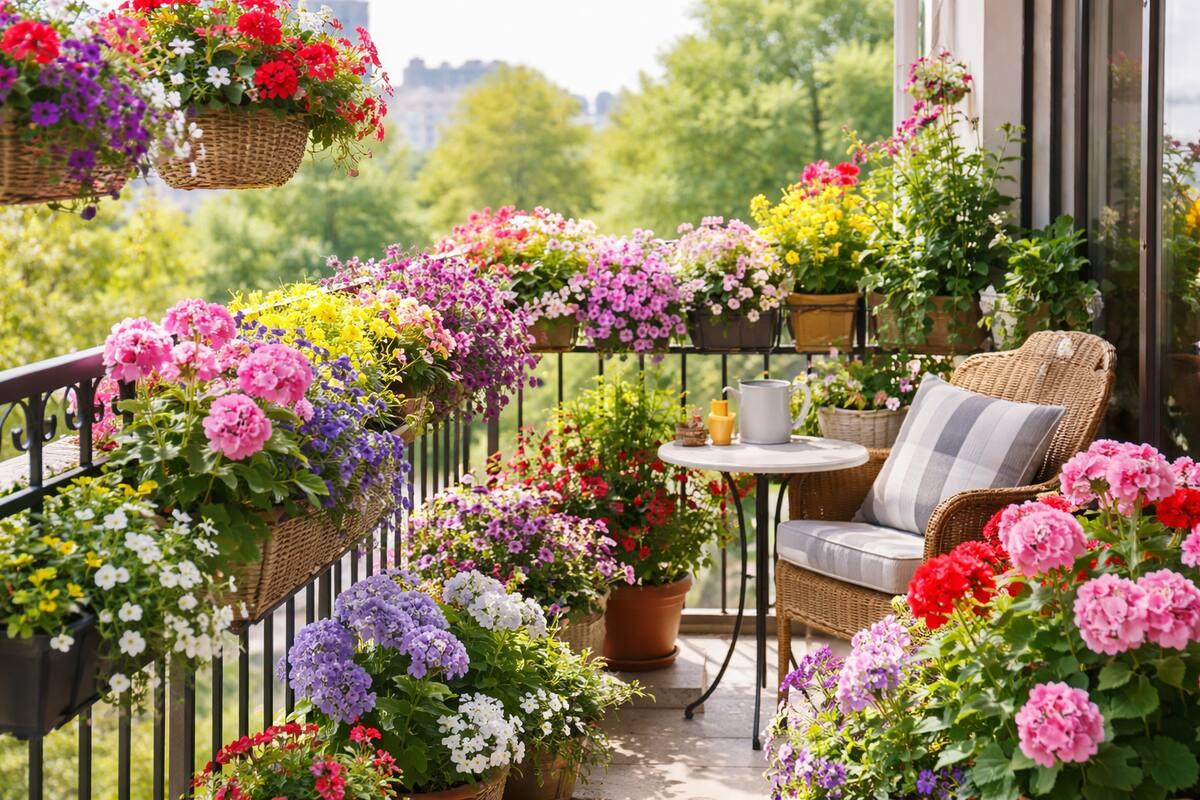
This style embraces abundance. Flowering plants, layered containers, climbing greenery, and woven seating create a balcony that feels more like a private courtyard than a narrow outdoor ledge. It is an excellent choice for anyone who prefers a relaxed, romantic garden over a restrained minimalist arrangement.
Layering is what makes the look work. Taller plants establish a backdrop, medium-height flowering pots fill the middle, and low-growing or trailing varieties soften the edges. Place containers in groups rather than evenly spacing every pot. Clustering creates visual rhythm and gives the planting a more natural character.
Wooden planters are especially useful for building a continuous green boundary, while individual pots provide flexibility for seasonal changes. White cushions and simple outdoor upholstery balance the richness of the foliage. If space is tight, choose a compact loveseat or one generous chair rather than several pieces of furniture.
To recreate the effect, start with a few reliable plants suited to your conditions, then add seasonal color. White flowers can bridge bright pinks and deeper greens, while small flowering climbers bring height without occupying much floor area.
Plan for maintenance as carefully as appearance. Dense planting needs regular checks for airflow, pests, moisture, and overcrowded roots. Keep access to drains clear and make sure planters can be watered without splashing the building or the balcony below. A lush garden should feel inviting, not difficult to manage.
For a more affordable version, build the display gradually. Invest first in good containers and healthy structural plants, then add seasonal flowers as the budget allows. The layered effect becomes more convincing over time.
A Contemporary Balcony Garden With Matching White Planters
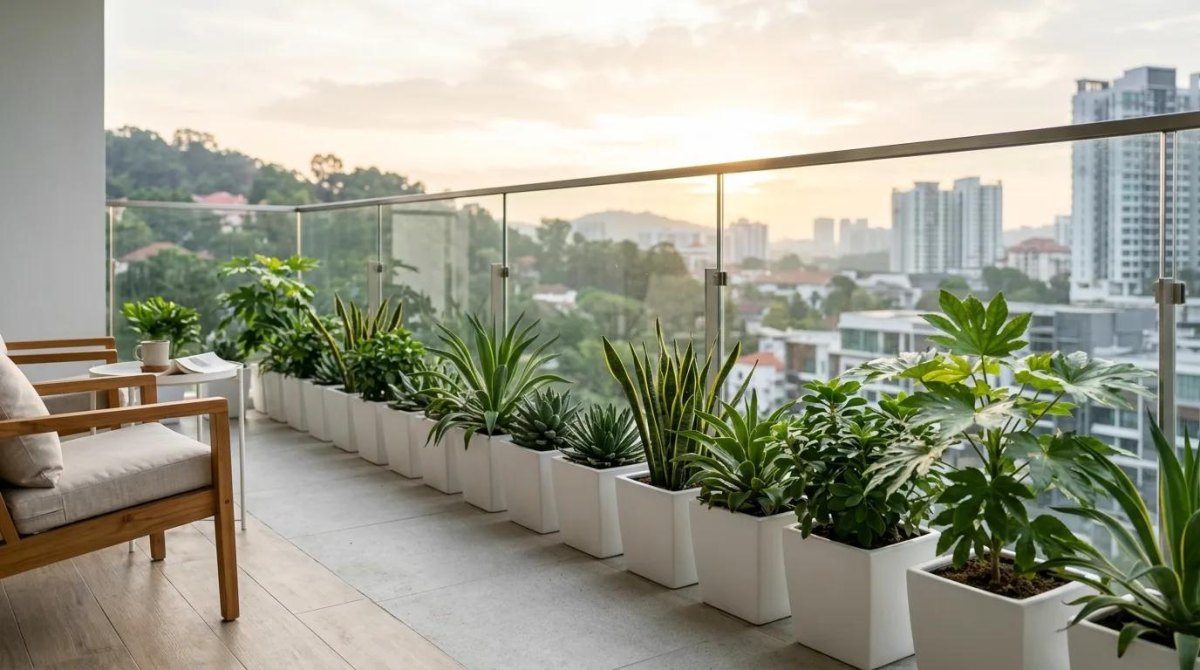
For a contemporary home, a row of matching white planters creates a clean, gallery-like garden. This arrangement relies on repetition, generous spacing, and sculptural foliage rather than a dense mixture of flowers. It is particularly effective on a larger balcony or terrace where a long run of containers can establish order.
White square pots visually connect different plants, allowing their shapes to become the main attraction. Upright succulents, architectural foliage, and compact tropical-looking plants can each contribute a distinct silhouette. The important thing is to select species with compatible light, temperature, and watering requirements rather than choosing solely by appearance.
Begin by measuring the usable edge and deciding how much space the containers may occupy. Leave room to walk comfortably and open doors fully. A consistent gap between planters feels deliberate, but the spacing should also allow plants to reach their mature width without touching every neighboring pot.
Think of the foliage as living sculpture. Mix tall, narrow forms with broad leaves and low, spreading plants. If you prefer an even quieter aesthetic, repeat just two or three species along the row. Choose outdoor-rated containers, confirm that they have appropriate drainage, and use a potting mix matched to the plants.
A pale palette does not have to feel sterile. Introduce a single timber chair, a textured cushion, or a warm-toned side table. These small details soften the geometric planting without undermining the modern character.
This design is also easy to refresh: swap one container at a time when a plant outgrows its position or the seasonal conditions change. The consistent pots preserve the overall composition.
A Tropical Balcony Garden With Natural Rattan Seating
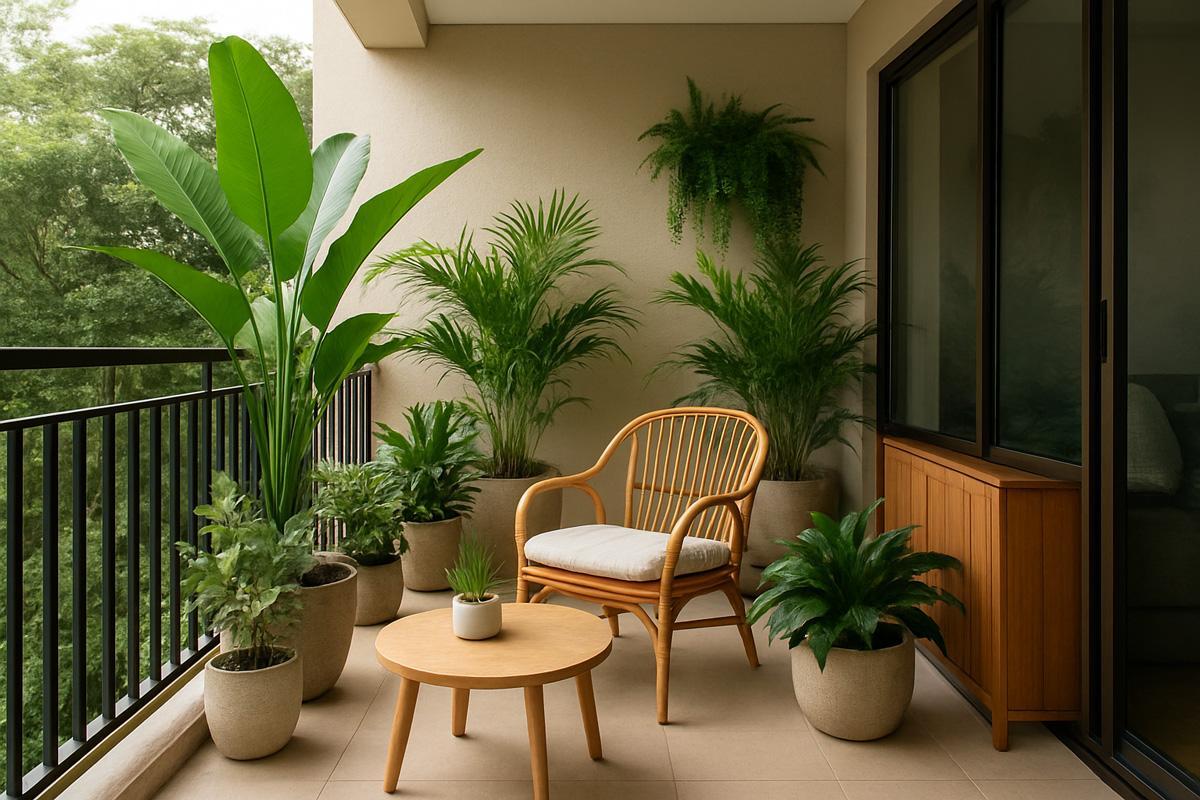
A tropical-inspired balcony brings a sense of escape through broad leaves, layered greenery, natural materials, and relaxed seating. This interpretation pairs a rattan chair with a low round table and plants of several heights, creating a little retreat for reading, coffee, or a quiet end to the day.
The design works because it balances soft botanical shapes with simple furniture. Large leaves establish a lush backdrop, while smaller ferns and compact foliage plants fill the lower levels. Neutral pots let the greenery remain the dominant color, and rattan introduces texture without adding visual weight.
To adapt the look, choose plants according to your actual conditions. Palms, ferns, and other tropical-looking species can be attractive in containers, but not all tolerate direct sun, cold weather, or drying wind equally well. In a sheltered, shaded balcony, foliage plants that prefer indirect light may thrive. On a hot, exposed balcony, choose tougher sun-tolerant alternatives.
Group plants at different heights using stable stands and appropriately sized pots. Keep the chair in a position where the foliage frames the view rather than completely blocking it. A small round table offers enough space for a cup, book, and one decorative pot without dominating the floor.
Make the seating comfortable. Select outdoor-suitable cushions and store them indoors during prolonged wet weather. Check the care requirements of natural rattan before leaving it outside year-round; weather-resistant synthetic alternatives may be more practical for exposed balconies.
The finished space should feel abundant but not chaotic. Repeat a few materials, allow leaves room to spread, and keep the main walking route clear. That is the difference between a tropical garden and a collection of crowded pots.
A Recycled Vertical Garden for Herbs and Vegetables
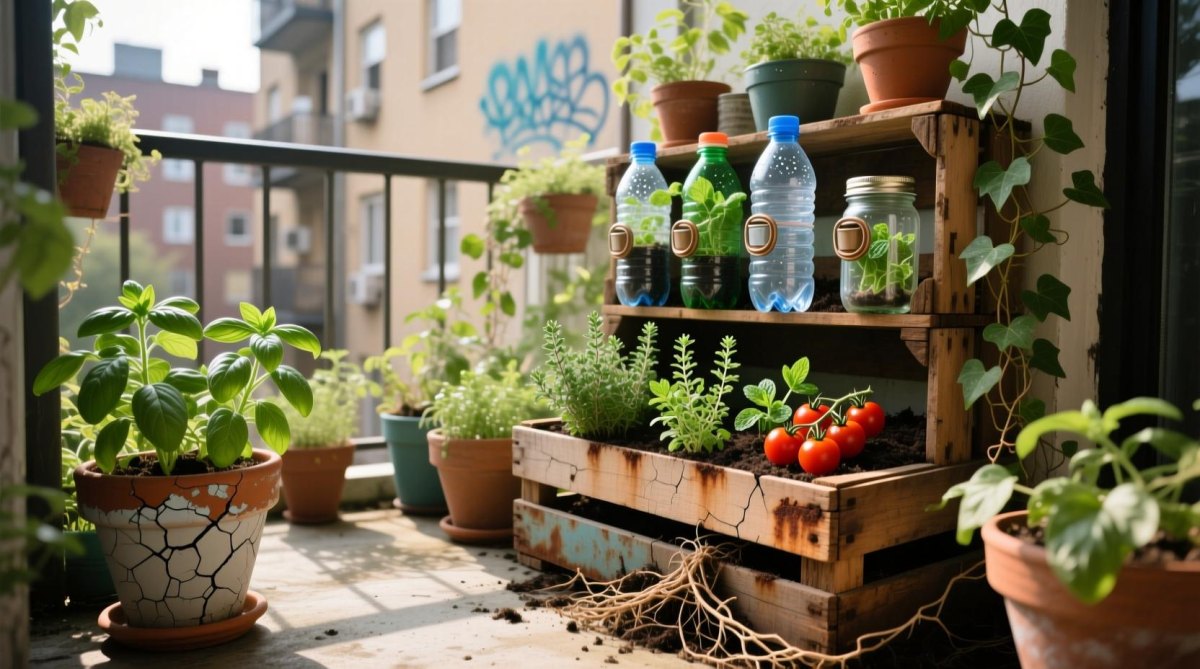
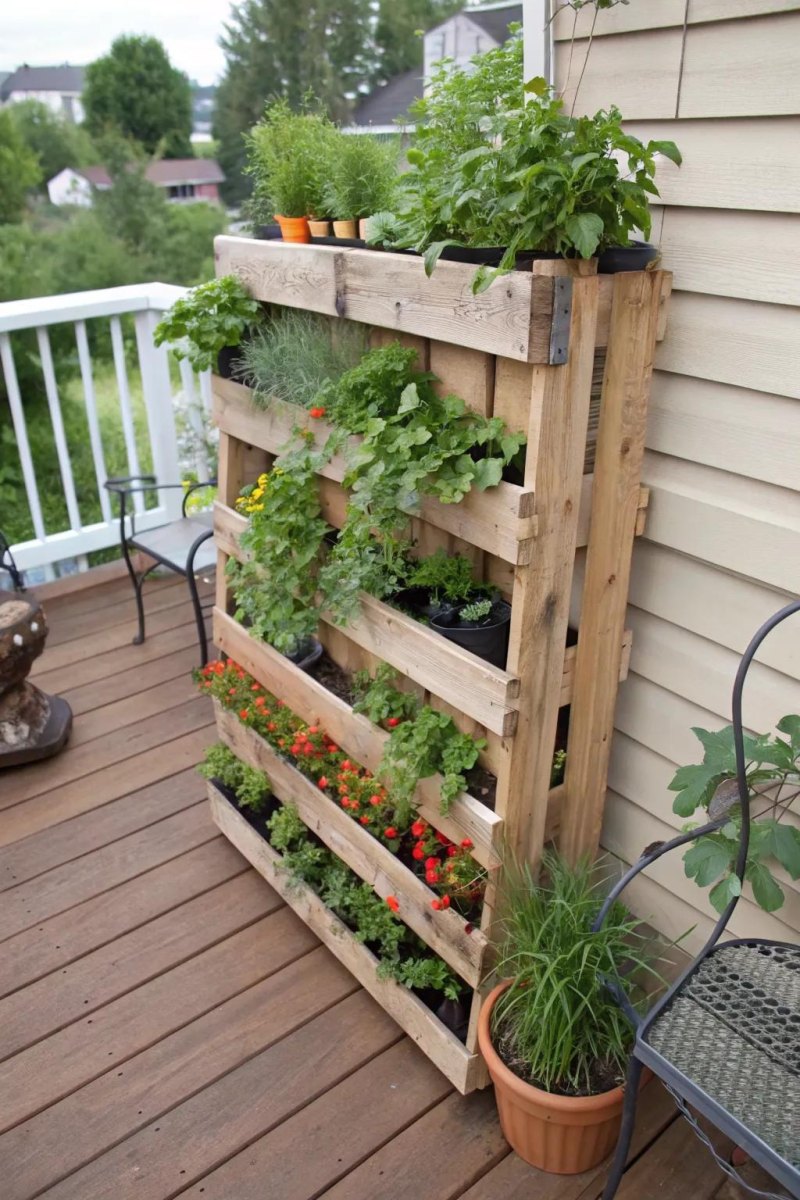
A homemade vertical growing station makes an appealing project for anyone who wants to grow food with limited space. A tiered wooden structure can hold herbs, compact vegetables, and small containers, while reused bottles or jars may serve as supplementary propagation vessels when adapted safely for that purpose.
The strongest version of this idea puts function before decoration. Reserve the best-lit level for plants that need the most sun, keep herbs within easy harvesting reach, and use lower shelves for crops that tolerate the available light. Compact basil, parsley, leafy greens, and suitable small tomato varieties are possible choices, depending on exposure and container size.
Not every recycled container is suitable for growing edible plants. Use clean, food-safe materials, provide adequate drainage, and avoid vessels that previously held chemicals. Narrow bottles are generally better for propagation or small-rooted plants than for mature fruiting vegetables, which need enough soil volume to support roots and moisture.
Choose untreated or appropriately protected materials for the growing structure, and anchor it against movement from wind. The unit should remain stable when every shelf is loaded with wet growing medium and mature plants. Leave sufficient space between tiers to avoid shading all the lower growth.
For an easy first harvest, begin with a few herbs and one compact leafy crop rather than filling every compartment immediately. Watch how the sun moves across the balcony, then adjust placement as needed.
A productive vertical garden does not need elaborate equipment. A sturdy shelf, suitable containers, good drainage, and thoughtful plant selection can turn an overlooked corner into a useful little food-growing station.
Raised Wooden Planters for a Productive Balcony Vegetable Garden
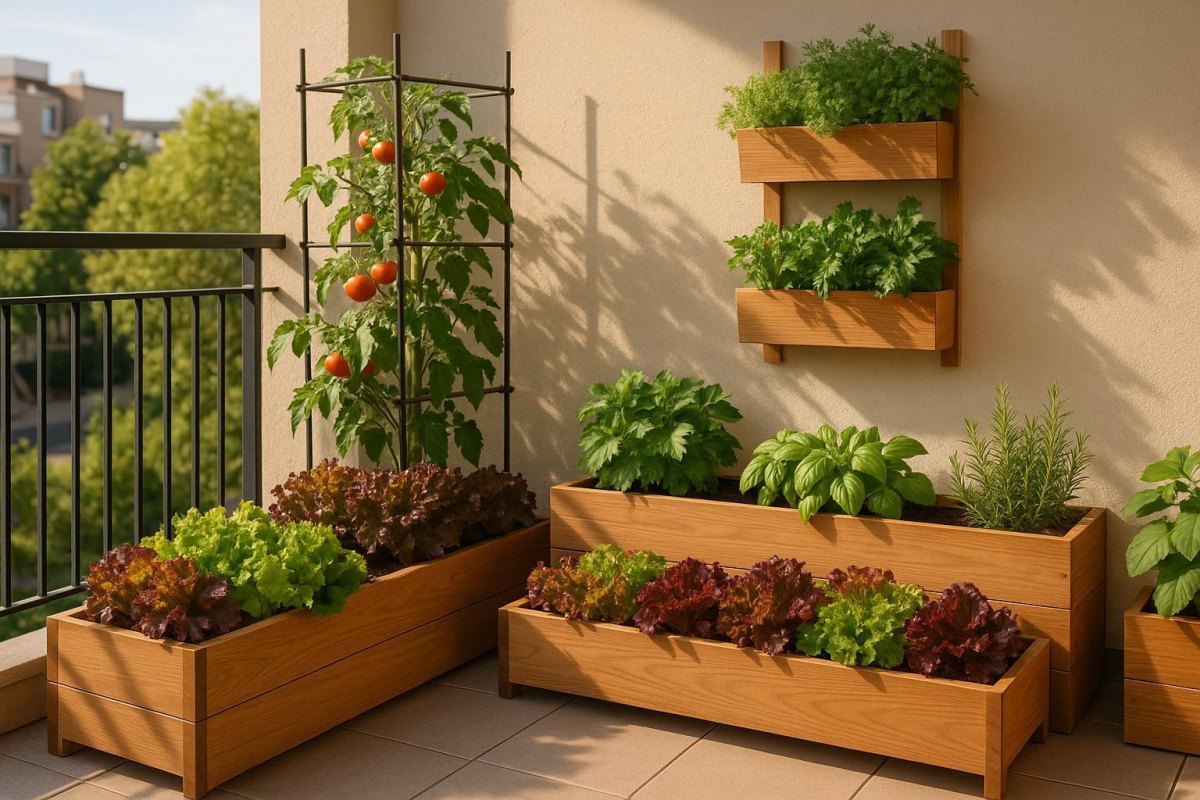
Raised wooden planters are ideal for a balcony garden that prioritizes harvests as much as appearance. Deep rectangular beds provide a defined growing area for leafy vegetables, herbs, and compact tomato plants, while the timber gives the arrangement a warm, furniture-like finish.
Edible planting benefits from organization. Place taller crops toward the back where they will not shade shorter plants, and group herbs with broadly compatible growing needs. Lettuce and other leafy greens can occupy the front of a bed, while a suitable compact tomato variety grows in a separate container or a section with enough depth and support.
Choose planter dimensions based on the mature roots of your crops, not simply the footprint available. Use a quality growing medium designed for containers, and ensure excess water can drain freely. Raised beds can become very heavy once filled and watered, so confirm the balcony's permitted load before installation. A large planter should never be assumed safe simply because it fits the space.
Plan the layout around access. You should be able to reach the middle of each bed without stepping into the growing area or leaning dangerously over the railing. Leave room to harvest, prune, and refill watering cans.
Tomatoes generally need substantial sunlight, regular moisture, and support suited to the variety. Leafy crops may tolerate a different exposure. A single uniform watering routine may not suit every crop, particularly when containers differ in size.
To maintain a refined appearance, repeat the same timber finish across the beds and keep tools in a small weather-resistant storage box. The result is a practical vegetable garden that feels deliberately designed rather than improvised.
A Simple Railing Planter Garden for Instant Flower Power
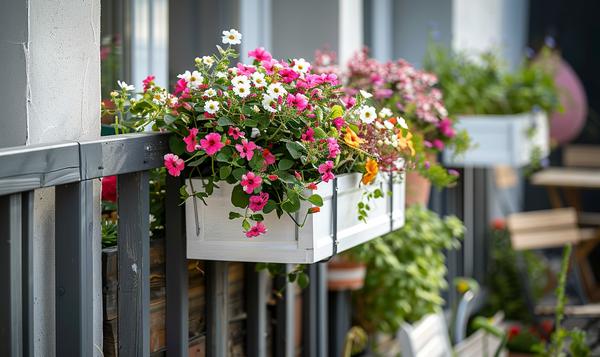
When a balcony is too small for multiple floor pots, railing planters offer a direct route to a greener outlook. A compact rectangular planter filled with trailing flowers can soften a metal railing, add seasonal color, and leave the walking area free for furniture or movement.
The appeal is its simplicity. Instead of arranging an elaborate collection, choose one or two flowering varieties and let their blooms and trailing stems do the work. Petunias, calibrachoa, and other compact flowering plants may suit a sunny position; shaded balconies need alternatives chosen for lower light.
Get the attachment right before planting. Use a railing planter designed for the actual railing profile, with secure fittings and a load rating that accounts for saturated soil. Do not rely on an improvised hook or a loose container balanced on top. Confirm any building rules about objects mounted outside the railing.
For a polished display, match the planter to the railing or choose a neutral color that recedes behind the flowers. Repeating a single planter style along the balcony creates a neat border. Leave enough space between containers for airflow and access to the railing for cleaning and inspection.
Water regularly, checking moisture more frequently in hot or windy conditions. Small containers can dry quickly, and flowering annuals may need feeding during active growth according to the product instructions. Remove tired blooms where appropriate to keep the arrangement looking fresh.
A railing planter is an excellent starting point for a beginner because the investment is modest and the visual impact is immediate. Start with one secure box, learn how quickly it dries, and expand only if the balcony's structure and rules allow it.
A Cozy Balcony Garden Illuminated With String Lights
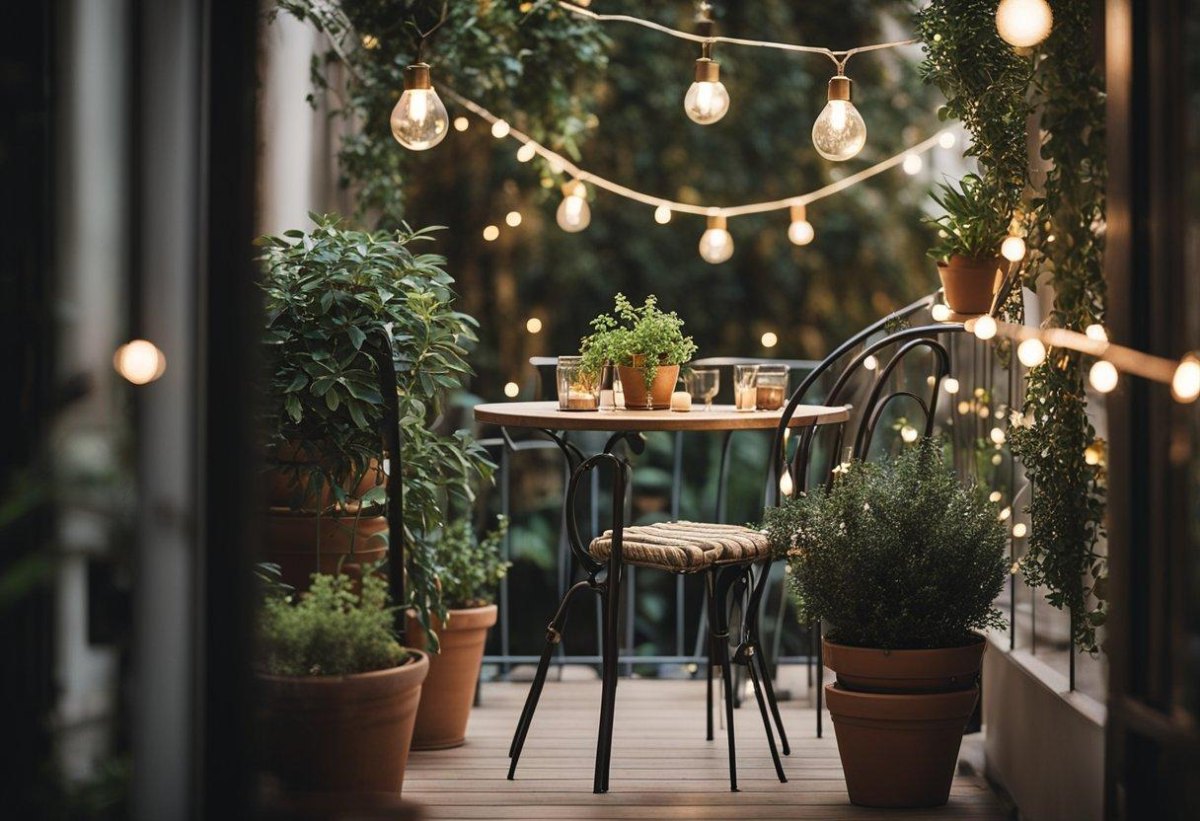
Plants establish the atmosphere by day, but lighting determines how a balcony feels after sunset. This intimate setup combines potted greenery, a compact café table, and warm string lights to create a relaxed evening retreat without requiring a large outdoor lounge.
Warm, layered lighting is more inviting than a single harsh source. String lights provide a gentle overhead glow, while a small lantern or suitable rechargeable lamp can illuminate the table. Keep the brightness comfortable and avoid aiming lights directly toward neighboring homes.
Use the plants to shape the space. Taller containers can frame one end of the seating area, while smaller herbs or compact shrubs soften the railing. Choose sturdy pots and arrange them so that their leaves do not tangle with the light cable or obstruct the route to the door.
Outdoor-rated lighting is essential where equipment may be exposed to moisture. Follow the manufacturer's installation instructions, use an appropriate power source, and keep plugs and connections protected as specified. Do not hang lights from branches or railing parts that cannot safely carry the load, and never let cords become trip hazards.
For a coherent finish, repeat the light's warm tone through natural wood, terracotta, or woven textures. A small round table and two slim chairs are enough for a coffee or an informal supper. Keep the plant palette relatively restrained so the lighting remains a subtle feature rather than competing with a wall of bright flowers.
This idea is particularly useful for balconies that get little daytime use because of work schedules. With a few comfortable plants and dependable lighting, even a small outdoor area can become a place worth visiting in the evening.
A Mediterranean Balcony Garden With Terracotta Pots
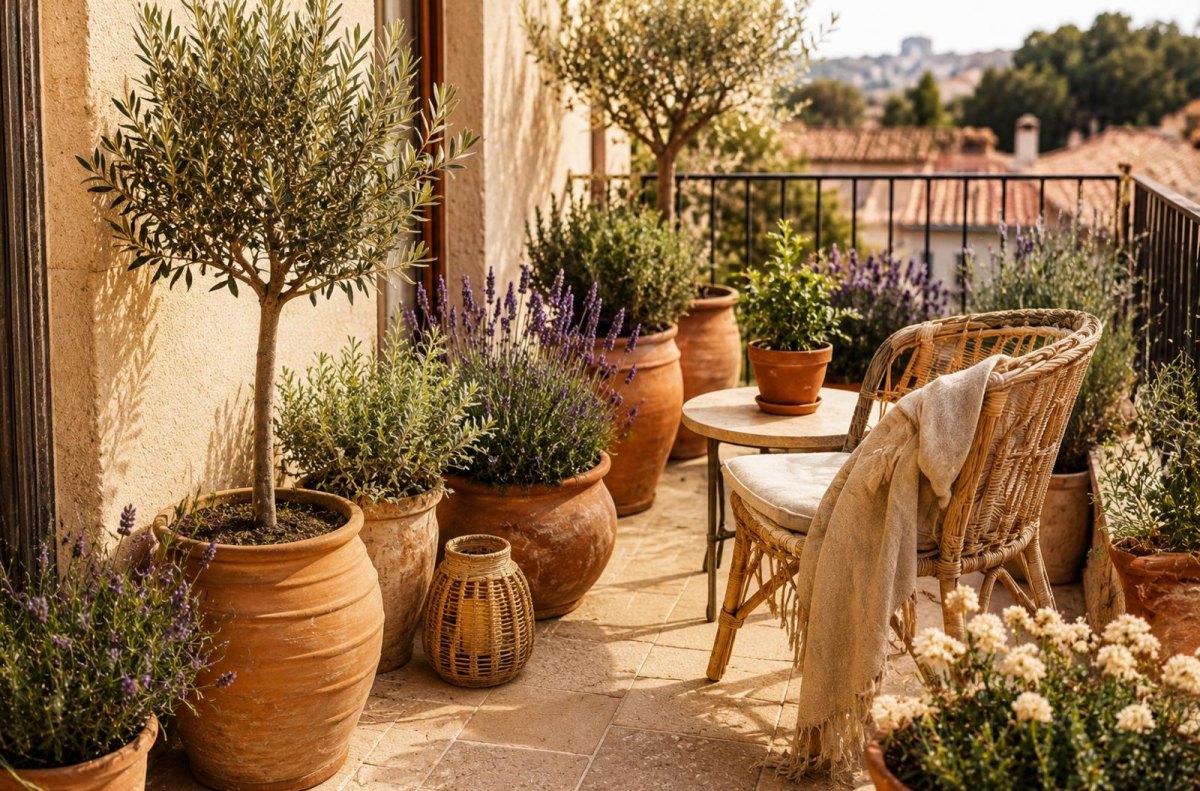
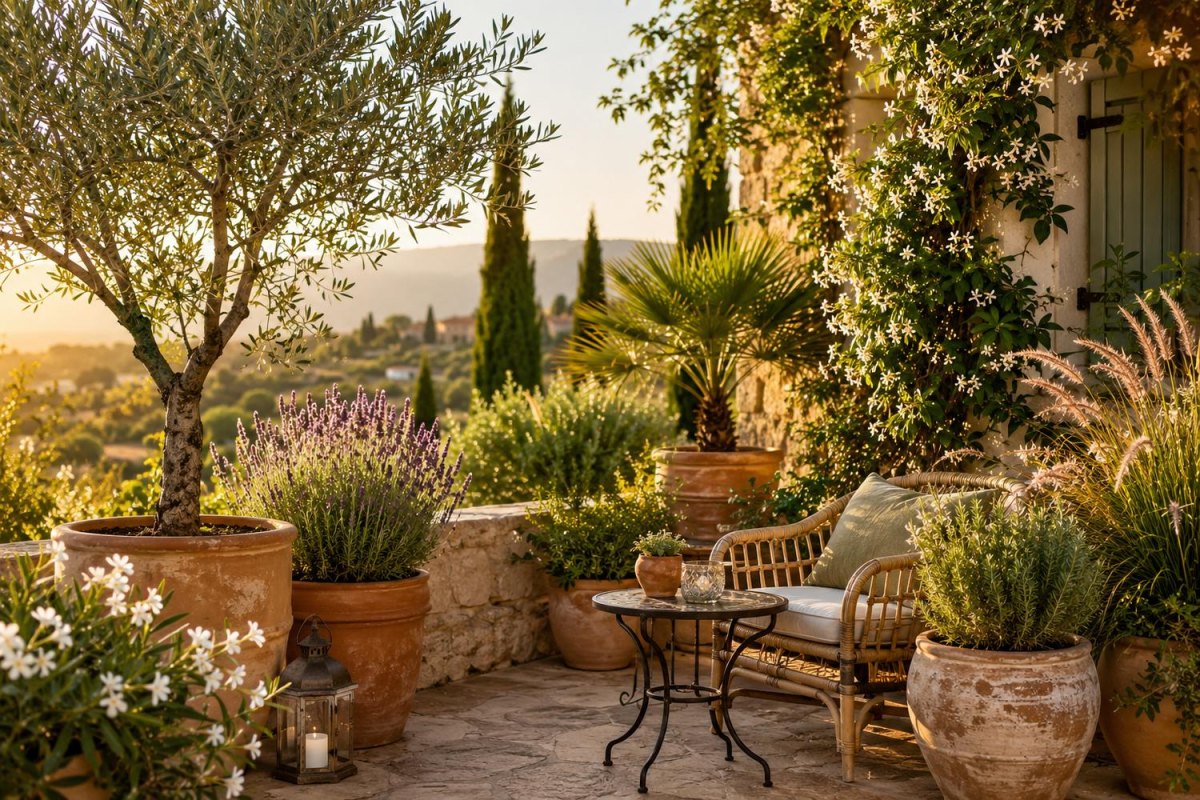
Terracotta pots, an olive-like small tree, lavender, and aromatic herbs give this balcony its Mediterranean character. The look is sun-warmed and relaxed, relying on earthy materials and plants with distinctive silhouettes rather than elaborate furniture or tightly coordinated flowers.
Terracotta is both a visual choice and a growing consideration. Its porous surface allows moisture to evaporate through the pot, which can help some plants but also means the growing medium may dry more quickly. That makes watering habits important, particularly during hot, exposed weather.
Begin with a few large containers as anchors, then add smaller pots around them. A compact olive tree may suit a sunny balcony where its climate requirements can be met, while lavender and rosemary can contribute fragrance and texture in suitable conditions. Choose varieties with mature sizes appropriate for container growing, and do not assume every Mediterranean plant will thrive in a cold or shaded location.
A woven chair, a small round table, and a natural-fiber accessory are enough to reinforce the style. Keep the color palette close to sand, clay, olive green, and muted lavender. This restrained scheme makes even a small collection of plants feel intentional.
Drainage is essential. Use pots with drainage holes, select a growing medium suitable for each plant, and avoid leaving roots standing in water collected in saucers. Large terracotta containers can be heavy, especially when wet, so account for their weight before placing them on a balcony.
Over time, the appeal comes from letting the plants develop at their own pace. A few healthy, well-chosen specimens will feel more authentic than an overcrowded assortment that needs constant trimming.
A Soft Neutral Balcony Garden With a Comfortable Loveseat
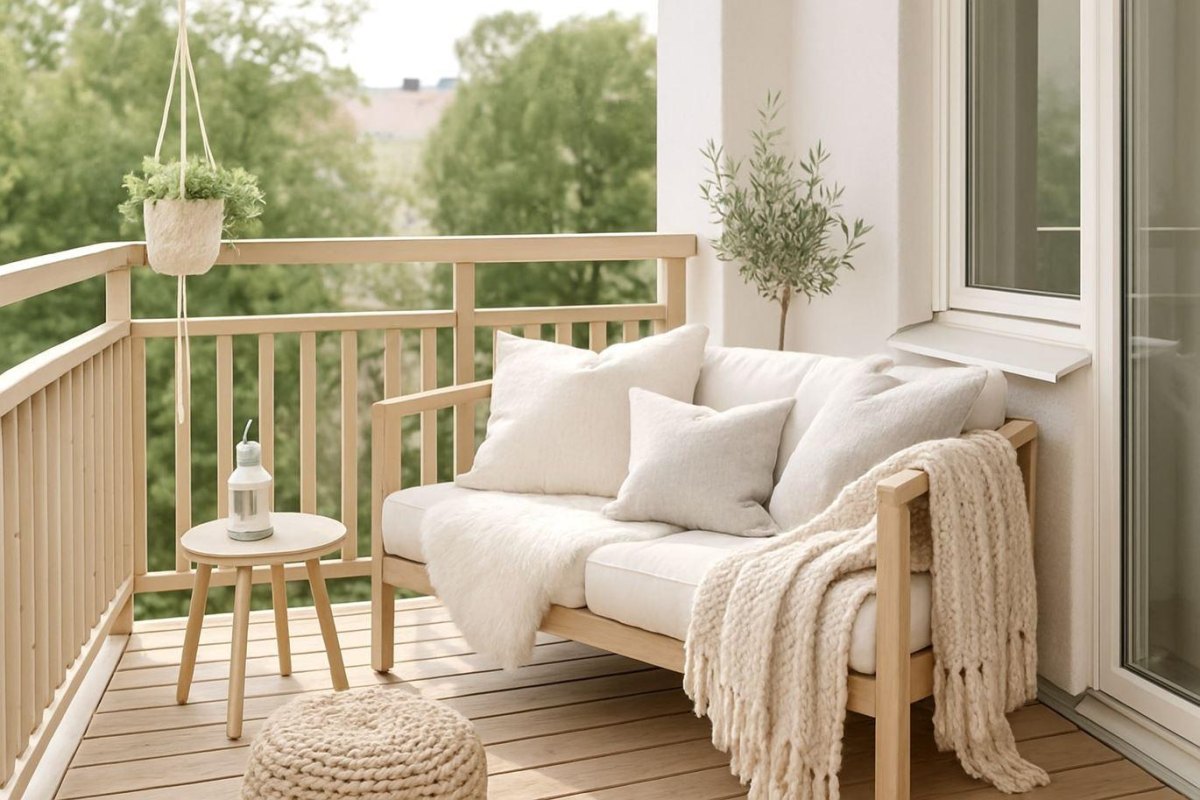
This setup treats the balcony as a quiet extension of the living room. A pale wooden loveseat, generous cream cushions, a small side table, and a restrained selection of plants create a restful outdoor setting that feels uncluttered without being bare.
The design relies on texture rather than strong color. Natural timber, woven accessories, soft upholstery, and a few green leaves provide enough visual interest to make the space feel finished. It works particularly well for anyone who wants a comfortable place to read, have breakfast, or take a break without maintaining a densely planted garden.
Choose seating to fit the actual footprint. Measure the depth of the loveseat, allow space for the door to open, and preserve a clear path to the railing. A compact side table is more useful than a large dining table if the main purpose is relaxation.
For planting, use a limited mix of forms: one taller specimen, a few medium-sized leafy plants, and a small hanging or tabletop plant if space allows. Neutral containers in cream, taupe, or natural clay help unify different species. Select plants that suit the balcony's sun and wind conditions rather than buying by color alone.
Outdoor textiles need a plan. Look for cushions made for outdoor use, and bring them inside or store them in a dry container when rain or prolonged damp weather is expected. Keep drainage points clear, and choose furniture materials suited to the exposure.
This is a particularly adaptable idea for renters and minimalists. Start with good seating and two or three plants, then add greenery gradually. The calm effect comes from leaving enough open space for the furniture to remain the main event.
An Artificial-Grass Balcony Garden With Lounge Seating
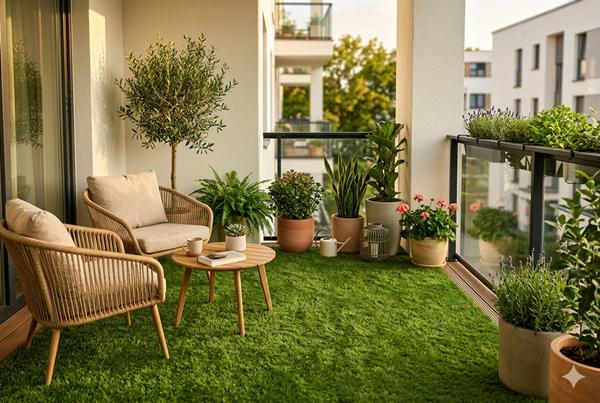
Artificial grass creates a softer visual foundation for a balcony, bringing the suggestion of a small lawn to a hard-surfaced apartment terrace. Paired with light outdoor chairs, natural-toned cushions, and potted greenery, it offers a relaxed garden atmosphere without requiring a conventional lawn.
The strongest version uses the turf as a background rather than treating it as the entire garden. Containers of different heights provide real foliage, while a compact seating arrangement makes the space useful. Choose a limited range of pot colors so the green floor does not compete with the planting.
Preparation matters more than the color of the turf. Select a product intended for the relevant outdoor application, and make sure the installation does not cover drainage outlets or interfere with the balcony's waterproofing. Water can become trapped underneath an unsuitable covering, and loose edges can create trip hazards.
Before buying, check the manufacturer's guidance for drainage, cleaning, heat exposure, and installation. Consider whether the balcony receives strong afternoon sun, which can make some artificial surfaces uncomfortably hot. A removable option may be preferable where permanent alterations are not permitted.
Use planters with raised feet or suitable supports when needed to prevent standing water underneath them. Real plants still need appropriate growing medium, drainage, and watering, even if the floor itself needs little maintenance.
To complete the arrangement, add two comfortable chairs and a small table, leaving enough room to walk around them. This approach suits people who want the visual softness of green underfoot and a tidy outdoor sitting area, but it works best when the underlying surface remains properly ventilated and drained.
A Minimalist Balcony Garden With Tall Bamboo Planters
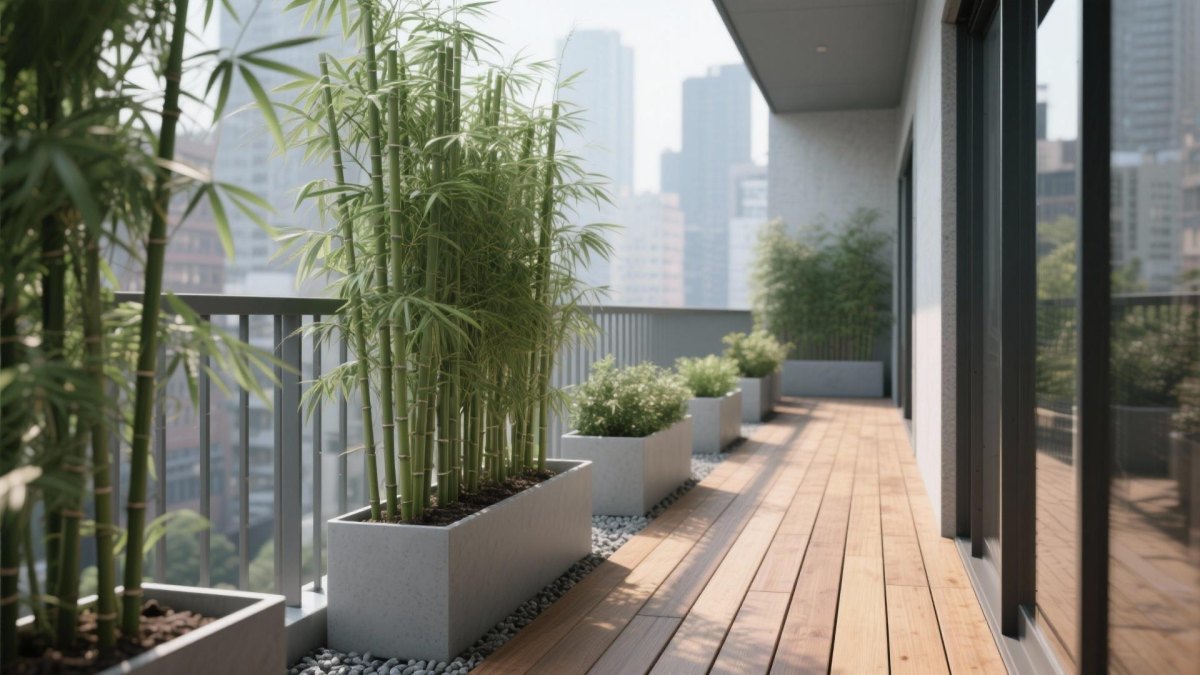
Tall bamboo creates a distinctive architectural screen along a narrow balcony, bringing vertical lines, movement, and a sense of privacy. Repeated rectangular planters reinforce the geometry, while a clear stretch of decking keeps the passageway open and the overall design understated.
The key is choosing the right bamboo for containers. Some species can grow vigorously and become difficult to manage, so look for a clumping variety suited to pots and the local climate. Confirm its expected height and width before planting, and provide a container large enough to support mature growth without becoming unstable.
Place the tallest planters along the railing or another appropriate boundary, but keep the exit route and door area clear. Repeating a few matching containers makes the planting feel intentional. A restrained palette of timber, charcoal, and green is enough; additional decorative pieces may make the long corridor feel cramped.
Wind exposure deserves attention. Tall plants catch more wind than low-growing herbs, and their containers can become top-heavy. Choose stable planters, check the balcony's permitted load, and secure the arrangement appropriately. Do not allow foliage to obstruct neighbors' views or interfere with railings and drainage.
For a similar screening effect without bamboo, consider other narrow, container-suitable plants chosen for the balcony's light and climate. Upright ornamental grasses may work where conditions are appropriate, while compact evergreen shrubs can offer a more solid screen.
This setup is ideal for someone who values privacy and a quiet, contemporary aesthetic. It makes the balcony feel more enclosed without filling the floor with furniture, and its strong repetition can turn an awkward passage into a deliberate garden feature.
A Lush Balcony Garden With an Evening Lounge Atmosphere
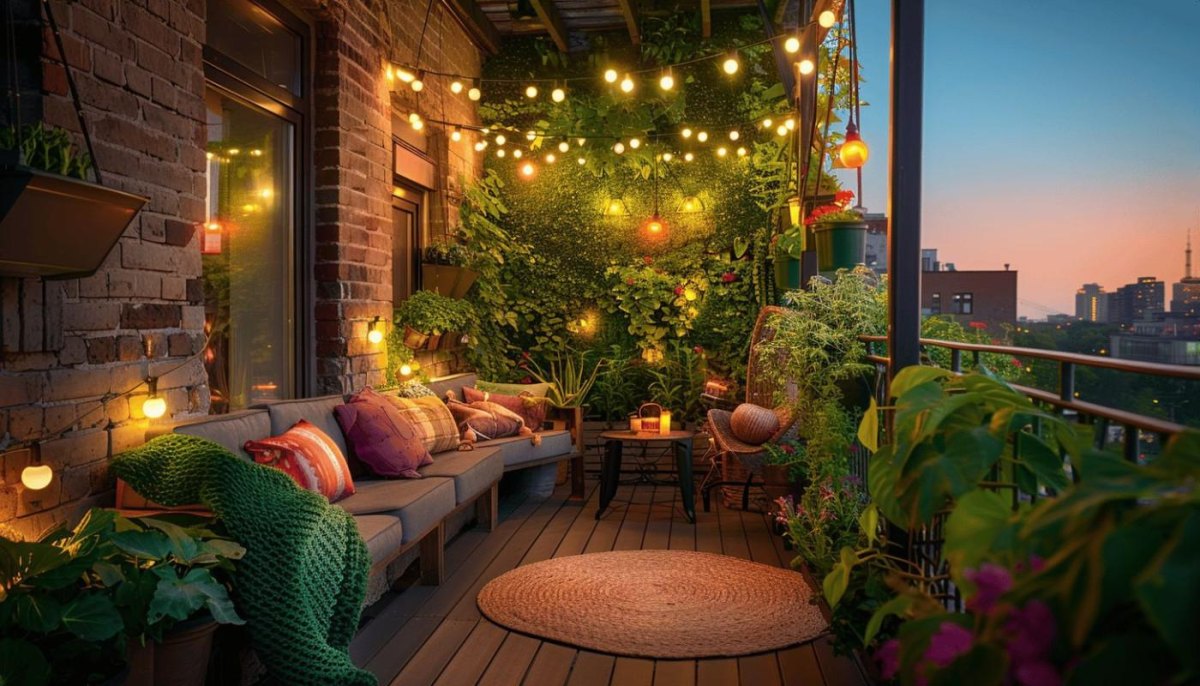
This more dramatic balcony garden layers climbing greenery, abundant potted plants, cushioned seating, and warm festoon lighting to create an outdoor lounge with a relaxed, almost courtyard-like mood. It is a good choice for people who entertain outdoors or want a balcony that feels distinct from the interior living room.
Build the atmosphere in layers. Start with the seating, then use plants to frame the edges and soften the hard lines of the building. Taller containers can establish a backdrop, medium-height plants add fullness, and trailing foliage brings softness to shelves or suitable supports. Keep the center relatively open so the furniture remains usable.
Climbing plants can make a balcony feel enveloped in green, but they need an appropriate trellis or support system. Do not assume a railing, gutter, or light cable can carry their weight. Choose species that suit the exposure and can be maintained without damaging the building or spreading into neighboring spaces.
For the furniture, combine durable outdoor upholstery with a small table and one or two accent chairs. Repeating cushions in a limited palette gives the space a designed quality even when the plants are varied. A textured outdoor rug can define the seating area if it does not impede drainage or create a slip hazard.
Choose weather-rated lighting and install it according to the manufacturer's directions. Keep cables away from walking paths and plant supports, and avoid leaving cushions outside through prolonged wet weather.
This is a lush design, so maintenance should be part of the plan. Prune regularly, check for pests, remove dead leaves, and ensure dense planting still receives adequate airflow. When the greenery is healthy and the seating is comfortable, the balcony becomes a destination rather than a place used only in passing.
A Zen-Inspired Balcony Garden With Pebbles and Timber Decking
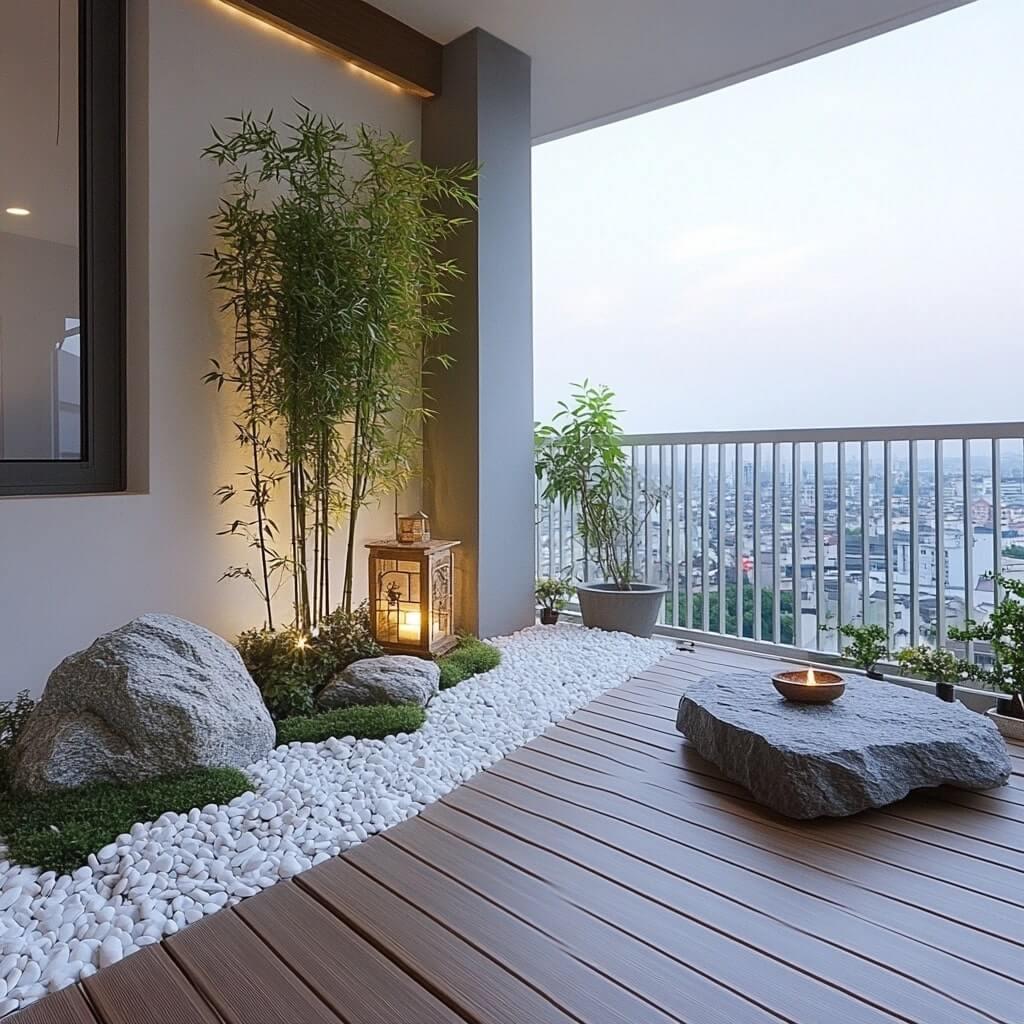
A Zen-inspired balcony takes a different approach to greenery. Rather than filling every edge with flowers, it combines pale pebbles, timber decking, sculptural rocks, and carefully placed plants to create a calm, restrained composition. The visual emphasis is on space, texture, and a sense of balance.
Negative space is an essential part of the design. A clear deck area gives the eye somewhere to rest, while a narrow pebble bed introduces contrast between the warm wood and the pale stones. Bamboo or another suitable upright plant can add height without making the arrangement feel crowded.
To adapt the idea, choose a few durable containers and a limited number of plants with distinctive shapes. Select species that tolerate your local climate and balcony exposure. In a sunny, windy location, suitable drought-tolerant plants may be more practical than delicate foliage; a shaded balcony will require a different selection.
Before spreading pebbles, confirm that the surface can drain freely and that the stones cannot wash into outlets. Use a contained tray or suitable barrier where needed rather than covering the balcony's drainage system. Pebbles, rocks, planters, and decking all add weight, so consider their combined load and use materials appropriate for outdoor installation.
A low table and one simple chair are enough to complete the arrangement. Avoid too many decorative objects; a lantern or one carefully chosen pot will usually have more impact than a collection of accessories.
This garden style is especially appealing for people who prefer quiet outdoor rituals over intensive planting. It can also be relatively low-maintenance when the plants are chosen carefully, though drainage, leaf removal, and container watering still need regular attention.
A Flowering Balcony Trellis With a Cozy Conversation Corner
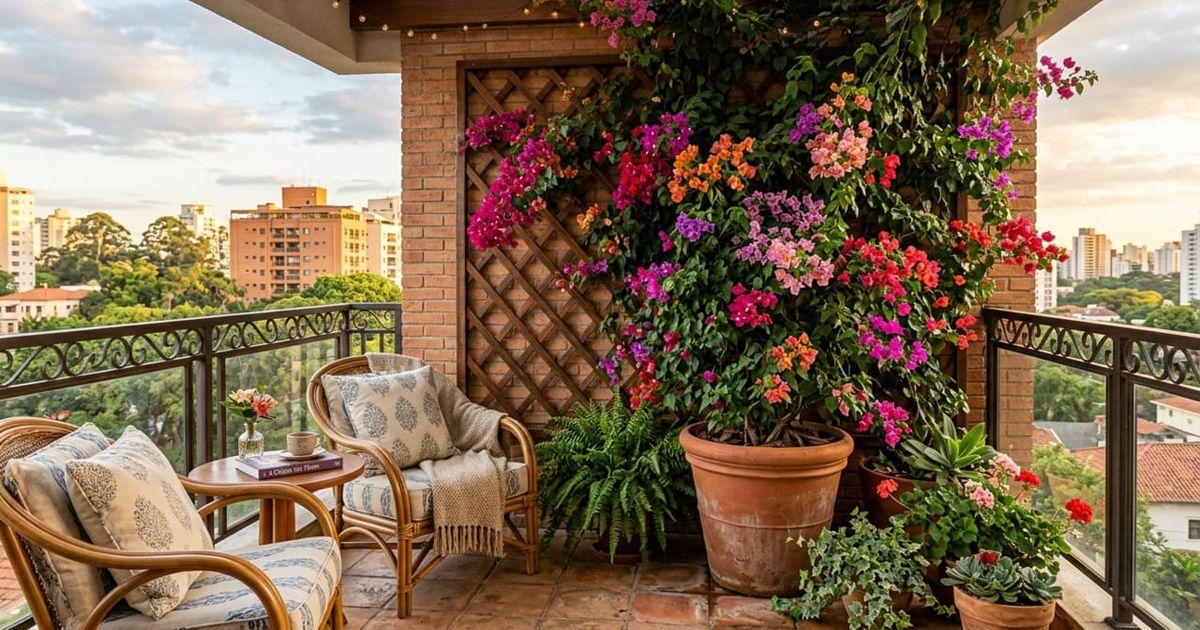
A flowering trellis gives a balcony a strong focal point and creates the impression of a garden wall without requiring a large planting bed. This design combines a climbing display with terracotta containers, compact flowering plants, and a pair of comfortable chairs, turning one corner into a natural place for conversation.
The trellis supplies height while the pots create depth. Climbing roses, clematis, or other suitable climbers can be considered according to local climate, sunlight, and container requirements. Some varieties need more room, pruning, or support than others, so choose a plant that can be managed within the available space.
Install a freestanding or properly secured trellis designed for outdoor conditions. Confirm that its fixings are suitable for the structure and that the mature plant will not overload the support. Leave space between the climber and nearby furniture so stems can be trained and pruned without disturbing the seating.
Terracotta pots add warmth, while smaller plants near the base soften the transition between the trellis and the floor. Repeat two or three flower colors rather than mixing every possible shade. This makes the focal point feel intentional and helps the surrounding plants complement rather than compete with it.
For seating, use a pair of chairs and a small side table instead of a bulky sofa. Position them to face each other slightly, leaving a clear path behind or beside them. Cushions and a light throw can make the arrangement comfortable, but choose outdoor-friendly fabrics and store soft furnishings when conditions are wet.
This approach is ideal for balconies with a plain wall or exposed corner that needs character. One well-chosen climber, supported correctly and paired with a restrained collection of pots, can provide a more convincing garden backdrop than dozens of unrelated containers.
A Modern Terrace Garden With Sculptural Container Planting
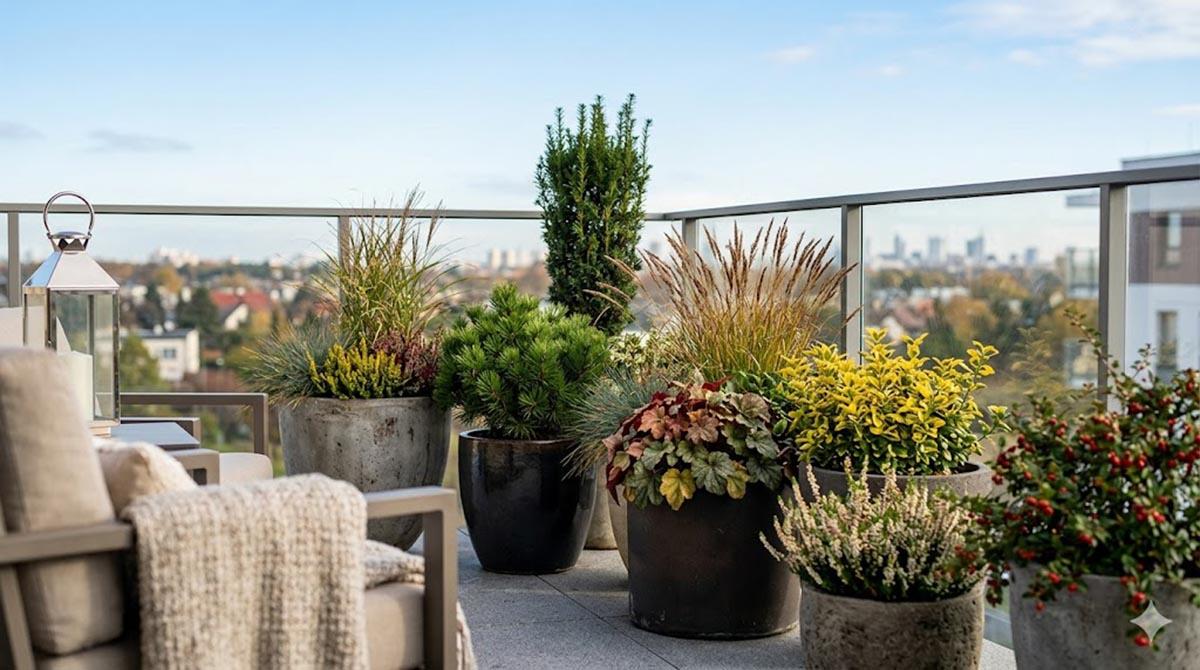
This contemporary terrace uses large, carefully selected containers to create a garden that feels composed rather than crowded. Evergreen shapes, ornamental grasses, compact shrubs, and seasonal foliage provide structure, while the furniture remains understated enough for the planting to take the lead.
Think of each planter as an individual composition. A tall upright plant can establish height, a rounded shrub creates volume, and a low or trailing plant softens the edge. Choose containers with complementary shapes and finishes, such as matte black, weathered concrete, or warm neutral tones. The variety comes from the plants rather than an assortment of unrelated pot styles.
For a balcony or rooftop terrace, select plants according to wind exposure, sunlight, and seasonal temperatures. Ornamental grasses can bring movement, while suitable evergreen shrubs provide year-round structure. Plants with colorful foliage may add interest when flowers are not in season.
Spacing matters. Leave room for plants to mature, and arrange containers so that each can be reached for watering, pruning, and inspection. A heavy planter filled with wet growing medium can be difficult to move, so settle on the layout before filling the largest containers and verify the balcony's load capacity.
A neutral chair and a soft outdoor throw provide comfort without distracting from the garden. Keep a consistent height rhythm by alternating taller specimens with lower containers, rather than lining every pot up at exactly the same level.
This style suits homeowners who appreciate a clean, modern aesthetic but still want seasonal character. The arrangement can evolve by replacing a few smaller plants while the larger structural specimens remain in place, giving the terrace continuity from one season to the next.
A Compact Balcony Garden With Layered Planters and a Reading Chair
A final approach brings together the most useful elements of a small balcony garden: a comfortable chair, a compact table, and a thoughtful collection of planters arranged around the perimeter. The emphasis is on creating a personal retreat rather than maximizing the number of plants.
Give the seating a clear role. Place the chair where it feels sheltered but still leaves a straightforward route to the door. A small table should be large enough for a drink or book without becoming an obstacle. If the balcony is particularly narrow, one comfortable chair is often more useful than a matching pair.
Arrange plants in a loose sequence of heights. A taller specimen can frame the seating, medium-sized pots create a green backdrop, and a low planter adds foliage near the floor. This layered effect provides the feeling of enclosure without blocking every view. Use a few related container finishes to make different plant species feel connected.
Plant selection should reflect the conditions rather than a fixed shopping list. Check how much direct sunlight reaches the balcony, whether wind dries containers quickly, and how cold the space becomes in winter. Select a mixture of plants that can tolerate those conditions and that you can realistically maintain.
Before adding larger pots, consider weight, drainage, and access for watering. Keep outlets clear, use containers with appropriate drainage, and avoid placing heavy objects where they could fall or interfere with the railing.
Finish with one personal detail: a textured cushion, a lantern, or a favorite small herb pot. The best balcony garden does not need to be elaborate. When the plants are healthy, the furniture fits, and the walkway remains clear, a modest corner can become a daily pleasure rather than another space to manage.
A successful balcony garden starts with the way you want to use the space. Perhaps that means harvesting herbs beside a tiny café table, settling into a cushioned chair surrounded by foliage, or growing flowers above the railing. Choose one clear direction, work with the light and structure you have, and add plants gradually. With thoughtful spacing and a few well-chosen materials, even the smallest balcony can become a personal outdoor retreat.
Frequently Asked Questions
How do I start a balcony garden in a small apartment?
Begin by measuring the floor area and observing the balcony's sunlight over the day. Choose a few containers suited to your preferred plants, prioritize a clear walking route, and use a vertical rack or railing planters where safely permitted. Start with manageable plants such as herbs or compact foliage varieties, then expand as you learn how quickly the containers dry.
Which plants are best for a balcony garden?
The best plants depend on sunlight, wind, seasonal temperatures, container size, and how much care you can provide. Sunny balconies may suit herbs such as rosemary and compact flowering plants, while shadier areas may suit certain ferns or foliage plants. For vegetables, choose compact varieties suited to containers and make sure fruiting crops receive enough light.
How can I make my balcony garden look expensive on a budget?
Use a consistent palette, repeat a few container styles, and invest in one or two larger structural plants rather than buying many unrelated small pots. Add inexpensive herbs or seasonal flowers for variety, reuse suitable containers safely, and keep the layout uncluttered. A clean seating area and thoughtful plant grouping can look more polished than a larger collection without a clear plan.
How do I keep balcony planters safe and healthy?
Use secure, purpose-made fittings for hanging planters, confirm the balcony's permitted load before adding heavy containers, and never obstruct drainage outlets. Choose pots with suitable drainage holes and plant-specific growing medium. Check moisture regularly, inspect plants for pests, prune overcrowded growth, and protect containers and furniture from weather according to their material and care instructions.
More Pinterest Visuals



 Balcony & Patio GardensSmall Space Garden Ideas That Make Every Inch Count
 Balcony & Patio GardensKübelpflanzen für die Terrasse – 15 Ideen für ein grünes und blühendes Outdoor-Paradies
 Seasonal & Flower Containers16 Beautiful Container Garden Flower Combinations That Work
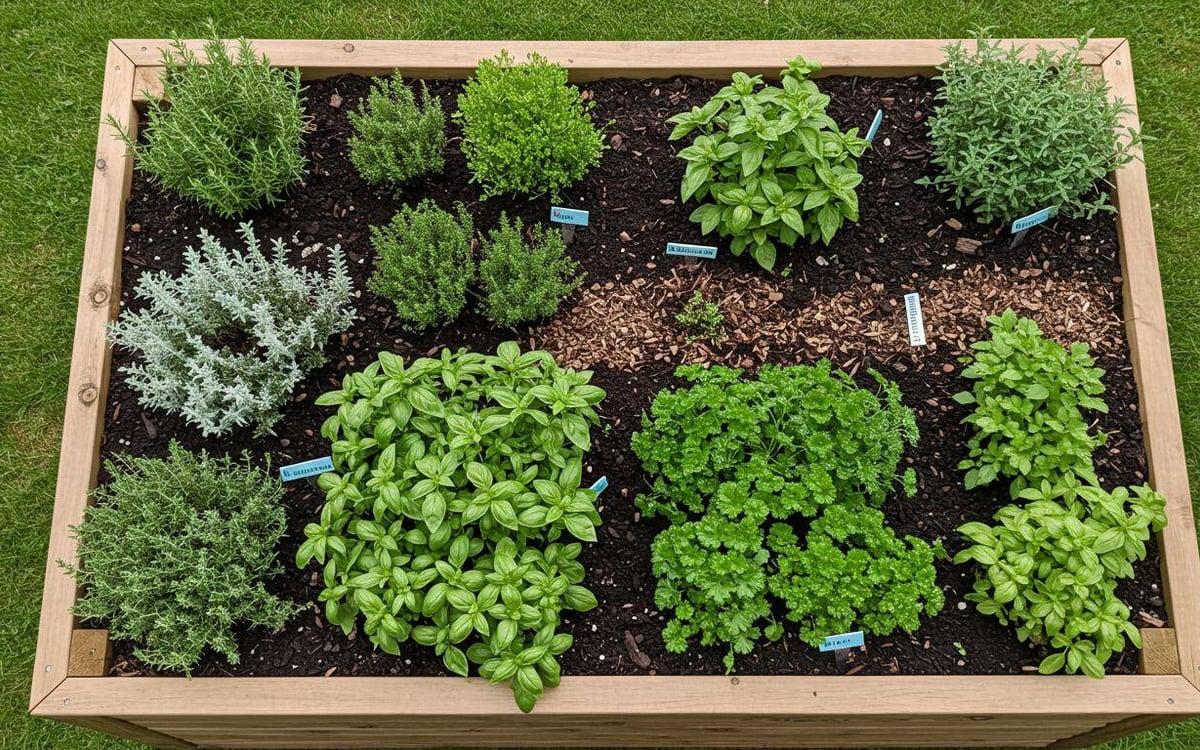 Raised Bed Gardening15 Raised Bed Herb Garden Design Ideas for a Productive Home Garden