Shade is not the same thing as no light, and that distinction matters more in a pot than most pretty container photos let on. In my Boise garden, I work with USDA zone 7a, roughly eleven inches of annual precipitation, alkaline soil, hot summers and plenty of wind. A pot tucked beside the north side of the house behaves very differently from one getting three hours of morning sun, so I start by watching the spot before buying plants. Extension guidance also separates light shade, moderate shade and heavy shade rather than treating them as one category.
These are the shade pot combinations I would actually consider, with container size and watering in mind. I am not going to tell you that a tiny decorative pot will carry a thirsty planting through July. In my climate, container plants can need daily attention, and sometimes more than once a day during hot, dry weather.
Lush Ferns in Classic Pots
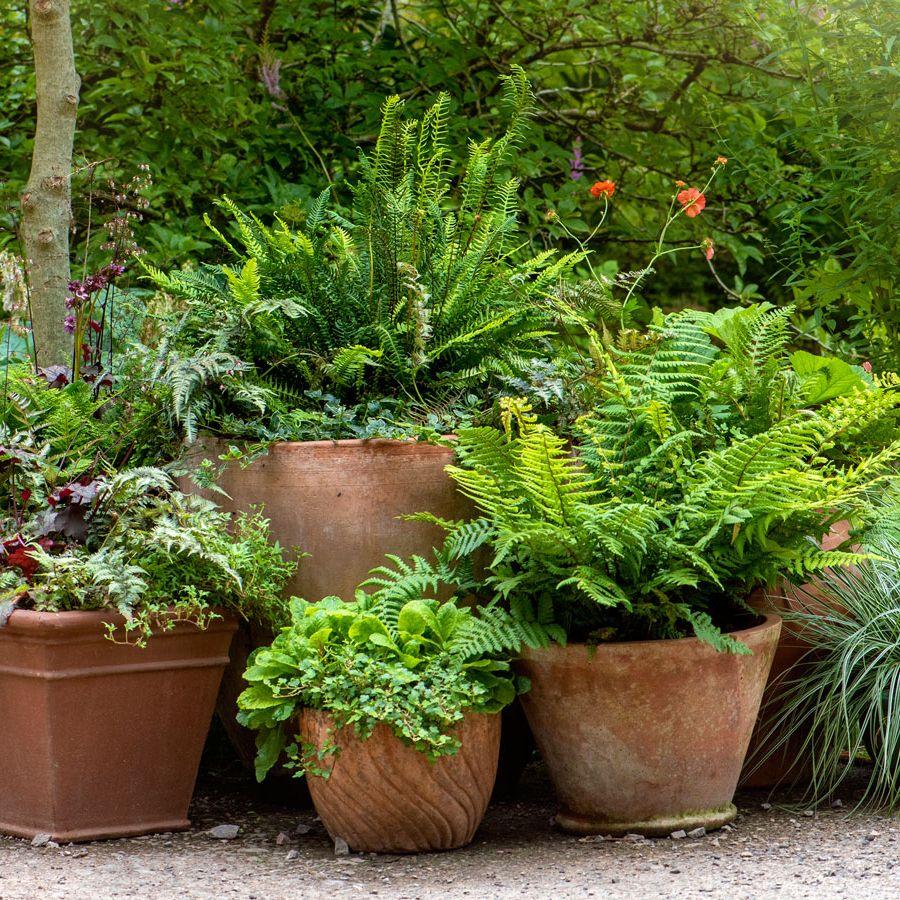
Ferns are one of my first choices when I want a pot to look generous without relying on flowers. I like a large fern in a simple pot because the fronds do the decorating. Ferns generally prefer consistently moist conditions and indirect light, which makes them much better candidates for a protected shady corner than a pot baking against a south-facing wall.
My potting tip
For a fern I want to keep looking good, I choose a container with real root-room rather than a tiny cachepot. Drainage holes are non-negotiable, and I check moisture below the surface before watering instead of watering by the calendar.
Difficulty: easy. The trick is not letting the root ball swing from bone-dry to saturated. In my dry climate, that is where the notebook usually tells me what went wrong.
Hostas for Bold Foliage
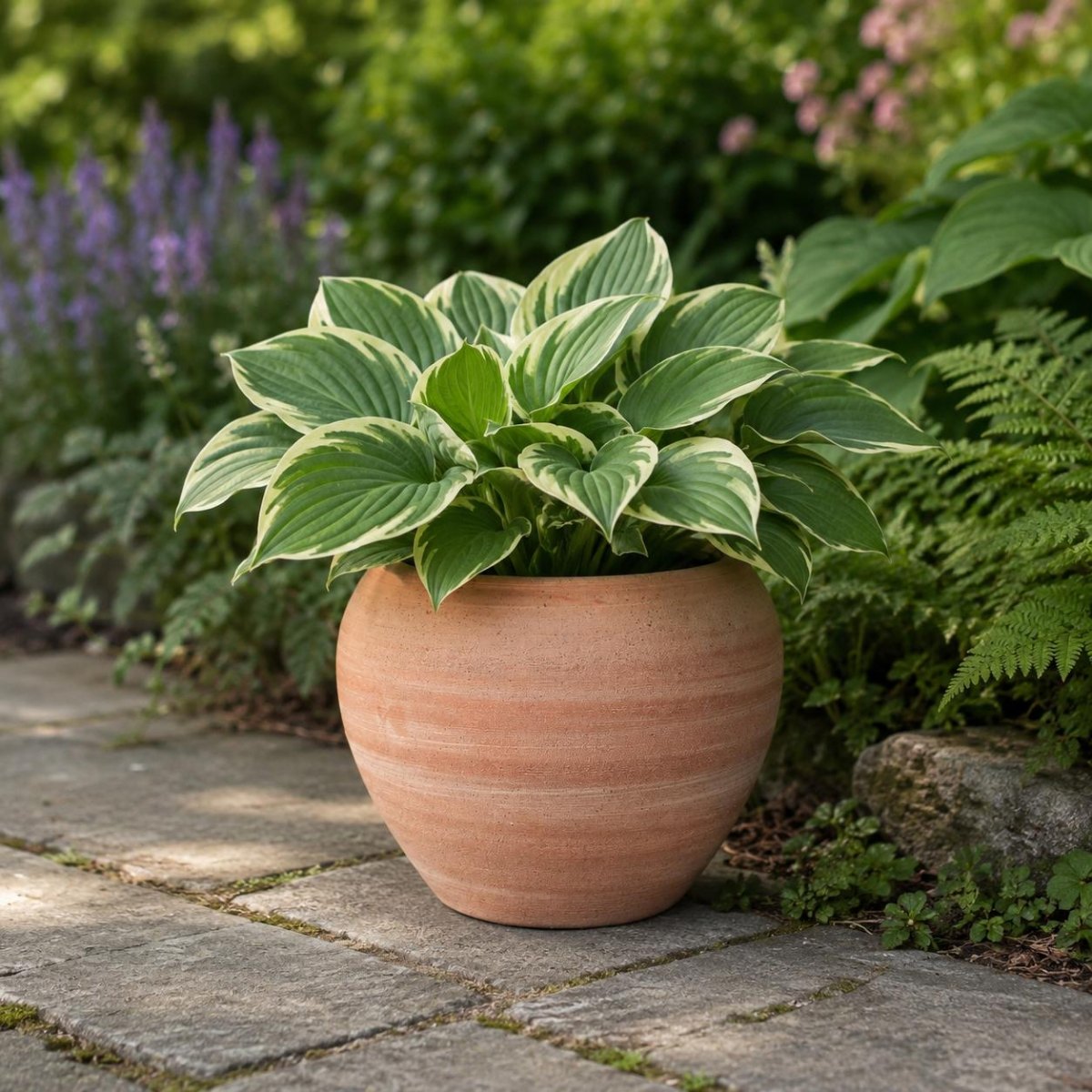
A hosta gives me something flowers sometimes cannot: big, readable foliage from across the garden. Illinois Extension notes that hostas make good container accents, and I particularly like them in pots where their leaves can sit above smaller plants rather than disappearing into a crowded perennial bed.
- Best use: A single hosta as the focal plant in a medium-to-large pot.
- Light: Bright shade or filtered light is a safer starting point than hot direct afternoon sun; large leaves can scorch.
- Design: Pair the broad leaves with a fine-textured fern or a trailing plant for contrast.
I would rather give one hosta enough soil volume than cram three into a pot because the photo looked fuller at planting time. Container space matters, particularly for plants that will stay in the pot for more than one season.
Colorful Shade-Loving Annuals
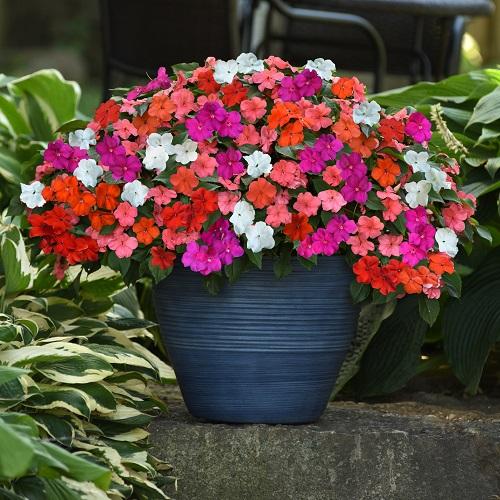
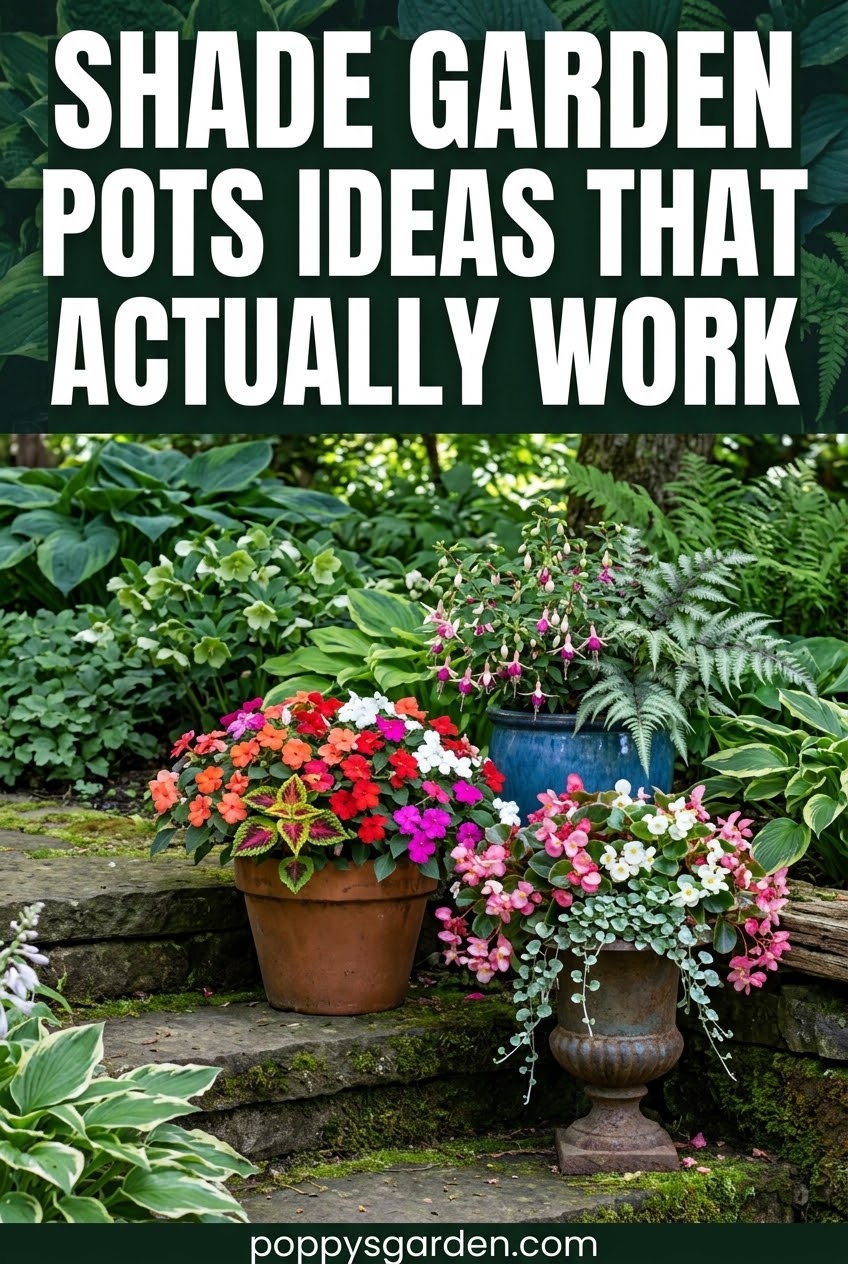
When I want actual flower color in shade, I usually start with impatiens or begonias. Iowa State Extension calls impatiens a standout shade annual and notes that both traditional and New Guinea impatiens perform well in containers; wax begonias are another reliable shade option.
| Plant | Why I use it |
|---|---|
| Impatiens | Bright flowers and a spreading habit suited to containers |
| New Guinea impatiens | Larger flowers plus interesting foliage |
| Wax begonia | Long-lasting flowers with green or bronze leaves |
For a colorful pot, I resist the temptation to buy one of everything. One flower color family plus contrasting foliage usually looks more intentional and is easier to keep watered evenly.
Mixed Textures in One Pot
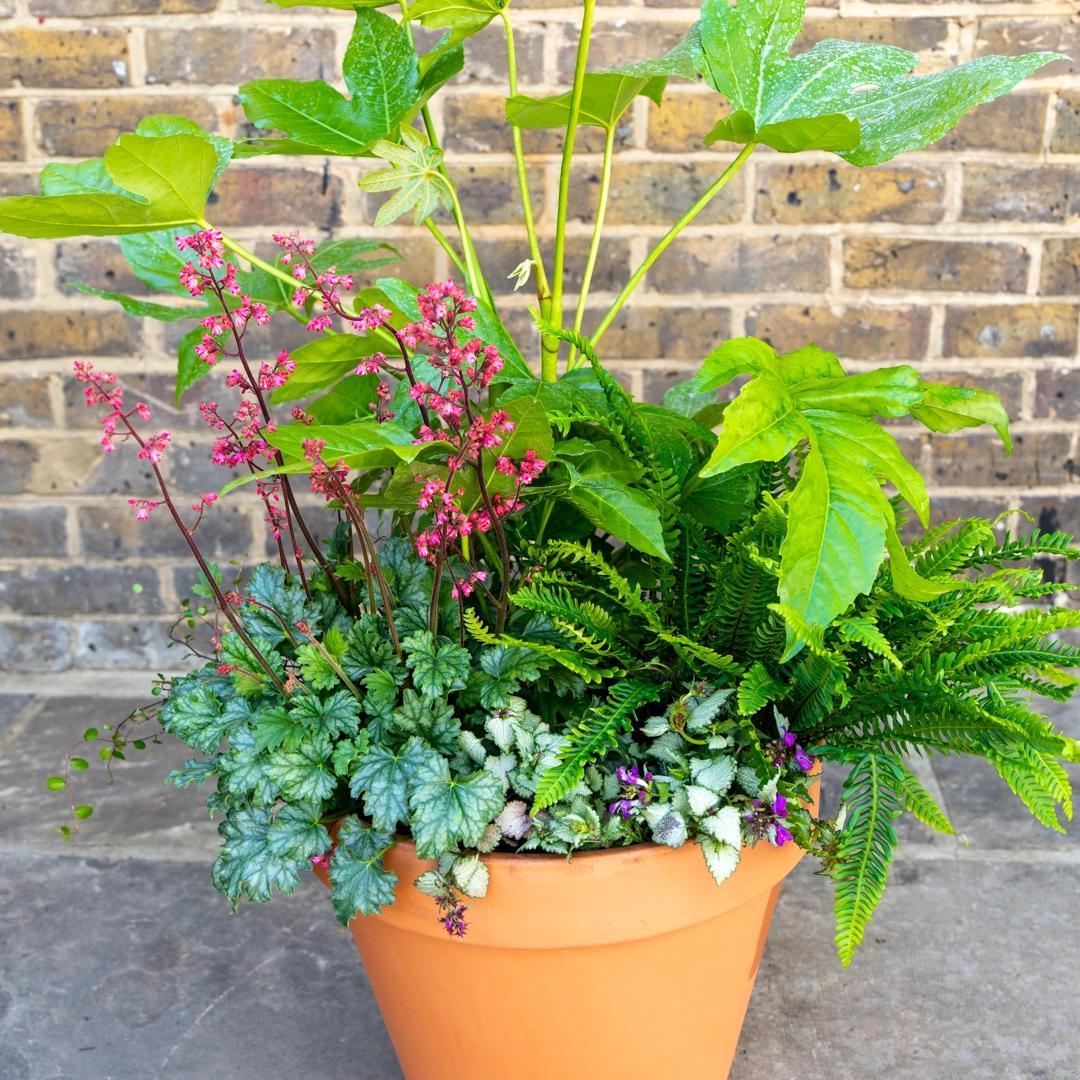
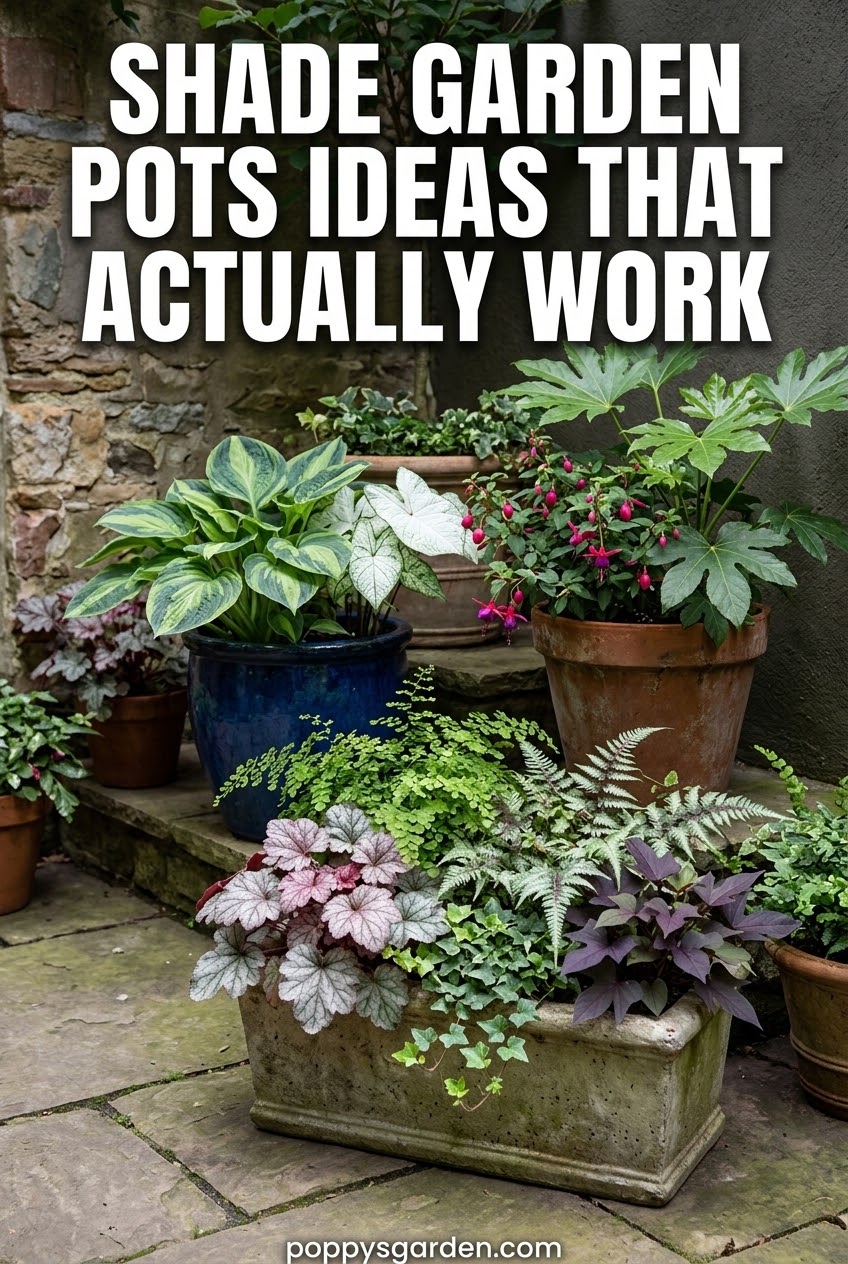
This is where container gardening gets fun for me. I look for different leaf shapes rather than simply adding more flowers: a broad hosta, feathery fern, rounded heuchera and something trailing can make one pot feel like a little garden border.
- Choose a focal plant. Give the tallest or boldest foliage the central or rear position.
- Add middle foliage. Use one or two mounding plants to fill the space around the focal plant.
- Finish the rim. Add a compatible trailing plant so the container has movement.
Extension guidance uses essentially this thriller, filler, spiller framework, but I treat it as a design tool rather than a law. The plants still need compatible light and moisture requirements or the arrangement will be fighting itself by midsummer.
Shade Herbs for a Useful Garden
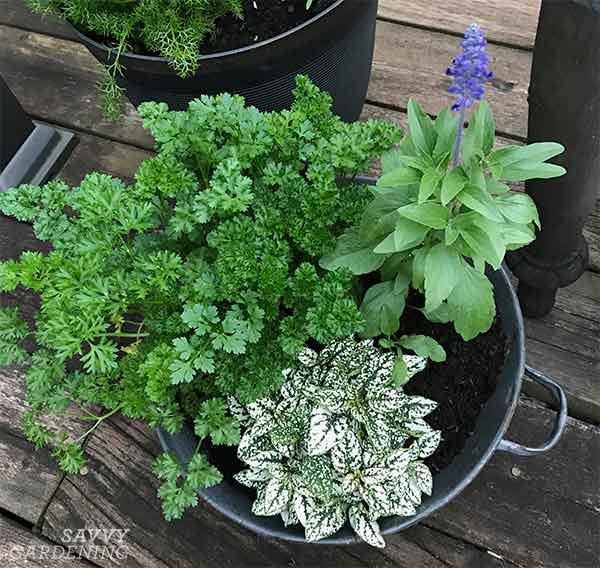
I like an ornamental pot that earns its space at dinner, too. Shade does narrow the herb list, but Iowa State Extension includes chives, cilantro and parsley among herbs that can handle light shade, with mint tolerating moderate shade as well.
One pot I keep separate
Mint gets its own container in my garden. It is a vigorous spreader, and putting it with slower herbs is an invitation for one plant to take over the entire pot. Separate pots are easier to manage and easier to harvest.
In Boise's dry summer, I would put edible containers where I can reach them easily for watering. A pot that is theoretically perfect but twenty steps beyond the hose is not going to receive heroic maintenance in July.
Caladiums for Vibrant Color
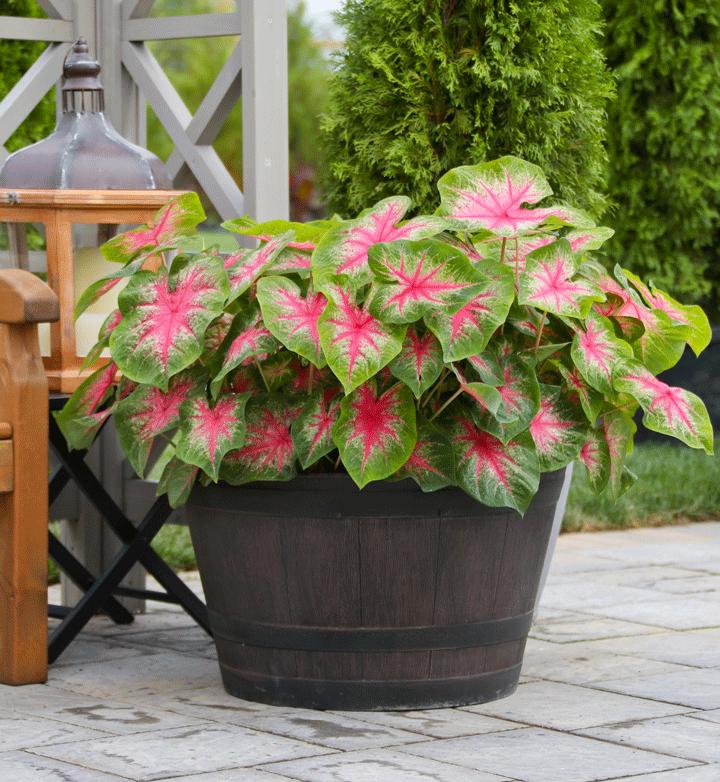
Caladiums are my answer when the shade garden needs color but I do not want another flower. Their pink, red, white and green foliage can carry the whole composition, and University of Georgia Extension lists caladiums among plants suited to shade containers.
12–30 inches
Typical caladium height in the cited Georgia guidance
I especially like caladiums as the focal point in a mixed pot because the leaves give me strong color without requiring several flowering plants. If I am planting several together, I want a generous container; UGA guidance notes that several young caladiums can initially be planted in a three-gallon container and grown on from there.
Heuchera for Year-Round Interest
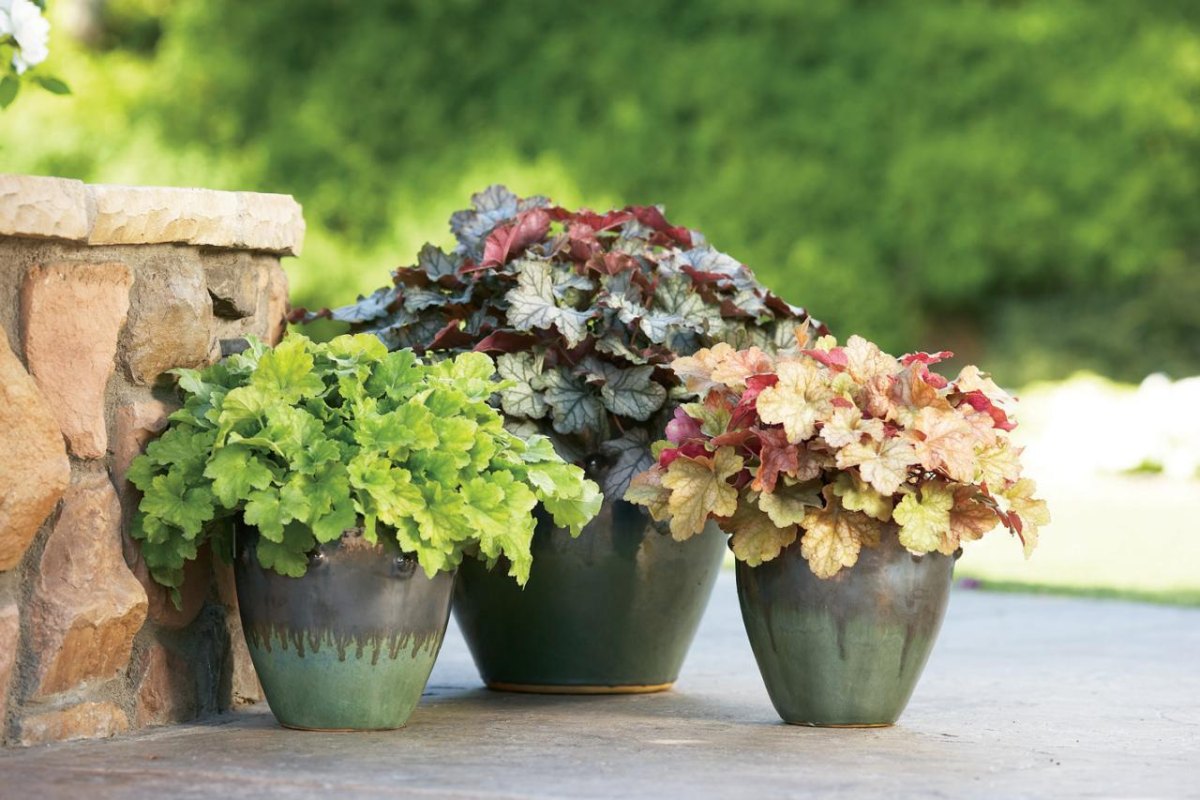
Heuchera earns a spot on my shade-pot list for its foliage rather than its flowers. The leaves can bring burgundy, bronze, lime and other tones into a planting where green is otherwise doing all the work. Extension guidance specifically includes coral bells as a spiller for shady containers.
Why I like it
- Colorful foliage lasts beyond individual flower flushes.
- It can work as a middle layer or spill gently over a pot edge.
- It pairs well with ferns and other fine-textured foliage.
What I watch
- Do not assume every cultivar wants identical light conditions.
- Do not let a container stay waterlogged.
For me, the useful combination is heuchera plus green foliage, not heuchera plus five other leaf colors. One strong contrast is usually enough.
Trailing Plants for a Cascading Look
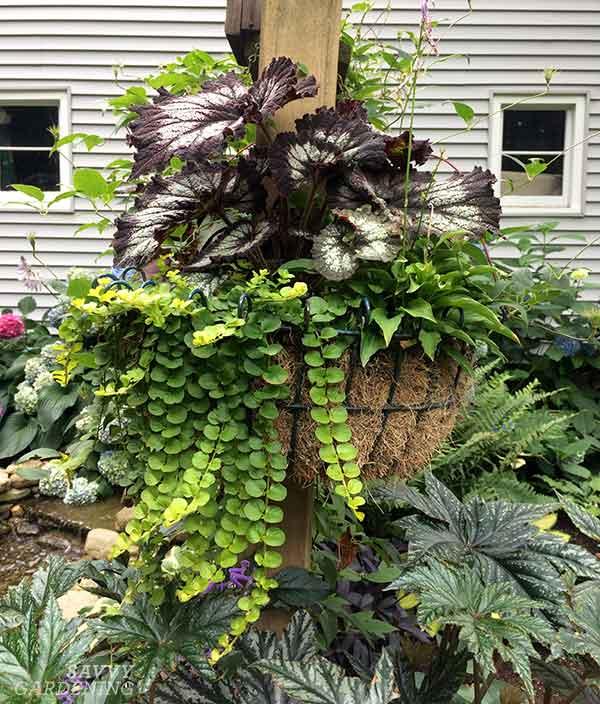
A pot can look unfinished to me when everything stops abruptly at the rim. Trailing plants solve that by creating a cascading edge, and extension container guidance commonly identifies plants such as ivy, bacopa, coral bells and other trailers as spillers.
The rim is part of the planting
I place trailers near the outside edge so they have somewhere to go. A spiller does not need to be dramatic on planting day; I care more about whether its growth habit fits the container and whether its water needs match the plants beside it.
This is also a good place to use one large pot instead of several tiny ones. More soil volume gives the roots a larger moisture reservoir, which is particularly helpful during hot weather.
Statement Pots in Shady Corners
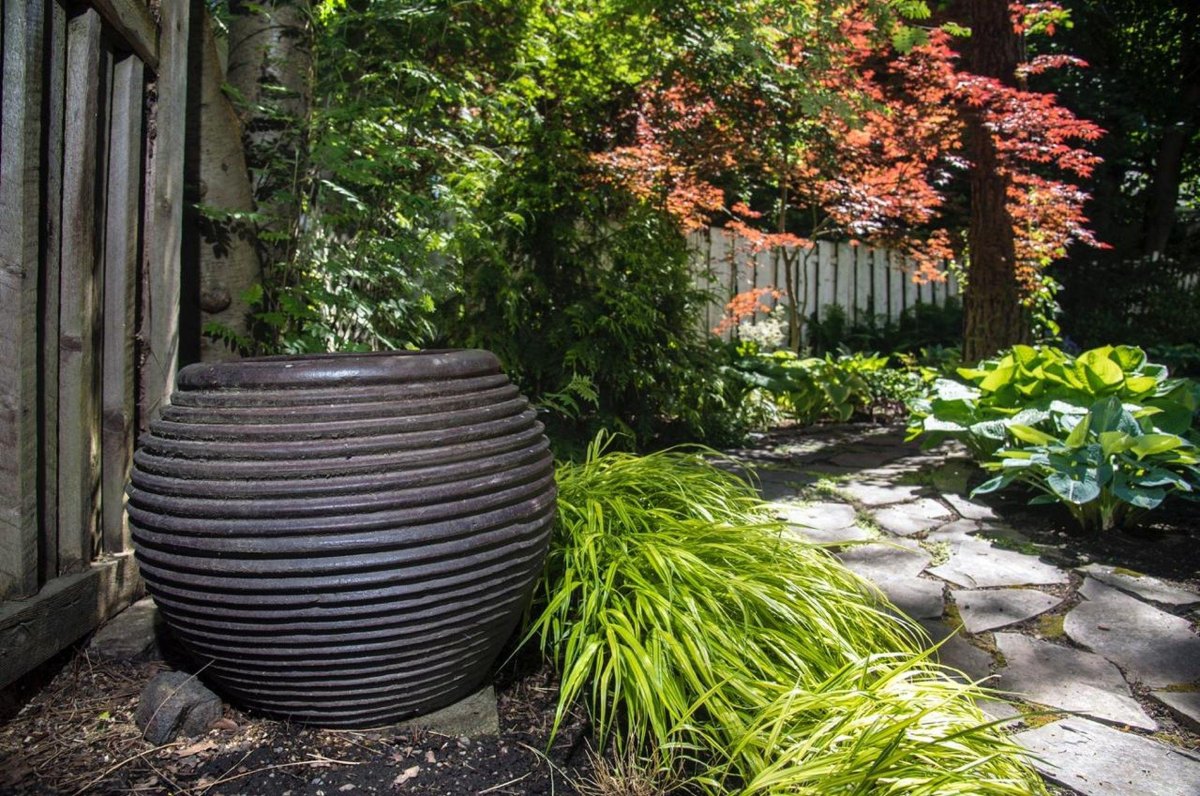
A shady corner does not have to be the place where the spare pot goes to die. I like using a large statement container beside a doorway, under an overhang or at the end of a path, then choosing plants that genuinely fit the available light.
- Check the spot at several times of day before planting.
- Choose a pot heavy enough to resist tipping if the location is windy.
- Make sure the container has unobstructed drainage.
- Use potting mix rather than heavy garden soil.
- Leave enough room for the mature root systems.
Wind deserves more attention than it gets. Illinois Extension points out that containers can blow over and that large leaves are especially vulnerable to wind damage. Weight and shelter are part of plant selection, not an afterthought.
Seasonal Shade Container Combinations
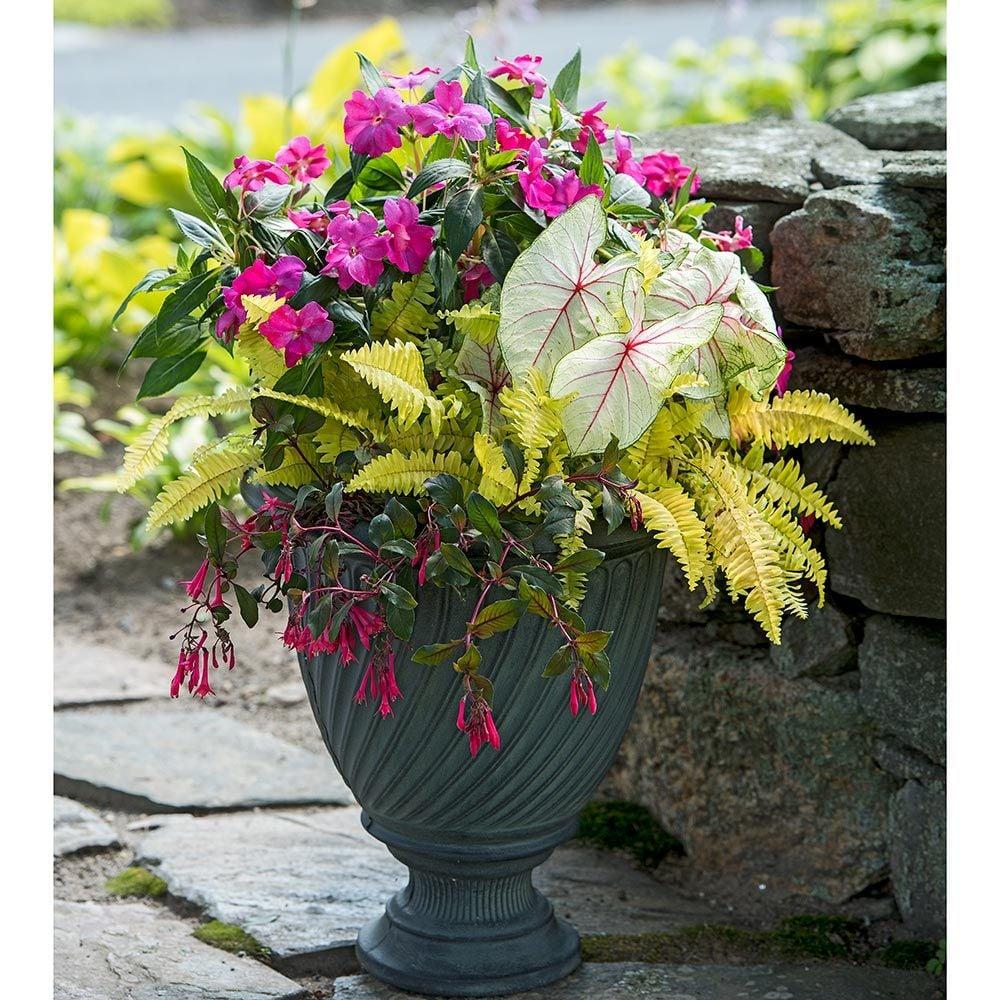
I think of a container as a small seasonal bed rather than a permanent arrangement. A spring pot can be refreshed for summer, and a tired summer combination can be replaced rather than nursed through another six weeks. Extension guidance also notes that containers can be changed with the seasons.
- Cool season: Use plants that tolerate your local cold conditions, and protect containers when temperatures threaten them.
- Warm season: Shift toward shade-tolerant annuals such as impatiens and begonias once your local frost risk has passed.
- Late season: Refresh the pot with foliage or cool-season plants rather than expecting a summer annual to look good forever.
Because I garden in Boise zone 7a, I do not give a universal calendar date for swapping these out. I work from my own last and first frost dates, then check local Extension recommendations. Your frost dates may be weeks different, even if your USDA zone looks similar.
Small-Space Shade Pot Ideas
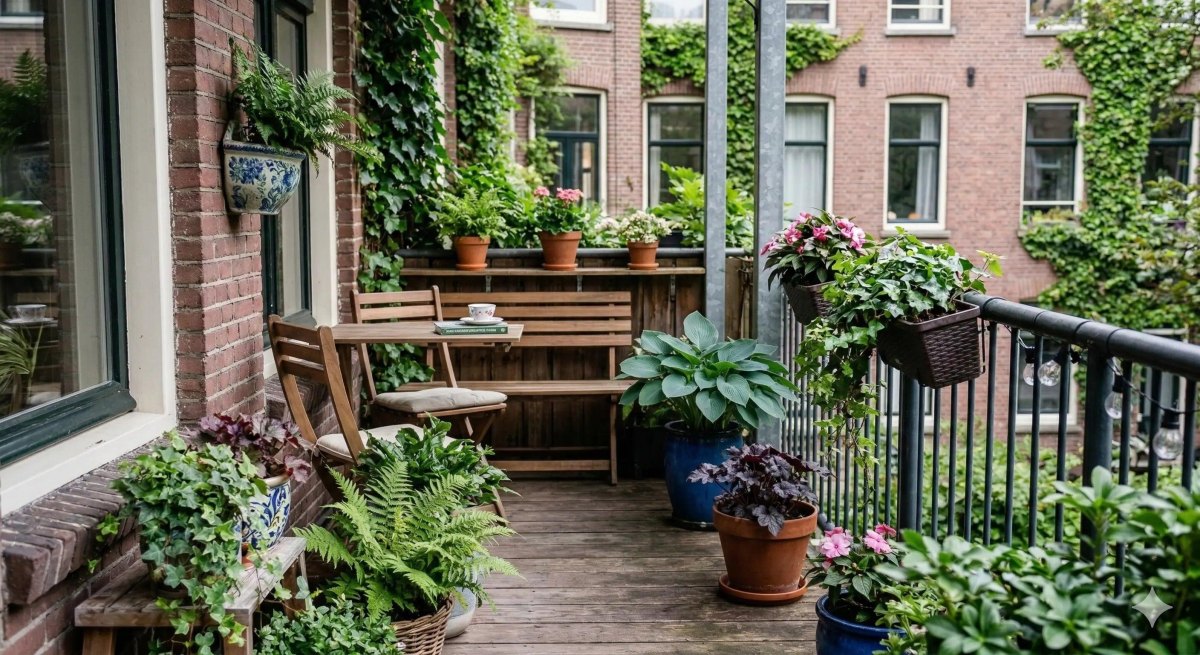
You do not need a yard to make this work. A stoop, narrow patio or balcony can hold a useful collection of shade pots, provided the containers have drainage and the structure can safely carry their weight. UMN Extension specifically recommends containers for small spaces and emphasizes drainage and lightweight potting mix.
| Space | My approach |
|---|---|
| Narrow stoop | One taller pot with a compact focal plant |
| Small patio | Group three pots at different heights |
| Balcony | Use lightweight containers and verify load limits |
| Shaded steps | Repeat one plant in several pots for a calmer look |
Small pots have one annoying mathematical disadvantage: they hold less water. In hot weather, container plants may need daily moisture checks, and small containers can dry faster than larger ones.
Modern Minimalist Shade Pots
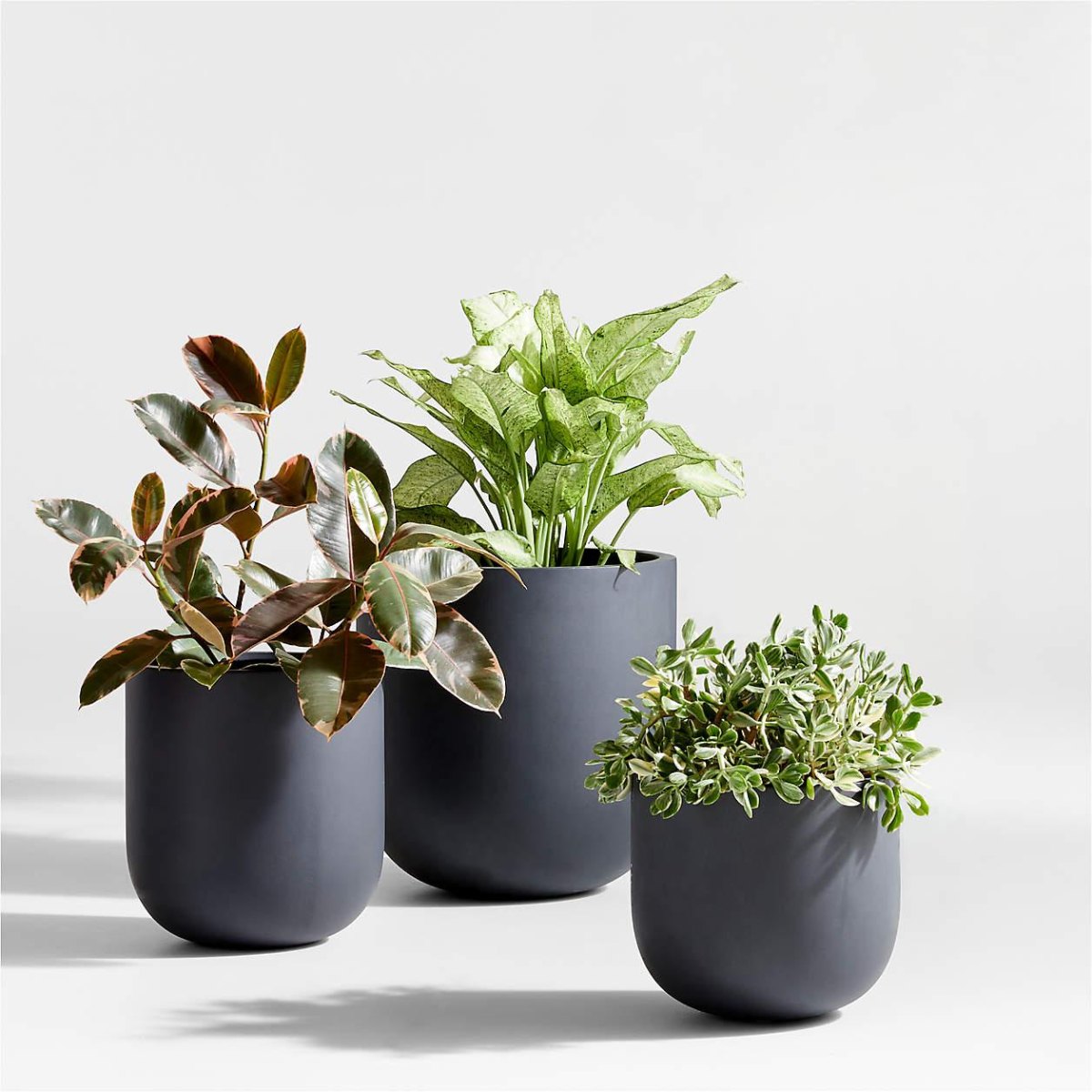
My favorite minimalist shade containers are usually not empty-looking at all. They rely on strong foliage shapes, repeated pot forms and a limited plant palette. A large green-leaf plant in a matte dark pot can be more striking than a dozen unrelated flowers.
Keep the planting simple when the container itself is part of the design. I would rather repeat two compatible plants than force six species into one pot.
My container rule
For this style, I pay particular attention to the potting mix and watering routine because minimalist arrangements leave nowhere for a struggling plant to hide. Containers need good drainage and even moisture, and extension guidance recommends quality potting mix rather than heavy garden soil.
If you are choosing between a beautiful tiny pot and a plain container with enough soil volume, I would take the plain one. Root space beats styling every time, and you can always put the plain pot inside something prettier.
More Pinterest Visuals



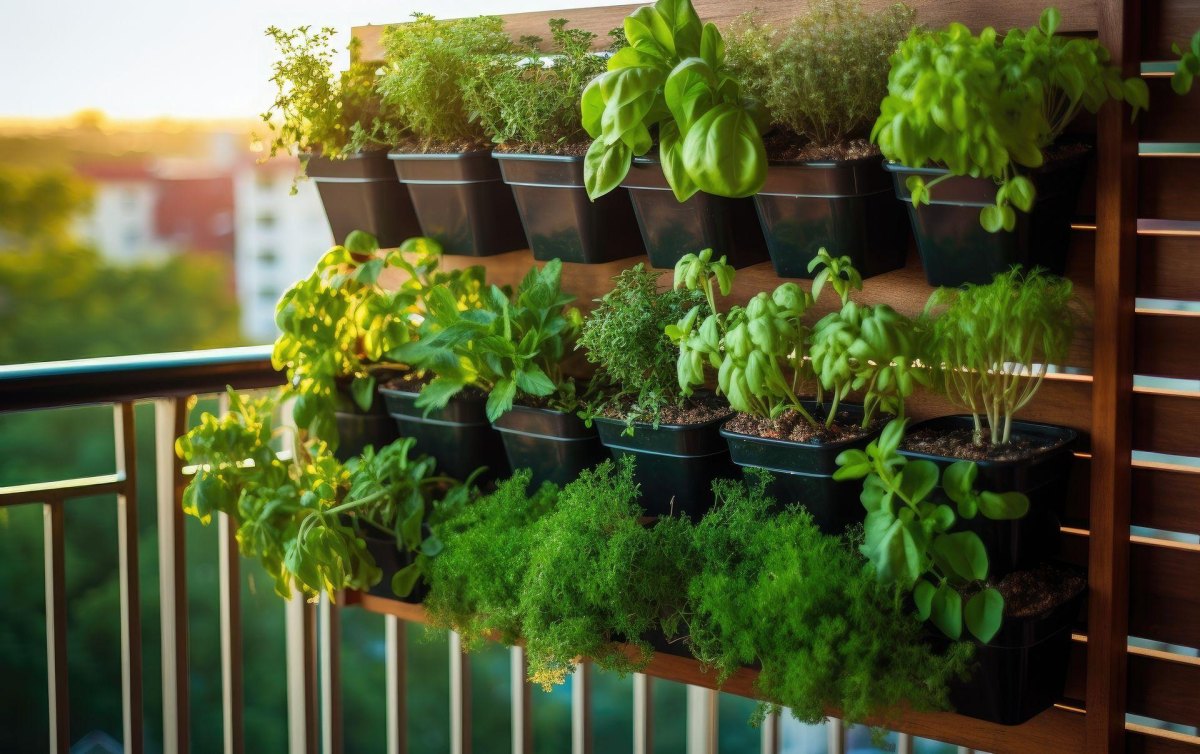 Balcony & Patio GardensSmall Space Garden Ideas That Make Every Inch Count
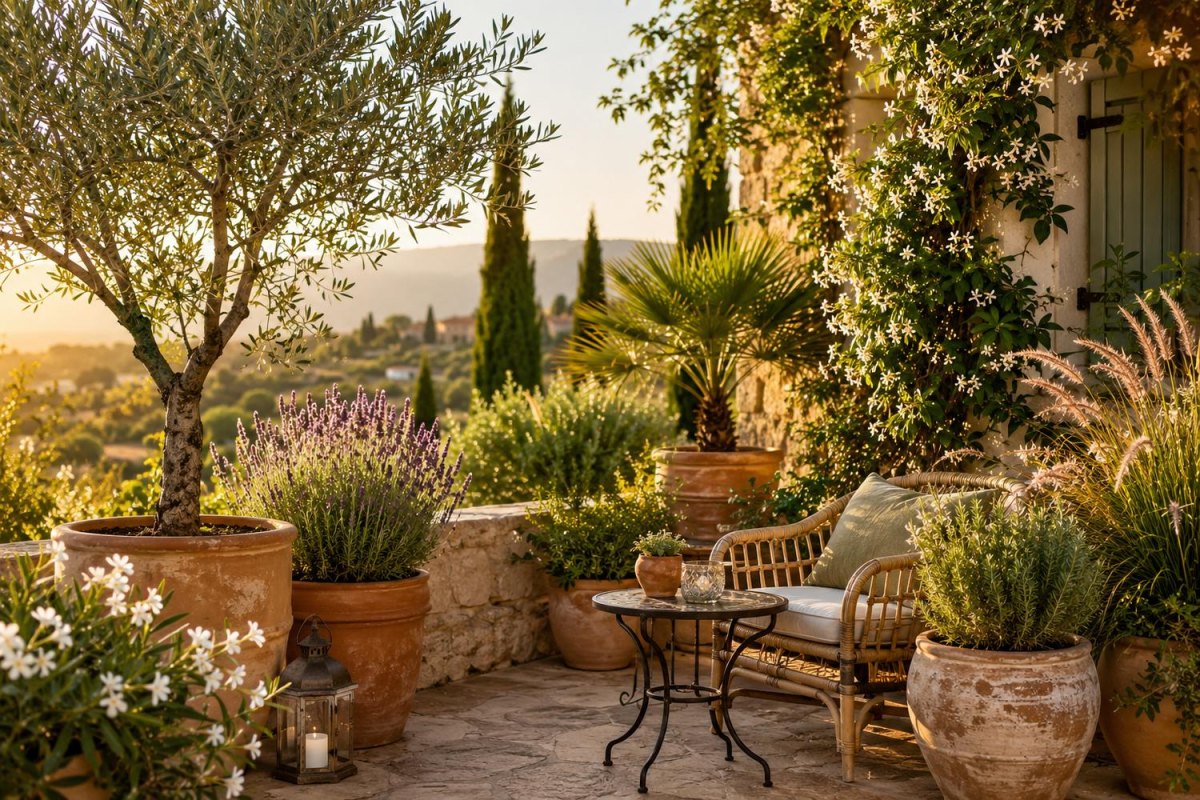 Balcony & Patio GardensKübelpflanzen für die Terrasse – 15 Ideen für ein grünes und blühendes Outdoor-Paradies
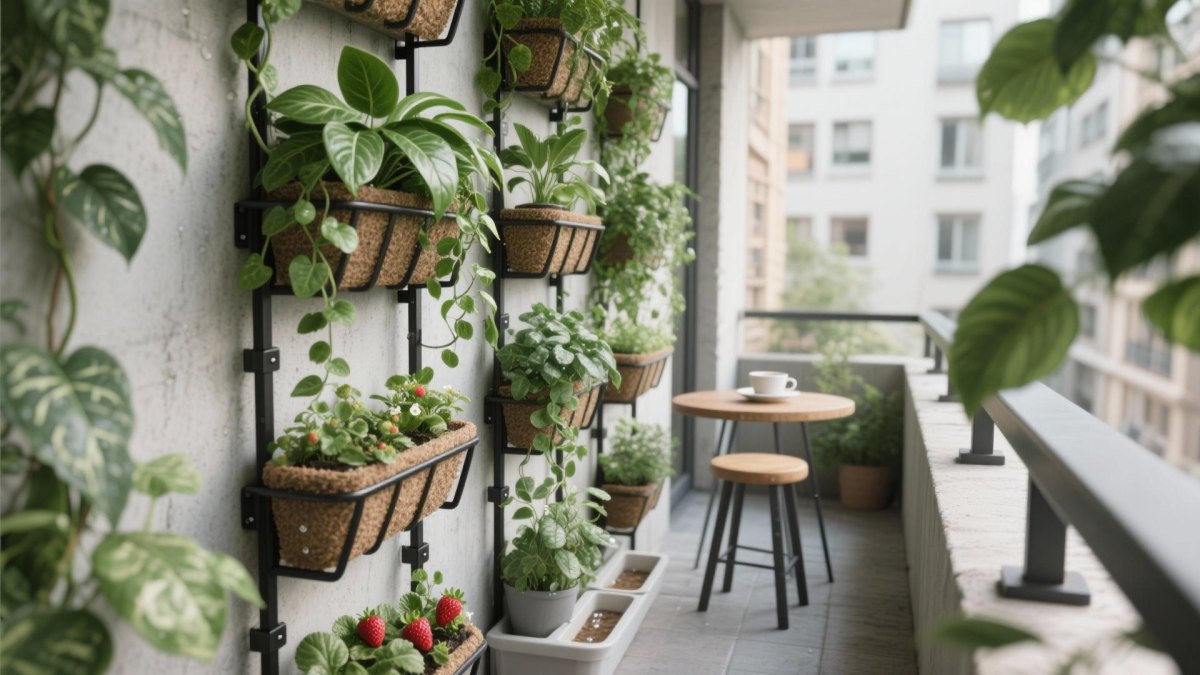 Balcony & Patio Gardens20 Balcony Garden Setup Ideas To Transform Your Outdoor
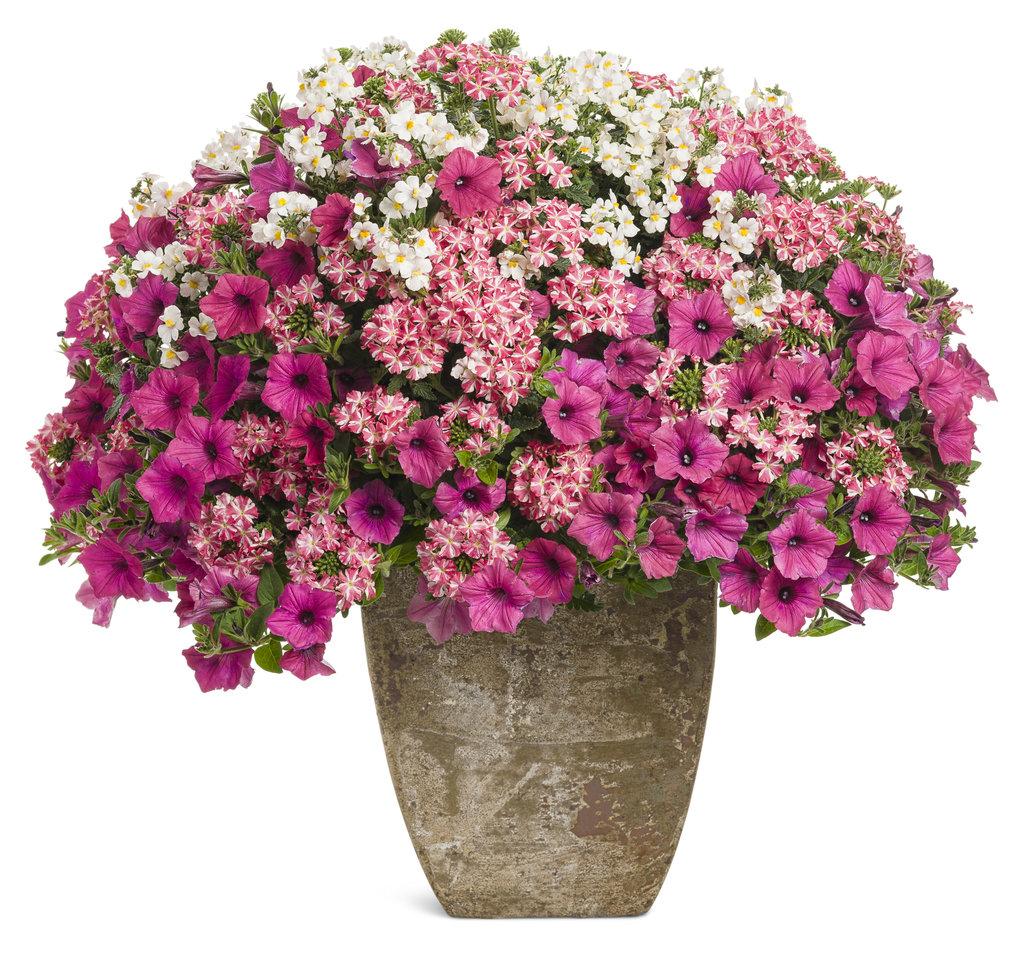 Seasonal & Flower Containers16 Beautiful Container Garden Flower Combinations That Work