 03.11.2026
Waiting weeks for a container garden to look full and colorful is not particularly exciting. I prefer flowers that get growing quickly, fill their pots generously, and keep producing blooms without demanding constant attention. Fortunately, there are several fast growing flowers for containers that can turn an empty patio, balcony, or sunny doorstep into a cheerful display.
I've always found that choosing the right variety matters just as much as choosing the flower itself. Compact zinnias, French marigolds, trailing nasturtiums, and dwarf cosmos are particularly useful when space is limited. The trick is giving their roots enough room, using a well-draining potting mix, and matching watering to the weather.
My six favorite flowers for quick container color
- Zinnias for bright, long-lasting summer blooms.
- Marigolds for easy-care flowers and sunny colors.
- Petunias for overflowing pots and hanging baskets.
- Nasturtiums for fast-growing trailing foliage and flowers.
- Sweet alyssum for fragrant, spreading flower clusters.
- Dwarf cosmos for delicate flowers in smaller spaces.
One timing note before planting: I garden in Boise, Idaho, USDA zone 7a, where annual rainfall is only about 11 inches, the soil tends to be alkaline, July heat is intense, and late spring frosts are a real possibility. I plan warm-season flowers around my own last frost date rather than relying on a fixed calendar. If you're gardening somewhere else, check your local frost dates and extension service recommendations before moving tender plants outdoors.
Zinnias
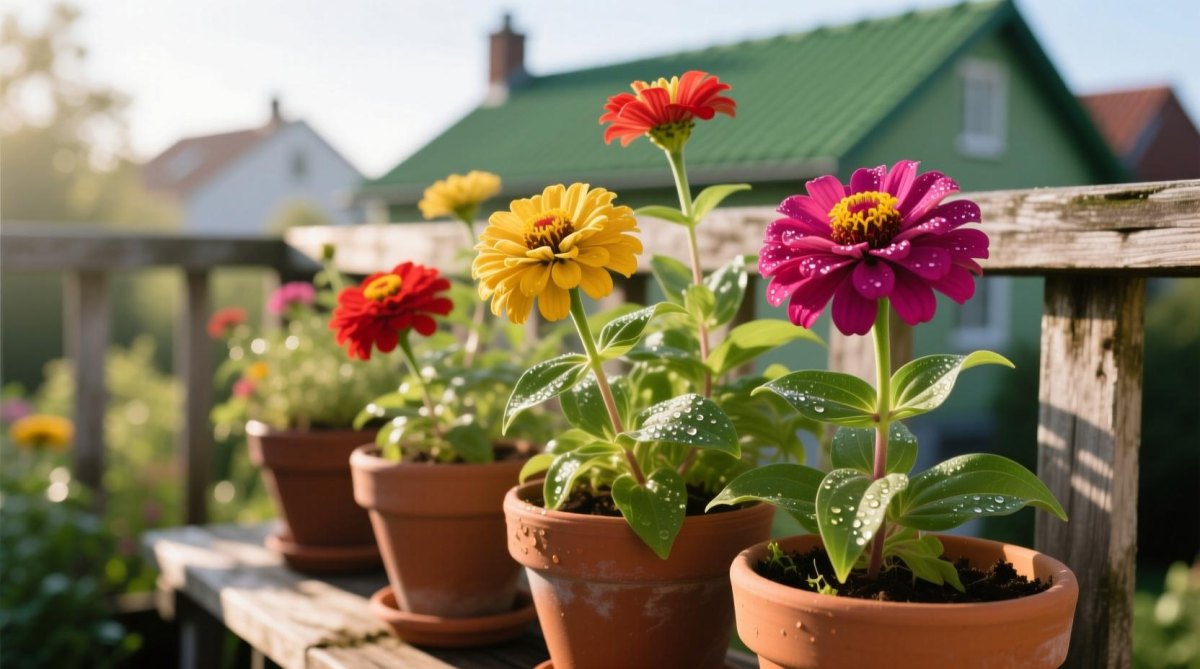
Zinnias are among my favorite choices when I want a container to look lively without waiting an entire season. They grow quickly from seed, come in an impressive range of colors, and produce flowers that are useful both outdoors and in a vase. For containers, I particularly like compact and dwarf zinnia varieties because they stay more manageable than the tall cutting-flower types.
I'd start with varieties such as Profusion or Thumbelina if space is limited. Taller zinnias can reach several feet, so check the mature height before buying a seed packet. The Royal Horticultural Society notes that zinnias can flower around 12 weeks after sowing, although temperature, light, and variety affect the timing. Full sun and warm conditions make a considerable difference to flowering.
For a single compact plant, I recommend starting with a container holding around 2–3 gallons of potting mix. Larger varieties will appreciate 5 gallons or more. Make sure the pot has drainage holes and use fresh, well-draining container compost rather than garden soil.
In my zone 7a Boise garden, I wait until the danger of frost has passed before direct-sowing outdoors. I also keep the local conditions in mind: our eleven inches of annual rainfall do not come close to meeting a container's summer water needs. For your garden, sow after your own last frost date and adjust for your local growing season.
Once established, water deeply when the mix begins to dry, especially during hot weather. Avoid repeatedly wetting the foliage, and remove faded flowers to encourage continued blooming. Container-grown zinnias also benefit from a suitable flowering fertilizer according to its label. If you're hoping to cut flowers, choose a sunny, sheltered position where stems won't be battered by wind.
My zinnia tip
Choose a compact variety and resist filling a small pot with too many seedlings. Crowded plants compete for water and airflow, and the result is usually fewer healthy flowers rather than a fuller display.Marigolds
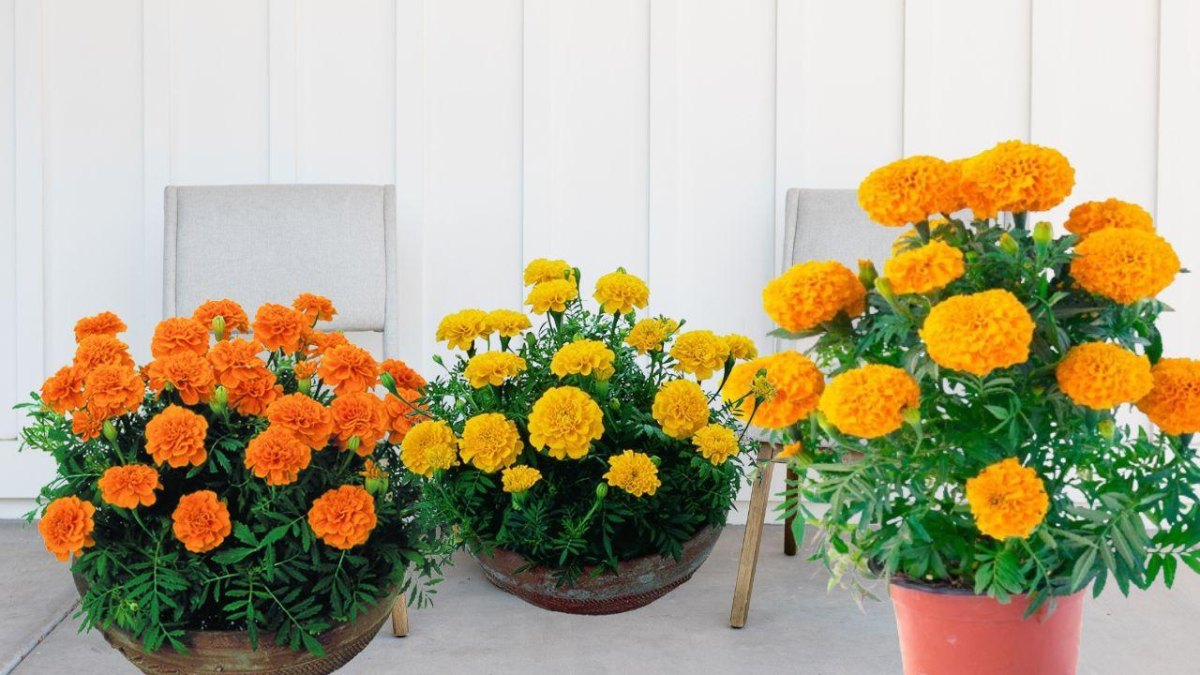
Marigolds are a reliable choice when I want plenty of cheerful color without complicated maintenance. Their orange, yellow, gold, and sometimes red blooms look particularly good in terracotta pots, window boxes, and mixed summer planters. They are also among the easiest flowers to grow from seed, which makes them a sensible option for beginners.
I usually suggest French marigolds (Tagetes patula) or compact Signet marigolds (Tagetes tenuifolia) for smaller containers. African marigolds can become considerably taller and need more room. The University of Minnesota Extension identifies Signet types as suitable for containers and recommends full sun and well-drained soil.
A 1–2 gallon pot is a practical starting point for a compact French marigold, while larger African varieties are better suited to containers holding 3–5 gallons or more. These are useful starting sizes rather than strict minimums; the mature dimensions on the plant label should guide your final choice. Good drainage is essential, as marigolds cope better with slightly dry conditions than persistently waterlogged roots.
For timing, I start seeds indoors several weeks before my last expected frost in Boise, zone 7a, and move plants outside only after frost danger has passed. Our high-desert climate means the pots need regular moisture checks once summer temperatures rise. Gardeners in other regions should follow their own frost dates and local extension advice rather than copying my planting schedule.
To keep marigolds flowering, I remove faded blooms and avoid excessive nitrogen fertilizer, which can encourage leafy growth at the expense of flowers. A balanced fertilizer used according to its label is generally sufficient. French marigolds are especially useful when I want a low, bushy display that does not overwhelm neighboring plants.
A small naming detail
Common names can be confusing. French and African marigolds belong to Tagetes, while calendula is also sometimes called pot marigold. They are different plants, so check the botanical name when purchasing seeds.Petunias
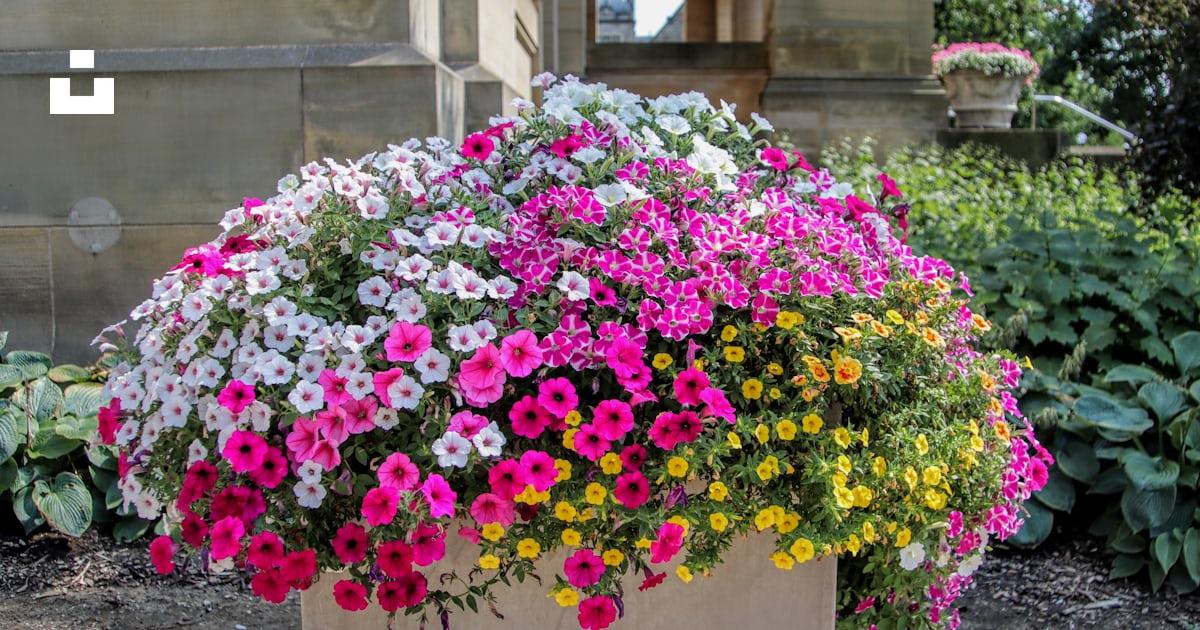
When I want a container to look full and overflowing with flowers, petunias are one of my first choices. Their trumpet-shaped blooms come in an enormous range of colors, including pink, purple, red, white, and striped combinations. They work beautifully in hanging baskets, window boxes, and patio containers, especially when you choose varieties with a naturally spreading habit.
Look at compact, spreading, or trailing petunias rather than tall bedding varieties if you're working with limited space. The Wave series is one familiar example of spreading petunias. University of Florida Gardening Solutions confirms that petunias are suitable for containers and hanging baskets and perform best in full sun with well-drained soil.
For a single medium-sized plant, I'd begin with a container holding approximately 2–3 gallons of mix. A 12-inch hanging basket can accommodate several smaller plants, provided they have enough room to develop. I never skip drainage holes, and I use a quality container potting mix that retains moisture without becoming soggy.
Petunias need more regular attention to watering than some of the other flowers on this list. In my Boise zone 7a garden, where summer heat and dry air can empty a container surprisingly quickly, I check pots every morning during hot spells. Some baskets may need watering daily or even more often in extreme heat. Your local climate, container material, and pot size will determine the actual frequency. Check the soil before watering rather than following an inflexible schedule.
Feed petunias with a balanced fertilizer or a flowering-plant fertilizer as directed on the packaging. Pinching young stems encourages branching, while removing spent flowers from older large-flowered varieties helps maintain a tidy appearance. Some modern small-flowered varieties are self-cleaning, which is useful if you don't want to spend every weekend deadheading.
My petunia tip
Don't underestimate the weight of a fully watered hanging basket. Use a secure hanging point and a basket large enough to hold sufficient potting mix. A tiny basket dries out much faster and makes summer care unnecessarily difficult.Nasturtiums
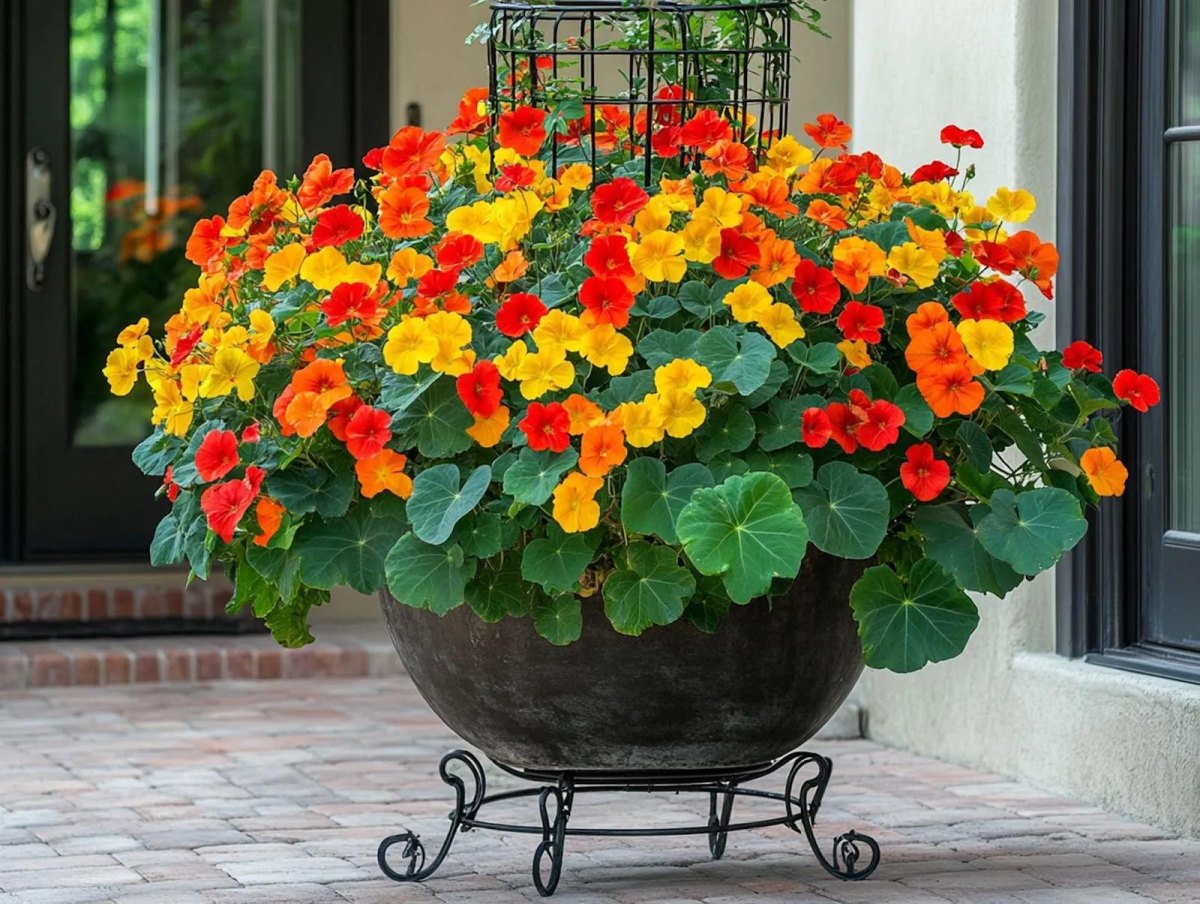
Nasturtiums are particularly satisfying when I want something that grows quickly and adds a relaxed, informal look to a container garden. Their rounded leaves and vivid flowers create a lovely contrast, and trailing varieties can spill over the edges of pots and window boxes. They are also easy to grow directly from seed, so there is no need to buy established plants if you'd rather start from scratch.
For containers, I look for compact or trailing nasturtiums depending on the effect I want. Compact varieties make attractive mounds, while trailing types work well in raised planters and hanging baskets. The RHS describes annual nasturtiums as fast-growing plants that can flower from early summer into autumn and are particularly suitable for containers.
One plant can be grown in a container of around 1–2 gallons, although trailing varieties benefit from a little extra soil volume. Choose a pot with drainage holes and use a reasonably fertile, free-draining potting mix. I avoid giving nasturtiums too much fertilizer because excessively rich conditions can favor leafy growth rather than the flowers I actually want.
In Boise, zone 7a, I sow nasturtium seeds outdoors after the last frost has passed. Their large seeds are easy to handle, and I find direct sowing more convenient than transplanting delicate seedlings. The same frost-date approach applies wherever you garden: wait until your local conditions are suitable, especially if spring temperatures are unpredictable.
Water seedlings regularly while they establish. Once the plants are growing strongly, keep an eye on container moisture during dry spells. The RHS specifically points out that pots and hanging baskets need regular watering through summer because their compost dries faster than garden soil. Keep the mix evenly moist without waterlogging it, and give trailing stems enough space to grow freely.
A note about edible flowers
Nasturtium flowers are commonly described as edible, but only consider eating them if the plant has been positively identified and grown without unsuitable pesticides or treatments. Never assume a nursery ornamental plant is safe to eat.Sweet Alyssum
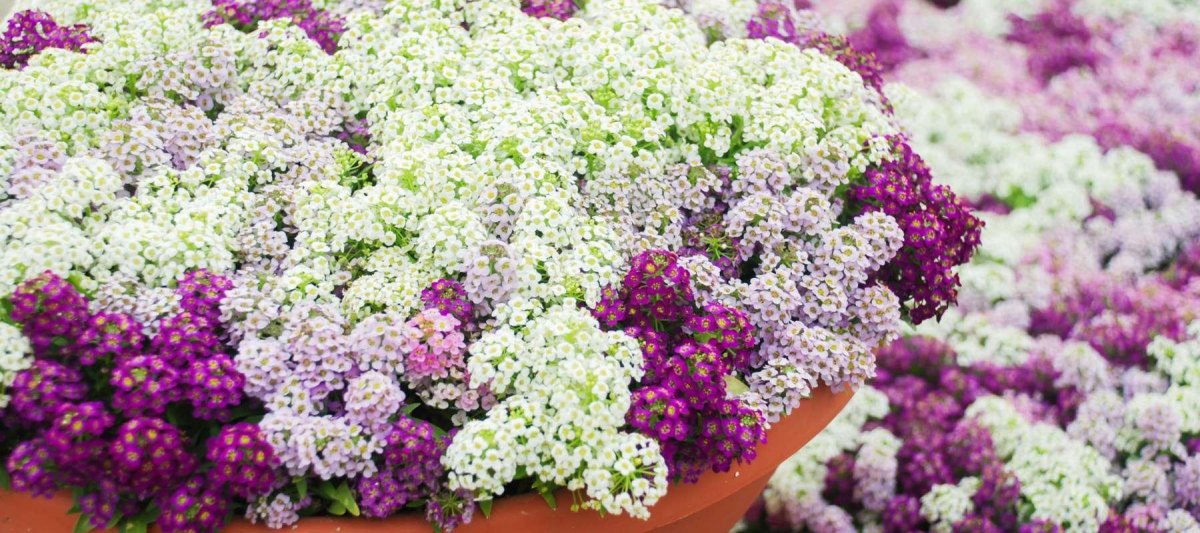
Sweet alyssum is one of those small flowers that can make an ordinary container look thoughtfully planted. Its clusters of tiny white, pink, and purple flowers form a soft carpet, and the delicate honey-like fragrance is an added bonus. I particularly like it around the edges of larger planters, where its low, spreading growth habit softens the sides of the container.
Unlike taller annuals, sweet alyssum generally stays compact. The University of Florida describes it as a low-growing plant that reaches approximately 12 inches tall and wide, with a spreading habit that works particularly well in containers. It also attracts bees and butterflies.
For one or two plants, I would start with a container holding around 1–2 gallons of potting mix, or use alyssum as an edging plant in a larger mixed planter. It appreciates well-drained soil, regular watering, and a sunny position. In particularly hot locations, some afternoon shade can help keep the display looking fresh.
If you're growing sweet alyssum from seed, patience is still required, but the wait is relatively short. Clemson Extension reports that plants grown from seed can flower within approximately 6–8 weeks. Seeds need light to germinate, so I only cover them very lightly with growing medium. Don't bury the tiny seeds deeply, or you may end up waiting for seedlings that never appear.
My Boise zone 7a garden presents a particular challenge for sweet alyssum. Our hot, dry summers can interrupt flowering, especially in older seed-grown varieties. If your summers are similarly intense, give plants some afternoon protection and check moisture frequently. Some newer heat-tolerant hybrids, including Snow Princess, are worth considering when shopping for starts. The University of Florida also highlights newer hybrids with improved heat tolerance.
Trim lightly if plants become untidy, remove faded flower clusters when needed, and apply a modest flowering fertilizer according to the product directions. Sweet alyssum is particularly useful as a companion to taller flowers because it fills gaps without competing visually for attention.
Dwarf Cosmos
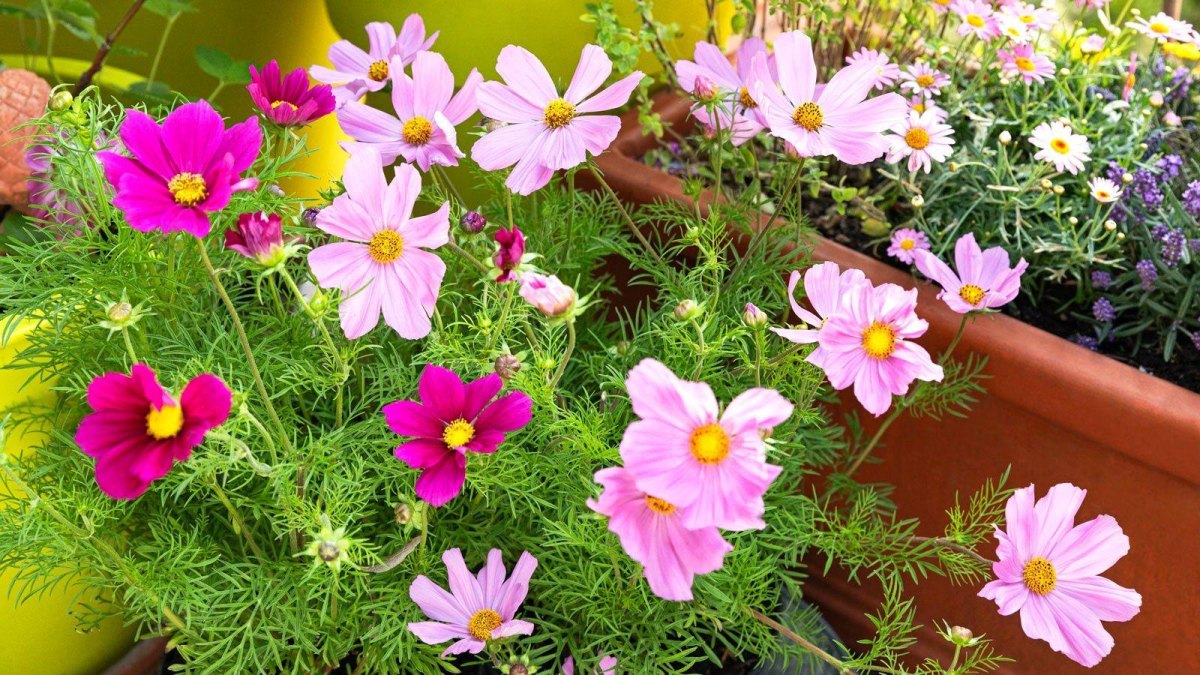
Dwarf cosmos bring a completely different look to container gardens. Their fine, fern-like foliage and simple daisy-shaped flowers give pots a light, airy appearance. I like them when I want something a little less formal than a tightly packed arrangement of bedding plants. The important word here is dwarf: regular cosmos varieties can become surprisingly tall and floppy in a container.
When choosing seeds, look for compact varieties of Cosmos bipinnatus or dwarf forms of Cosmos sulphureus. Check the mature height rather than relying on the word compact in a catalogue description. Dwarf varieties are much better suited to pots because they need less support and are easier to combine with other flowers.
I'd give one dwarf cosmos plant a container holding around 2–3 gallons of potting mix, with a diameter of approximately 12 inches or more. For a small group, increase the volume so the roots have room to develop. Good drainage and a sunny, sheltered position are important. Avoid using an oversized amount of fertilizer, as excessive feeding can encourage foliage at the expense of flowers.
In my USDA zone 7a garden in Boise, I wait until frost danger has passed before moving young cosmos outdoors. Our low rainfall and hot July conditions mean that container plants need more consistent watering than cosmos growing directly in the ground. If you're gardening in a cooler or warmer region, use your own last frost date and local extension guidance to determine when to sow and transplant.
Once the plants are established, water when the upper layer of potting mix begins to dry. Deadhead old flowers to keep the display tidy and encourage additional blooms. Tall stems may need support, but a properly selected dwarf variety should need much less intervention. For more consistent results, sow several seeds and thin the seedlings to the spacing recommended on the packet rather than allowing every seedling to compete in one small pot.
I find cosmos particularly useful when I want a container that looks natural rather than overly arranged. Pair pink or white flowers with purple petunias, or combine them with low-growing sweet alyssum. Just remember that container size matters: North Carolina State Extension explains that restricted root growth can reduce both plant development and flowering, while larger containers generally hold moisture longer.
My final planting recommendation
If you're starting with just one container, choose a compact zinnia or French marigold. Both provide noticeable color without requiring complicated arrangements. For a fuller display, combine one upright flower with a trailing nasturtium or a small patch of sweet alyssum, leaving enough space for every plant to develop.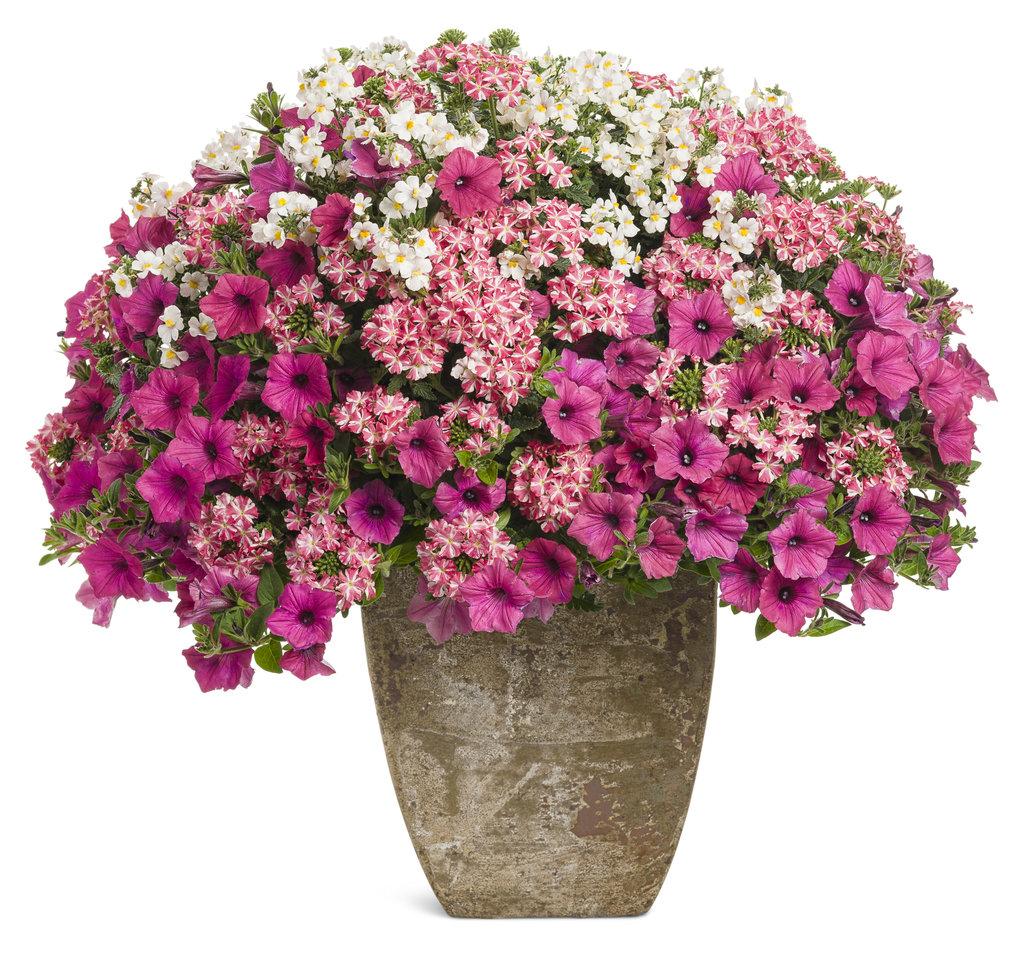

 Balcony & Patio Gardens16 Small Garden Ideas for Renters That Save Space and Look Beautiful
 Herb Gardening9 Beautiful Herb Garden Design Ideas That Are Practical and Easy to Grow
 Raised Bed Gardening10 Best Vegetables for Raised Garden Beds That Are Worth Growing
 Seed StartingSeed Starting Supplies List – 11 Essentials for Growing Healthy Seedlings at Home